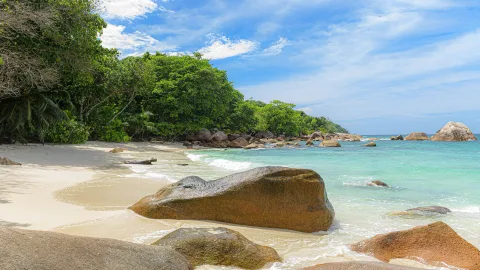
June 1, the calendar says summer, and Shamora Beach sits shrouded in fog, +16°C, and a wind that numbs your hands. The water is ice-cold. Two months later, this same spot is unrecognizable: +28°C, scorching sand, and a line for ice cream. Vladivostok is a city where the word "summer" needs a specific month attached.
Vladivostok sits at 43°N latitude — the same parallel as Sochi, Nice, and Toronto. Logic suggests swimming season should run from May to October. But the Sea of Japan and a monsoon climate write their own rules: genuine summer fits into five or six weeks, and swimming without a heroic streak is only possible in August.
Why the Latitude of Sochi Doesn't Mean Sochi Weather
The main reason comes down to two words: monsoon and current.
Vladivostok sits on the western shore of the Pacific, in a monsoon climate zone. In winter, a cold, dry northwesterly wind blows from the mainland, freezing the coast to –15 to –20°C.
Golden Horn Bay freezes over — yes, seawater in a port city ices up, and this continues from December through March.
In summer, the wind reverses: a southeasterly monsoon starts blowing off the ocean, carrying moisture, fog, and cool air. The first hit comes in June — a month technically classified as summer, but feeling more like April in St. Petersburg: gray skies, drizzle, temperature at +14–18°C. It's the year's foggiest and cloudiest month.
The second factor is the Primorye Current, flowing south along the coast, carrying cold water. It functions like the Canary Current off Morocco's shores — only cooling more intensely here. The sea in June sits at +12–14°C. Swimming at that temperature is essentially a sporting bet.
June: Summer on Paper
June in Vladivostok is deceptive. Daytime air runs +15–20°C, but feels colder due to humidity and wind. The sea sits at +12–15°C. Fog can shroud the city for days on end: visibility drops to a hundred meters, and the Russky Bridge dissolves into milk. Sunshine is a rare visitor.
Beaches sit empty. Locals know: there's nothing to do at the sea in June. You can walk the promenade in a windbreaker, drink coffee overlooking the bay, or visit Russky Island — but undressing and getting in the water is left to polar plunge enthusiasts and visitors who trusted the map coordinates and forgot to check the forecast.
The paradox: at the same latitude, Sochi hits +25–28°C air with water at +22°C. A 10-degree gap in water temperature.
The Black Sea is an enclosed, comparatively shallow basin that warms quickly. The Sea of Japan is part of the Pacific Ocean, and its temperature is shaped less by latitude, more by currents.
July: Warmer, But Not Yet Season
In July, fog retreats, sun appears more often, and air warms to +20–25°C. The sea sits at +18–21°C — tolerable for the hardy, but still cool for comfortable swimming. Most residents step in and step right back out — "dip in" and "swim" mean different things in July Vladivostok.
By the second half of July, monsoon downpours begin: brief, intense, sometimes with thunder. Temperature can drop sharply by several degrees after rain. Humidity runs 80–90%, and even at +23°C, the air feels heavy and sticky.
Beaches start coming to life in July, but more for sunbathing than swimming. Sand is hot, sun bright — but the water still has a bite. Kids splash near shore while parents stand knee-deep, deciding whether to go in deeper.
August: Finally, the Sea
August is the only month when swimming season in Vladivostok genuinely works. Air runs +24–29°C, hitting +31–33°C on hot days. The sea warms to +22–25°C, reaching +26–27°C in sheltered bays and shallows.
August is when locals flood the beaches en masse. Roads to the coast jam up starting Friday morning. Shamora (Lazurnaya Bay), Vladivostok's main beach, looks like a miniature Antalya on weekends: loungers, umbrellas, the smell of barbecue, kids shrieking. Parking is full by ten in the morning, and claiming beach space needs advance planning.
Water in August is clear, waves usually low, snorkeling visibility good. The underwater world of Peter the Great Bay isn't rich by tropical standards, but sea urchins, starfish, and small fish are visible. The key rule: don't step on an urchin — they're everywhere here, and a sting hurts.
August's downside is typhoons and heavy rain. Tails of tropical cyclones moving through from the Philippines and Taiwan sometimes reach Primorye. A full-blown typhoon is rare, but prolonged rain with wind occurs several times a month. After such rain, the sea turns murky for a day or two, and the beach isn't worth visiting.
September: Primorye's Velvet Season
An unexpected fact: September in Vladivostok isn't the end of summer — it's its best part. Monsoon rains recede, skies clear, and the air turns dry and transparent. Temperature runs +18–22°C, sea at +19–22°C in the first half of the month. Humidity drops, wind dies down, and the city finally gets what it waited all summer for: sunshine without fog or rain.
Swimming is still possible in September — during the first two weeks, water holds the warmth accumulated over August. By month's end, the sea cools to +16–18°C, and the season closes. But for walking, sightseeing, and photography, September is ideal: golden hills, clean air, minimal tourists.
Where to Swim
There are dozens of beaches around Vladivostok, but quality varies significantly.
Shamora (Lazurnaya Bay) — the most famous and most crowded. A wide sandy beach with gentle entry. Water warms faster than in open bays, since the inlet is shallow and shielded from wind. On August weekends, it's packed to the max — visit on weekdays or early morning. Infrastructure exists — cafés, restrooms, umbrella rentals — but on a modest scale.
Steklyanukha Bay (Glass Beach) — a small beach famous for tumbled glass instead of pebbles. Broken glass was once dumped here, and over decades the sea polished the shards into smooth, colorful stones. Photogenic, but small — fills up fast in season. Swimming works, but the entry is pebbly and not the most comfortable.
Russky Island — beaches on the island's southern side: Akhlestysheva Bay, Babkina, Novik. Reachable via the Russky Bridge and further dirt roads. Fewer people, cleaner water, but almost no infrastructure — no cafés, no showers, no lifeguards. But nature and silence more than compensate.
Coast outside the city. Bays toward Nakhodka — Triozerie, Livadia, Andreevka — rank among the best in Primorye. Clear water, white sand, pines. But it's a 2–3 hour drive from Vladivostok, and accommodation needs booking in advance — summer books out completely.
Why the Water Warms So Late
Three reasons the Sea of Japan near Vladivostok lags behind the calendar.
- Cold current
The Primorye Current carries water down from the north, from the Tatar Strait, where ice floes are still drifting in June. This cold mass suppresses coastal warming and prevents the sea from heating up before midsummer.
- Depth
Peter the Great Bay isn't a shallow lagoon. Open-water depths reach 50–100 meters, and warming that volume takes the sun time. Small bays (Shamora, Akhlestysheva) heat up faster because nearshore depth is 1–3 meters — exactly the layer you swim in.
- Fog and cloud cover
June's fog steals sunlight hours from the sea. While the coast sits shrouded in milk, the water gets no direct heat. When fog clears in July–August, the sun finally starts working — but by then, half of summer is already gone.
Thermal Inertia: Why the Hottest Month Isn't July
The same story as with continental climate, just in maritime form. Peak solar energy falls in late June (the longest day). But water gains heat with a 4–6 week delay, and sea temperature peaks in early to mid-August. Air follows the same lag: August is Vladivostok's hottest month, not July.
For the same reason, September stays warm: the sea releases its stored heat and warms the air. The result is a curious bonus — autumn feels milder than spring, despite identical sunlight levels.
What to Consider if Traveling in Summer
- Book in August — early. Hotels and lodges along the coast fill up in August: locals book a month or two ahead, and popular bays (Triozerie, Livadia) fill even sooner.
- Bring a windbreaker even in the heat. Weather changes within an hour. +28°C and sunshine in the morning; rain and +20°C by noon. Layering is the fundamental principle of a Vladivostok wardrobe.
- Sea urchins. They're abundant on rocky bottoms near shore. Enter the water in water shoes, or at least watch your step. Stepping on an urchin is unpleasant, and extracting the spines is worse.
- Jellyfish. In late August and September, jellyfish appear in the bays — mostly harmless, but the "crestik" (cross jellyfish) causes a painful sting. Not seeing a jellyfish doesn't mean there isn't one — locals know: if crestiki have been spotted near shore, best not to swim.
- Traffic to the beaches. The only road to Shamora on August weekends means hours stuck in traffic. Leave before 7 a.m. or seek alternative routes to less popular bays.
Vladivostok is a city where swimming season must be caught, not counted on. It's short, temperamental, dependent on fog, wind, and the Pacific Ocean's mood. But when the water finally warms in early August and the sky clears of haze, the bays of Primorye rival many well-hyped resorts. You just need to know when to come. Locals know: wait for August.