Moles
The mole is an amusing creature that spends most of its life underground, where it feels cozy and comfortable. An adult animal weighs about 170 g and grows up to 5 cm long. In times past, fashionable ladies showed off in mole-fur coats. As it turns out, this tiny creature has very valuable fur.
Moles are in fact blind. But that does not stop them from being bloodthirsty predators. With its keen sense of smell, a mole can sense prey from a great distance. It eats beetles, larvae, slugs, mole crickets and earthworms. The insatiable mole will not turn down a small mouse that happens to wander into its burrow either.
To this day, attitudes toward this creature are mixed. On the one hand, the mole destroys the root systems of plants and inevitably ruins the future harvest. The roughly two dozen deep tunnels in a vegetable garden or orchard that an adult animal is capable of digging are convincing proof of this.

But on the other hand, the mole tirelessly destroys pests that birds cannot reach. And scientists, for example, believe that completely wiping out this creature threatens to cause yet another biological imbalance.
Driving a mole out of its «home» is a difficult task. And gardeners often resort to a simple method. They place rags soaked in kerosene in the burrows or scatter herring heads there. The unpleasant smell drives moles from their established homes. But for how long? These creatures are surprisingly attached to their native «home». Tin cans hung above the burrows are also used for a noise-based deterrent effect.
Ground squirrels

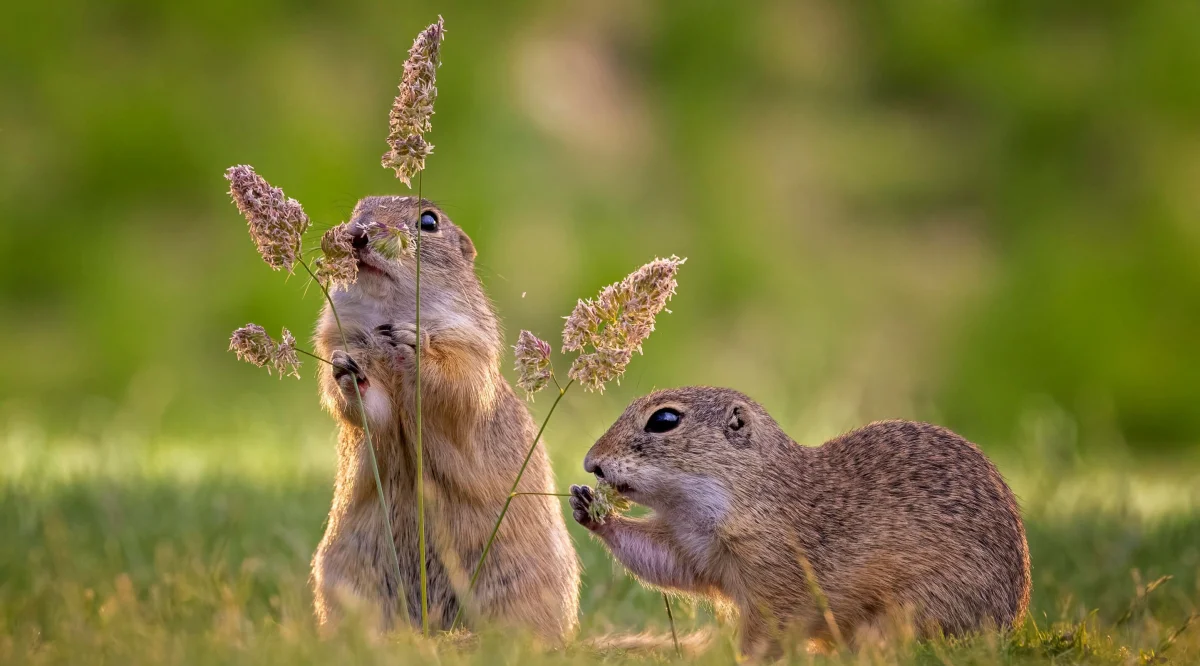
The ground squirrel belongs to the squirrel family of the rodent order. An adult animal weighs about a kilogram and a half. The ground squirrel's body grows up to 38 cm long, and its fluffy tail reaches 16 cm. Notably, the animal's tail is a kind of compass, helping it move in the right direction when its burrow is pitch dark all around. It also protects it from the sun and keeps it from freezing to death in winter.
The ground squirrel is incredibly voracious and carries food it has gathered in its cheeks to its storeroom. There it eats part of it and saves the rest. Devastating raids by ground squirrels on fields, vegetable gardens and country plots can destroy any harvest.
To some extent, naphthalene, coffee grounds and strong-smelling daffodils help get rid of these dangerous underground «residents». But ultrasonic repellers are far more effective. The pulsed signals throw ground squirrels into a panic. And the animals flee in whole families far away from the place where the device is installed.
Field mouse
.jpg)
A pointed little snout, beady eyes – this tiny creature looks rather cute. What's more, the field mouse in question weighs just 15 grams. True, its length sometimes reaches 13 cm. The animal's harmless «appearance» is deceptive. By and large, field mice are a real headache for gardeners. They breed quickly and pose a threat to all crops, which they gnaw down to the very roots.
Scattered ash, bunches of wormwood and tansy – this remedy only gets rid of the uninvited guests for a certain time. You can also throw spruce branches into the rodents' burrows: they are prickly and will force the «owners» to leave the plot. Of course, electronic repellers are more effective. True, for any pets you have brought to the country house with you, this will be an unpleasant ordeal.
Hamster

The hamster that lives in our vegetable gardens and country plots is usually black in color. In common parlance it is also called the carbysh. It weighs about 700 g, and the animal is no more than 31 cm long.
The hamster is very cautious, but it becomes very dangerous when, as they say, it is cornered. Powerful paws and long claws together with sharp teeth are a serious threat even to a human.
Having appeared on a garden or vegetable plot along with its voracious family, the hamster is capable of destroying all the vegetation. Although sometimes this predator hunts smaller rodents and frogs. Note that the hamster's audacity knows no bounds. At times it drives a larger ground squirrel out of its burrow and takes over its underground home. Young trees and seedlings suffer most from the hamster. With its sharp teeth it completely strips the bark off them. Fighting the carbysh is exhausting and difficult. The hamster is cunning and avoids any traps. The most humane and effective method is the use of the electronic repellers mentioned above.
Shrew

The shrew is the tiniest mammal on the planet. Its size barely reaches 5 cm. But this «little one» is capable of turning over an entire plot and ruining the whole harvest. Because of the brownish color of its teeth, the shrew is often called the brown-toothed shrew. It is incredibly voracious and, weighing just 12 g, eats three times more food than the animal itself weighs.
You can fight this underground pest with folk remedies. For example, marigold flowers planted near a shrew's burrows repel it. And it leaves the plot. The brown-toothed shrew also cannot stand a stream of cold water. Fish scraps thrown into the burrows that give off a strong smell drive it from its established home.