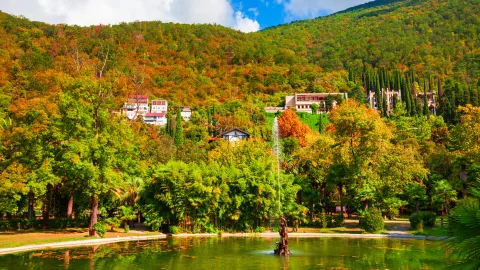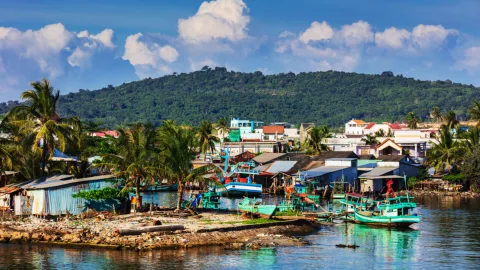
The sea is warmer than in June, the beaches are far quieter than in August, and prices are lower than both. If you're not tied to the school calendar, September isn't a consolation prize—it's a deliberate choice that outperforms peak summer in almost every way, with one exception: shorter daylight hours.
The velvet season follows a simple law of physics. The sea absorbs heat throughout the summer and releases it gradually, which means that by September the water at most southern resorts is actually warmer than it was at the beginning of summer, even though the air has become noticeably more comfortable.
The oppressive heat fades, humidity eases, but the sea remains wonderfully warm. That combination makes September one of the best months for a beach holiday almost anywhere in southern Europe and beyond.
Russia: Where September Really Shines
Russia's southern resorts often feel better in September than they do at the height of summer. As soon as schools reopen, families head home, the beaches empty almost overnight, and the coastline takes on a far more relaxed atmosphere.
Sochi
The Black Sea remains a pleasant 23–25°C (73–77°F)—warmer than it is in June—while daytime temperatures settle at a comfortable 24–27°C (75–81°F) without August's heavy humidity. Beaches in Khosta, Kudepsta, and along the Imeretinskaya Embankment become noticeably quieter, while warm evenings make outdoor dinners a genuine pleasure rather than a sweaty ordeal.
Local markets brim with figs, persimmons, feijoas, and homemade wine, making September feel like harvest season on the coast. For anyone who has only experienced Sochi in July or August, the city in September comes as a pleasant surprise.
Crimea
The Southern Coast—from Yalta and Alushta to Sudak—is arguably at its best. The sea holds at 22–24°C (72–75°F), daytime temperatures stay around 24–26°C (75–79°F), vineyards are heavy with ripe grapes, and sightseeing becomes enjoyable again. Exploring palaces, mountain trails, and medieval fortresses no longer means battling relentless summer heat.
In 2026, hotels across Crimea continue to offer lower prices than many resorts on Russia's mainland Black Sea coast, making it one of the most affordable destinations for the velvet season.
Anapa and Gelendzhik
September solves one of the biggest complaints about these resorts: the seasonal algae blooms disappear. The sea becomes noticeably clearer while remaining comfortably warm at 22–24°C (72–75°F), and beaches in Dzhemete, Vityazevo, and Divnomorskoye regain the peaceful atmosphere that can be hard to find during peak summer.
Dagestan
Along the Caspian Sea, water temperatures remain at 22–24°C (72–75°F), while the intense 35°C (95°F) summer heat gives way to a much more comfortable 26–28°C (79–82°F). It's an excellent time to explore Derbent and the dramatic Sulak Canyon, when cooler weather and soft golden light make long days of sightseeing especially rewarding.
Abkhazia
Ask locals about the best month to visit, and many will answer September without hesitation. The sea stays at a comfortable 24–25°C (75–77°F), while August's humidity finally disappears.
Fresh figs fill the markets, the beaches around Pitsunda become wonderfully quiet, and even popular attractions such as New Athos can be enjoyed without the crowds.
As an added bonus, guesthouses often reduce their prices by 20–30%.
International Beach Escapes Without Peak-Season Prices
Turkey
September is classic Mediterranean velvet season. The sea remains beautifully warm at 26–28°C (79–82°F), while daytime temperatures settle into a pleasant 28–30°C (82–86°F). Resorts such as Antalya, Kemer, and Alanya continue operating at full capacity, but with noticeably fewer visitors and lower prices than in August.
The Aegean Coast, including Bodrum and Marmaris, offers an even milder climate, with sea temperatures around 24–25°C (75–77°F) and daytime highs of roughly 27°C (81°F). For many travelers, Turkey delivers the best balance of weather, price, and value among overseas beach destinations in September, with package holidays often costing 15–25% less than they do just a few weeks earlier.
Egypt
After enduring months of 40°C (104°F) heat, Egypt finally becomes comfortable again. Daytime temperatures ease to 32–35°C (90–95°F), while the Red Sea reaches its warmest point of the year at 27–28°C (81–82°F).
The second half of September marks the beginning of Egypt's own velvet season, which lasts well into November. It's also one of the finest times for diving, thanks to exceptional underwater visibility and relatively calm conditions.
Montenegro
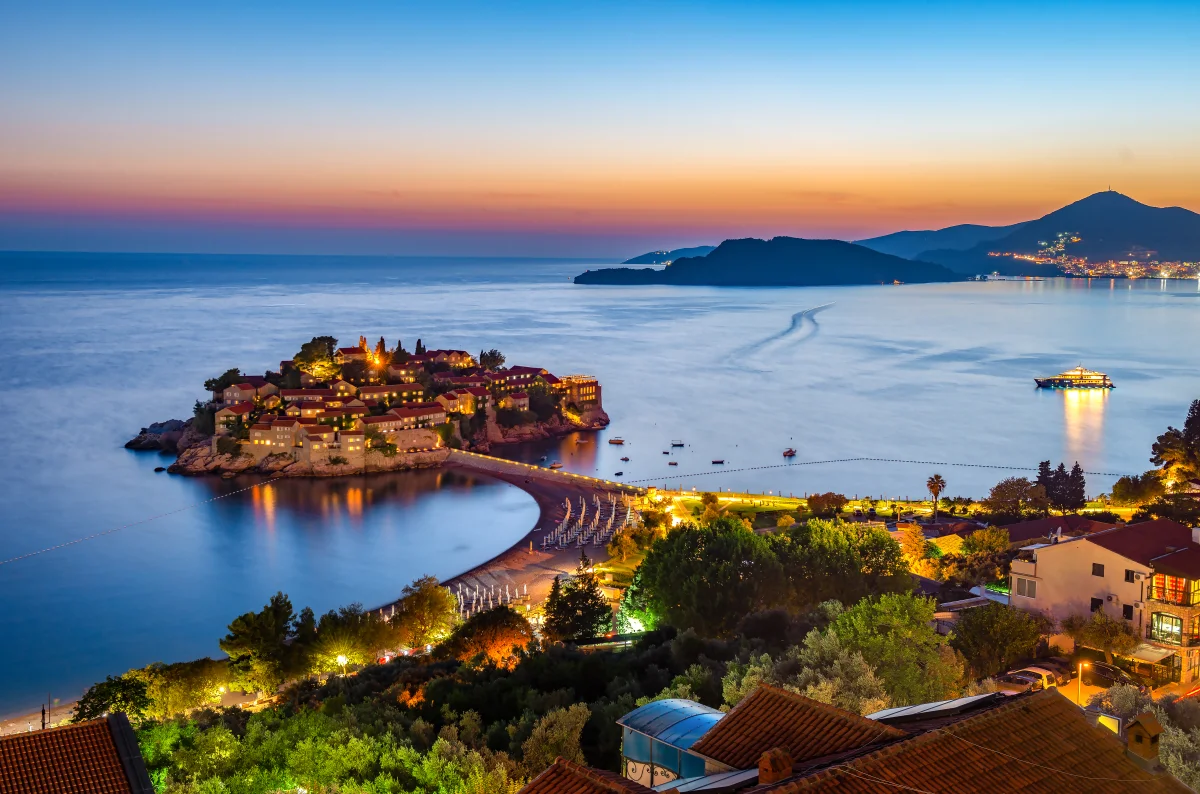
September transforms the Adriatic coast. The sea stays at 24–25°C (75–77°F), daytime temperatures hover around 25–27°C (77–81°F), and Budva finally recovers from the crowds of August. Places like Kotor Bay, Petrovac, and Ulcinj become especially atmospheric, with warm autumn light reflecting off terracotta rooftops and quiet waterfront promenades.
Georgia
In Batumi, the sea remains a comfortable 24–25°C (75–77°F), while daytime temperatures reach 25–27°C (77–81°F). Rain is generally less frequent than in August, and the city's famous mix of seaside relaxation, mountain scenery, excellent cuisine, and wine makes it one of the region's most rewarding September destinations—especially for travelers who value food as much as the beach.
Asia: Where September Works—and Where It Doesn't
September is a transition month across much of Asia. The monsoon has retreated in some regions but remains active in others, so choosing the right destination is more important than during the winter season.
- Bali remains one of the safest choices, enjoying the final stretch of its dry season with sunny weather, temperatures around 28°C (82°F), and warm 27°C (81°F) ocean water. Visitor numbers begin to decline after August, making both beaches and hotels noticeably quieter.
- Vietnam's central coast, particularly Nha Trang and Da Nang, generally stays dry as well, although stronger winds often arrive toward the end of the month, making the first half of September the safer option.
- On Sri Lanka's eastern coast, destinations such as Trincomalee and Pasikuda enjoy the last weeks of their dry season before the northeast monsoon arrives in October.
Not every destination is a good bet, however. Phuket often experiences the final phase of the southwest monsoon, bringing rough seas and frequent storms. Koh Samui begins its rainy season, the Maldives remain in their wetter period, and the Philippines face an elevated risk of typhoons.
Beyond the Beach
September isn't just one of the best months for swimming—it's also among the finest times for cultural and sightseeing trips, combining comfortable temperatures with thinner crowds.
- In Uzbekistan, cities such as Samarkand, Bukhara, and Khiva cool to a pleasant 25–28°C (77–82°F) after the scorching summer, while markets overflow with melons, grapes, and pomegranates.
- In Georgia, temperatures around Tbilisi and Kakheti settle between 22–26°C (72–79°F) just as the famous Rtveli grape harvest begins, making it the perfect season for a wine-focused journey.
- Azerbaijan offers warm weather in Baku, where swimming is still possible, while mountain regions such as Sheki and Gabala begin to display the first colors of autumn.
Farther east, South Korea enters the opening chapter of its celebrated golden autumn. Mountain forests gradually begin changing color, while Seoul enjoys pleasant temperatures of 20–25°C (68–77°F), making September one of the country's most attractive months for first-time visitors.
Japan remains warm at 25–28°C (77–82°F), and although the famous momiji foliage is still a few weeks away, the summer humidity has largely disappeared, offering a much more comfortable travel experience.
Why September Is Better Value Than August
The advantages aren't limited to the weather. Domestic flights are often 20–30% cheaper than in August, while hotels along the Black Sea typically reduce their rates by 15–25% once the peak season ends.
Package holidays to Turkey also become noticeably more affordable—often 15–20% less expensive—despite offering arguably better weather. Restaurants, excursions, and car rentals tend to return to normal pricing as well.
Better still, the sea is generally warmer than it was at the beginning of summer, beaches are significantly quieter, and the softer September sun makes it much easier to achieve an even tan without burning after half an hour on the sand.
A Few Things to Keep in Mind
September isn't perfect everywhere. Weather becomes slightly less predictable than during the height of summer, and by the end of the month the Black Sea can experience its first autumn storms—usually brief but occasionally powerful. Rain also becomes more frequent in Batumi and Abkhazia, while Turkey tends to remain the most reliable choice.
The days are noticeably shorter, too. In Sochi, sunset comes about 90 minutes earlier than it does in July, meaning evening walks along the waterfront begin—and end—a little sooner.
By late September, some seasonal cafés, attractions, and boat tours also begin scaling back their operations, although this is usually only noticeable during the second half of the month.
Which Type of September Holiday Is Right for You?
If your priority is a beach holiday without oppressive heat, Sochi, Crimea, Turkey's Mediterranean coast, and Abkhazia are among the strongest choices. Travelers looking to combine beaches with sightseeing should consider Georgia, Montenegro, or Azerbaijan, where warm seas are paired with ideal conditions for exploring historic towns and mountain landscapes.
For those interested primarily in culture and history, Uzbekistan, South Korea, and Japan are outstanding September destinations.
Budget-conscious travelers will find some of the season's lowest prices in Crimea, Abkhazia, and during the second half of September, while anyone seeking dependable sunshine on a long-haul trip will find Bali approaching the end—but still within—the reliable dry season.
If you had to choose just one destination, however, it would be difficult to look beyond Sochi or Turkey. Both arguably offer a better experience in September than they do during the height of summer: the sea is warmer than in June, the air is cooler than in August, and the beaches are finally yours to enjoy.
The velvet season isn't simply for travelers who missed summer. It's summer at its very best.