Russian autumn is one of those phenomena worth taking time off for — in September or October, not July. Golden forest on the shores of Baikal, crimson slopes of Altai, grape harvest in Crimea, empty promenades in St. Petersburg — all of it accessible only during the few weeks when summer has left and winter hasn't yet arrived.
Autumn tourism in Russia was long considered a "consolation prize" — for those who missed their chance in summer. In recent years, that's changed: prices are lower, crowds are gone, and nature is at its most beautiful. For some destinations, autumn isn't a compromise — it's the best season.
Altai: World-Class Golden Autumn
If you're picking one place for an autumn trip across Russia, make it Altai. September and the first half of October turn the mountain valleys into a canvas that rivals Canada or New England: golden larches, crimson birches, emerald conifers — all set against snow-capped peaks.
The Chulyshman Valley in September is one of the most photographed spots in the country: the switchbacks of the Katu-Yaryk Pass, the turquoise Katun River, yellow larch forests, and the first snow on the summits.
The Multinsky and Karakol lakes, the Chemal Highway, the Aktru gorge — every turn in the road reveals a new palette.
The weather is unpredictable, and that's part of Altai's character. Daytime: +10–18°C; nighttime: down to 0°C, with frost possible. A warm jacket, waterproof shoes, and thermal underwear are essential. By September, mosquitoes are gone — a significant advantage over summer.
Getting there: via Gorno-Altaysk (direct flights from Moscow) or Barnaul. Mountain lodges operate, but some close by October — book ahead.
Karelia: Forests, Lakes, and Silence
Karelian autumn is for those who value peace. In September, forests along Ladoga and Onego turn gold, and tourist flow drops to a minimum. Kizhi in the autumn light, free of summer crowds, looks the way its builders intended — in silence, against a silvery lake.
Ruskeala, a mountain park with marble canyons, is just as striking in autumn as summer: the lighting still works, boat rides too, and the foliage on the cliffs adds extra color. In the evening, illumination switches on, turning the canyon into a fairytale world — without the summer crush.
Mushrooms and berries are a separate reason to visit Karelia in autumn. Porcini, birch boletes, aspen boletes, lingonberries, cranberries — the forest gives generously. Weather runs +8–15°C in September, rain is possible, but between showers come the clear, golden days everyone comes for.
Sochi and the Black Sea: Velvet Season
September Sochi is a different city from its August self. The crowds have left, the heat has eased, and the sea still holds its summer warmth: +23–25°C. Air at +24–27°C, evenings warm without the mugginess.
The promenade is spacious, loungers are free, and the market fills with figs, persimmons, feijoa, and homemade wine. For anyone who's only seen Sochi in July and remembers the crowds, sweat, and sunburned shoulders, September reveals the city's unexpected side.
Crimea in September–October follows the same story: sea at +22–24°C, Yalta and Sevastopol crowd-free, vineyards and wine tastings. October Crimea is already cooler, swimming an acquired taste, but for touring the palaces of the Southern Coast, it's ideal temperature.
Caucasus Mineral Waters: Autumn Without the Rush
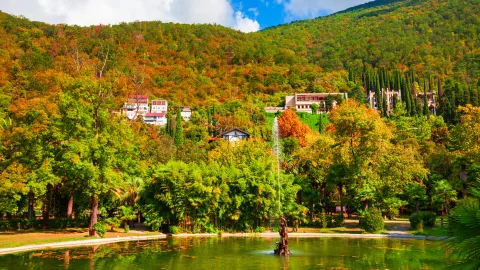
Kislovodsk, Pyatigorsk, Yessentuki, Zheleznovodsk — four cities transformed in autumn. Kislovodsk National Park — the second largest in Europe — turns into a palette in October that's hard to look away from: golden maples, crimson oaks, evergreen conifers.
Weather runs +12–18°C in September, +8–14°C in October. For terrenkur walks (medicinal walking trails) and strolls, it's more comfortable than summer — no heat, no exhaustion. Mineral springs, sanatorium stays, and mountain air — a format that works year-round, but autumn adds a bonus of color.
The Golden Ring: When the Towns Look Their Best
Suzdal, Plyos, Rostov Veliky, Yaroslavl — a route most people drive through in summer, missing half the experience. Autumn adds what summer can't: golden canopies over whitestone churches, morning fog over the Volga in Plyos, empty Suzdal lanes with a handful of tourists in September instead of hundreds.
Plyos is the Golden Ring's autumn jewel. A town on the Volga made famous by Levitan — this is exactly where he painted "Golden Autumn" and "Above Eternal Peace."
The landscapes haven't changed since: the same hills, the same river, the same golden birches. The difference is tourist numbers: in autumn, Plyos belongs to you.
From Moscow to any Golden Ring town is a 2–4 hour drive — the perfect weekend format.
Baikal: September Clarity
September Baikal is for those who've already visited in summer and want to see a different lake. The mosquitoes are gone, tourists have dispersed, and the air turns so clear that the far shore, 40 kilometers away, is visible as if within arm's reach.
Swimming is off the table — water at +12–14°C. But you can wander the shore in solitude, photograph mountain reflections in the water, or ride the Circum-Baikal Railway without fighting for tickets. The taiga around it turns gold and crimson, and Olkhon in September light looks as though someone cranked up the saturation in a photo editor.
By October, the weather deteriorates: wind, cold, gray skies. The prime window is the first three weeks of September.
Kamchatka: Two Months of Fire
Kamchatka's autumn deserves a separate mention, though we've covered it before. In September, the tundra and volcano slopes turn into a carpet of crimson, maroon, and gold. There's more color here than anywhere else in Russia: blueberries, lingonberries, dwarf birch, rowan — every bush blazes its own shade.
Bears are still on the rivers, helicopters are still flying, and prices sit 25–30% below summer. The key is making it before mid-September — after that come the winds, the rain, and the season closes.
When Golden Autumn Arrives — Region by Region
The golden season moves across the country from north to south and east to west, occupying each region for two to three weeks:
- Kamchatka, Yakutia — late August through mid-September
- Karelia, Murmansk — mid-September through early October
- Baikal, Altai — mid-September through early October
- Golden Ring, Moscow region — late September through mid-October
- St. Petersburg, Leningrad region — early through late October
- Caucasus, Mineral Waters — October through early November
- Crimea, Sochi — late October through November
Catching peak color is a matter of timing. Arrive a week early, and you'll see green with the first yellow patches. A week late, and you'll get bare branches and mud. The ideal window is 10–15 days per region — worth tracking through social media photos and foliage forecasts.
Why Autumn Beats Summer on Value
Savings aren't the main reason to travel in autumn, but they're a nice bonus:
- Airfare — 20–40% cheaper than summer.
- Hotels — 15–30% below peak prices.
- Excursions — the same, minus the lines.
- Roads — freer, parking easier, lodges quieter.
The one thing you "pay" for is shorter days and unpredictable weather. But a good jacket and an umbrella solve both problems — and golden forest against a leaden sky is one of the most powerful landscapes Russia has to offer.