It is no surprise that animals such as mice, squirrels, and rabbits quickly adapt to life in the city. After all, on streets full of shops and eateries, it is easier for them to find food. Far more interesting is how wild animals you would scarcely even imagine in city alleyways live side by side with people.
Raccoons

Among all the wild animals that live in cities, raccoons have just about the worst reputation. The thing is that they carry various diseases, including rabies. On top of that, raccoons are quite aggressive: they often get into conflicts with cats and dogs. These animals adapt easily to life in the urban environment. It is all because they have a highly developed sense of touch. They are also rather stubborn: after several attempts raccoons can pick locks, they climb into the attics of residential buildings, and they are ready to overcome any obstacle in their path in search of food.
Foxes

These animals are most often found in the cities of England. Foxes cannot tolerate city noise, so they most often live in the suburbs, although you can still come across them in urban slums. To survive, they dig burrows where they raise their cubs or hide themselves. Usually their «dens» are located among tree roots, in bushes, or on railway embankments. Foxes visit these burrows throughout the year, so in summer the animals can be seen lying next to their shelter. Not all that often, but these animals do nonetheless stroll along city streets. If a fox passes by, you should stop and avoid sudden movements. Foxes usually do not attack people and will even let themselves be petted, but you must not forget to be careful.
Macaques

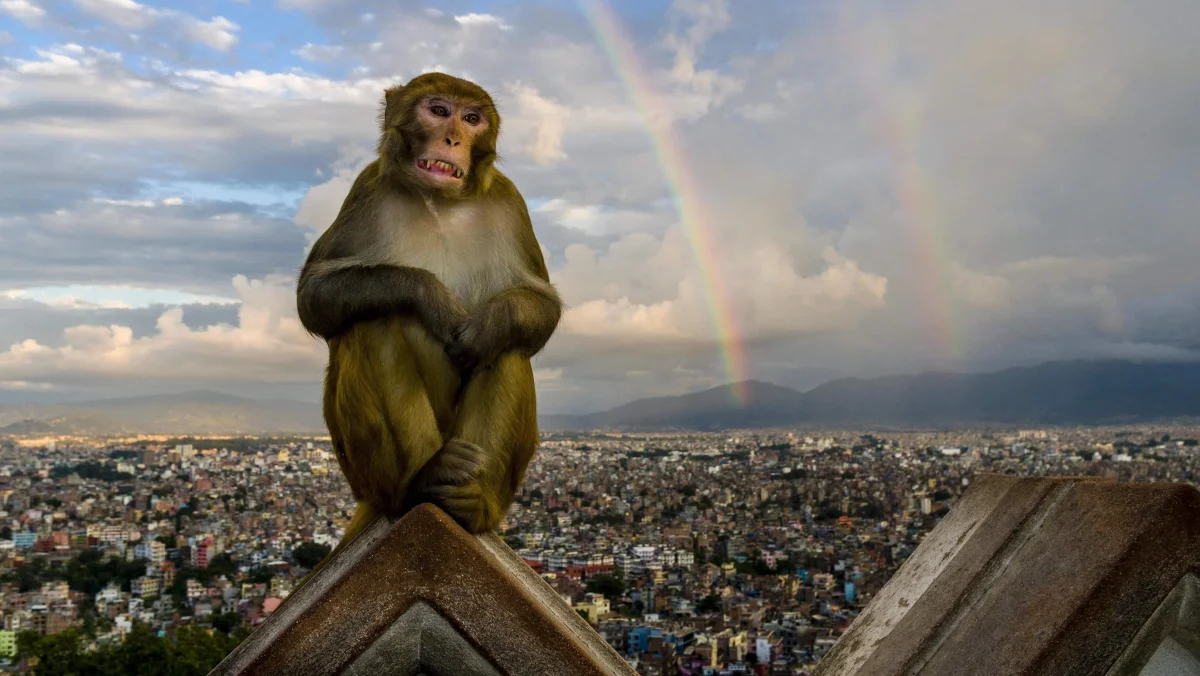
Sometimes in the cities of Africa and Asia you can come across macaques frolicking in the urban jungle. In search of new sources of food, they raid farms, beg for food, and steal provisions even from businesses. Urban areas offer monkeys easy access to shelter, food, water, and tall trees – their routes run along telephone and power lines. The monkeys hang around train stations, beg at roadsides, and rummage through trash cans. Unlike many other animals that live in cities, monkeys are almost unafraid of people. As a result, the main conflicts between humans and primates often arise because the animals bite people and steal their food and belongings.
Pumas

Los Angeles is one of the cities within whose limits many carnivorous animals live. There is a healthy population of mountain lions (another name for the puma) here. The animals are active mainly at night, prowling along city streets. For the most part pumas hide from people, so it is very rarely possible to photograph them. Some mountain lions have been spotted in the suburbs of Los Angeles, some — in the famous Hollywood Hills, and some — on the streets themselves. It is known that on several occasions pumas have attacked small dogs. But the main thing is that over the period of observation, which has been conducted since the beginning of the twentieth century, not a single conflict between a mountain lion and a human has been recorded.
Coyotes

In the most urban districts of Chicago, coyotes live side by side with people. Although the animals are predators, conflicts between people and prairie wolves are rare. Most often coyotes choose domestic animals as their opponents. They live in urban areas, including cemeteries, golf courses, and parks, especially those that most people do not dare to approach. Nevertheless, coyotes bring great benefit to city life. The thing is that their main diet consists of rodents — the main carriers of disease.