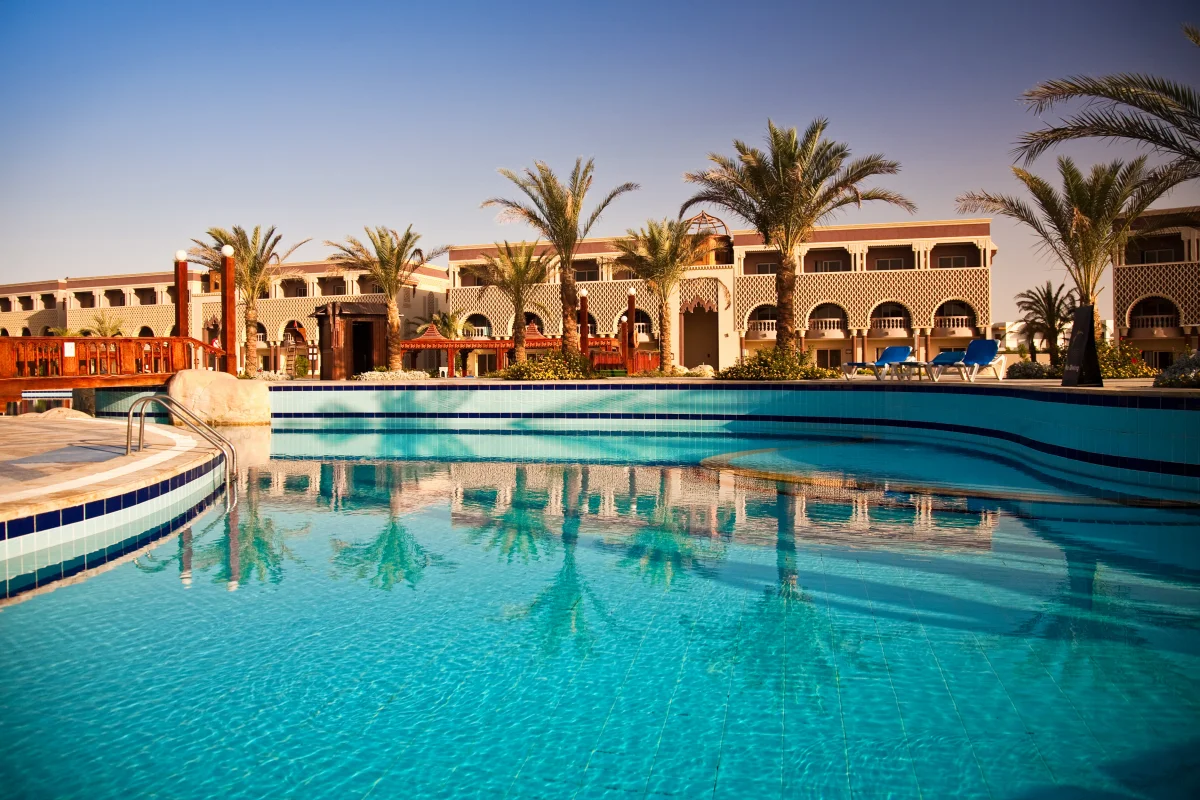
The Red Sea off Sharm el-Sheikh in December: +24°C. The Black Sea off Sochi in July: the same +24°C. One is called winter swimming, the other the height of beach season. The difference exists only in your head.
Egypt is one of the few destinations where beach vacations work twelve months a year. The Red Sea doesn't cool below +20°C even in the coldest weeks. But "you can swim" and "it's comfortable to swim" are different things, and winter Egypt demands the right choice of resort, hotel, and even which side of the bay you're on.
Water Temperature by Winter Month
The Red Sea is deep, warm, and nearly enclosed. It cools slowly and heats up fast. But the gap between resorts in winter is more noticeable than in summer:
December. Sharm el-Sheikh — +24–25°C, Hurghada — +22–23°C. The 2-degree difference comes down to geography: Sharm sits farther south and in sheltered bays where the water retains heat better. December is the last genuinely warm month: swimming is comfortable from 10 a.m. to 4 p.m.
January. The annual minimum. Sharm — +21–22°C, Hurghada — +20–21°C. For most people, this is the lower threshold of comfort. Swimming is possible, but stepping out of the water into the wind feels bracing — especially in Hurghada, where the coastline is exposed.
February. The first half mirrors January. By the second, the water starts warming: Sharm — +22–23°C, Hurghada — +21–22°C. Many consider late February the optimal time for a winter trip: prices haven't risen yet, and the weather already feels almost spring-like.
Comparing With the Black Sea by Degrees
Taking July temperatures at Black Sea resorts as the benchmark:
- Sochi, July — +24–26°C.
- Anapa, July — +24–25°C.
- Yalta, July — +23–24°C.
The Red Sea matches or exceeds these values for most of the winter. December in Sharm (+24–25°C) sits right at Black Sea July levels. Even January (+21–22°C) is warmer than the Black Sea in June (+19–22°C), when Russians are already opening their swimming season en masse.
The only weeks when the Red Sea dips slightly below a Black Sea summer are mid-January through early February in Hurghada. Even then, the gap is two or three degrees — not a chasm.
Why It Feels Different Than the Numbers Suggest
On paper, +22°C in the sea is the same whether you're in Sochi or Hurghada. In practice — it's not.
- Air Temperature
On the Black Sea in July: +28–30°C. In Hurghada in January: +20–22°C during the day and +12–14°C at night. After swimming in +22°C air with wind, the sensation is anything but summery. Sharm runs 2–3 degrees warmer with lighter wind, but without a jacket in the evening it still feels chilly.
- Wind
The primary factor separating winter comfort across Egyptian resorts. Hurghada sits on an open shore — January winds blow at 6–10 m/s, sometimes carrying sand. Sharm is shielded by the Sinai mountains and feels 3–5 degrees warmer at the same temperature.
- Sunshine
A winter day in Egypt delivers 9–10 hours of sun. In Moscow in January: 1–2. Even at +20°C, bright sunshine compensates for cool air, and in a wind-sheltered spot on a lounger, sunbathing is entirely doable.
Where It's Most Comfortable in Winter
Not all Egyptian resorts are equally suited for winter swimming. The differences between them in winter are far more pronounced than in summer:
Sharm el-Sheikh. The best choice for winter. Mountains block the wind, and bays warm up better than open coastline. Water runs 2–3 degrees warmer than in Hurghada.
Coral reefs start right at the shore — snorkeling works year-round.
Dahab. Even farther south than Sharm, with water slightly warmer — up to +23–24°C in December. But Dahab means wind: the town is known as a windsurfing capital, and in winter the gusts are real. Not ideal for lounging on the beach; excellent for kiting and diving.
Marsa Alam. The southernmost accessible resort, with winter water at +22–24°C. Less wind than Hurghada, pristine reefs, and few tourists. The downside: more modest infrastructure, and the transfer from the airport can take up to two hours.
Hurghada. In winter it loses to Sharm on feel: open shore, wind, sand in your face. But prices are lower, and with the right hotel — one in a sheltered bay or with a heated pool — it's a perfectly workable option.
El Gouna. "Egypt's Venice" — a resort on artificial islands near Hurghada. Its protected lagoons warm up better, and the wind feels weaker.
More comfortable than central Hurghada in winter, but pricier.
How to Prepare for Winter Swimming
Winter Egypt is a "swimming plus" format, not a pure beach vacation. A few rules that make the trip more comfortable:
- Choose a hotel with a heated pool. In January–February, this isn't a luxury — it's insurance against windy days when the sea is uncomfortable.
- Pack warm clothes. Daytime: T-shirt and shorts. Evening: jeans, a sweater, closed shoes. The gap between day and night temperatures can reach 10 degrees.
- Swim in the first half of the day. From 10 a.m. to 2 p.m. the sun is at its peak and the wind hasn't picked up yet. After 4 p.m. it's already cool, and getting out of the water is unpleasant.
- Choose bays, not open shore. In Sharm: Naama Bay, Ras Um El Sid. In Hurghada: hotels with enclosed lagoons.
Is Egypt Worth Visiting in Winter?
If your expectations are calibrated correctly — yes. Winter Egypt won't replicate summer Sochi by feel: you won't be able to lie on the beach in a swimsuit all day. But swimming at +22–24°C, sunbathing on a lounger, snorkeling over coral reefs — absolutely. The rest of the time: excursions to Luxor and the pyramids, evening strolls along the waterfront, dinners with a sea view.
And for anyone staring out a Moscow window in January at –15°C and gray sky, even +20°C and sunshine is an entirely different reality.