In 2021, the Gulf of Finland near St. Petersburg warmed to +26°C — Black Sea levels in July. In 2023, on the same dates, it was +15°C. An 11-degree swing in two years is perfectly normal for a body of water where warm swimming depends not so much on the calendar as on wind, currents, and sheer luck.
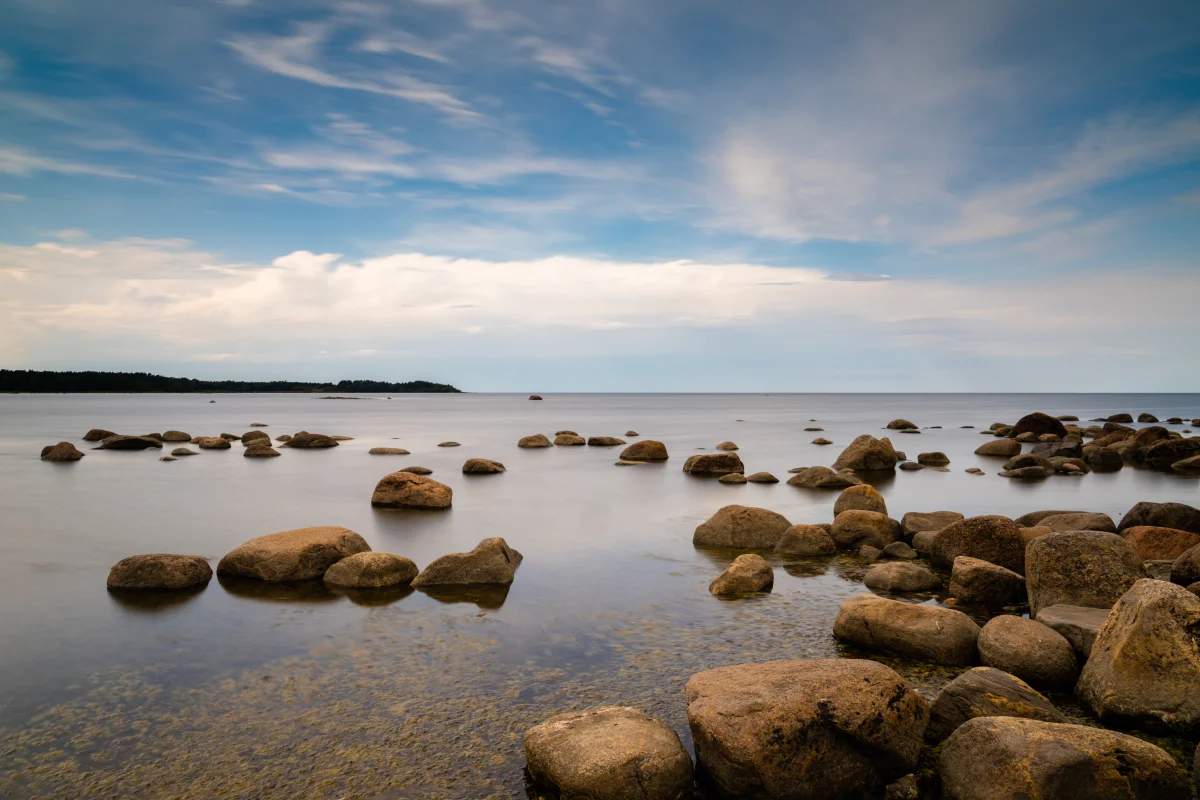
The Gulf of Finland is the easternmost arm of the Baltic Sea — shallow and nearly fresh due to the Neva River's outflow. The depth at most beaches stays under a meter for tens of meters from shore. You'd think shallows like that would heat up fast. They do — but they cool down just as quickly.
When the Water Becomes Swimmable
The gulf sheds its ice in April, but swimming before summer is out of the question — the water is +4–8°C. By late May, it warms to +10–12°C; in June, to +14–17°C. Most St. Petersburgers won't get in until the temperature hits +18–20°C — typically late June to early July.
Peak warmth falls in late July through early August: +20–22°C on average, reaching +24°C in the shallowest bays. But averages are deceptive: on any given day, the actual temperature can swing 5–7 degrees in either direction.
By mid-August, the gulf starts cooling; by September it's back to +14–16°C. The swimming season lasts anywhere from four to seven weeks, depending on the summer.
Why the Water Is So Unpredictable
The primary factor is wind. The Gulf of Finland is shallow and exposed, and wind can churn the water column in a matter of hours. A westerly wind pushes cold Baltic water in, sweeping away the warm surface layer that took a week to build. An easterly wind does the opposite, trapping warm water against the St. Petersburg shoreline.
The result: +22°C at the beach in the morning, +14°C by evening after the wind shifts. Locals know this quirk well and check the water temperature before every trip to the beach — yesterday's reading guarantees nothing.
The second factor is Neva River discharge. The river pours enormous volumes of cold, fresh, sediment-laden water into the gulf. After heavy rains, the water at St. Petersburg's beaches can turn murky and drop in temperature within 24 hours.
Where the Water Is Warmest
Shallow areas heat up fastest, and your best odds of warm water lie in the southern part of the gulf, where nearshore depth is minimal:
- Kurortny District (Sestroretsk, Zelenogorsk, Repino) — the northern shore. Beaches are sandy and wide. The water warms up reasonably well, but wind off the gulf blows the warm layer away more often than on the south side.
- Peterhof, Strelna, Lomonosov — the southern shore. Even shallower, even faster to warm. But water quality is worse — proximity to the port and industrial discharge.
- Kronstadt and the dam — water is cleaner than in the Neva Bay, but there are fewer accessible equipped beaches.
- Lisy Nos, Olgino — close to the city, shallow, warms well. Sandy bottom, but Rospotrebnadzor regularly advises against swimming here due to water quality.
Can You Swim at All?
This is the real catch. Most beaches on the Gulf of Finland within St. Petersburg's city limits are not recommended by Rospotrebnadzor for swimming. The reasons: bacterial contamination, proximity to sewage outflows, and remnants of military equipment on the seabed. Each season the agency publishes a list of approved sites — and it's usually short.
In 2026, among the few approved spots are Lake Bezymyannoye in the Krasnoselsky district (technically not the gulf, but the nearest body of water to the city with consistently clean water) and select sections in the Kurortny District. Before heading out, it's worth checking the current list on the Rospotrebnadzor website.
Outside the city, the situation is better. Beaches in Leningrad Oblast — Komarovo, Zelenogorsk, Repino — are cleaner and more spacious. But even here, water quality is tested seasonally, and recommendations can change.
Alternatives to the Gulf
St. Petersburgers, tired of the gulf's lottery, long ago discovered the lakes of the Karelian Isthmus. They warm up faster, the water is cleaner, and there's less wind:
- Lake Razliv — the nearest large lake to the city. Shallow, warm, with sandy beaches. Up to +24°C in July.
- Lake Vuoksa — more scenic but farther out. The water is cooler, but crystal clear.
- Lakes Lembolovskoye and Kavgolovskoye — popular with residents of the northern districts. Warm to +22–23°C.
How Not to Get It Wrong
The Gulf of Finland doesn't let you plan a beach day a week ahead. The only working strategy is to check the water temperature in the morning and go if you're lucky. Online services update data daily, and the difference between a sheltered shallow bay and the open gulf on the same day can be 4–6 degrees.
And it's worth accepting as fact: the Gulf of Finland is not the Black Sea. There are no stable weeks of +25°C here. But there are days when the shallows warm to +22°C, the wind drops, the sand is hot, and the silhouette of Kronstadt sits on the horizon.
On days like those, St. Petersburgers drop everything and head for the beach — because tomorrow the wind could shift, and the water will be ice-cold again.