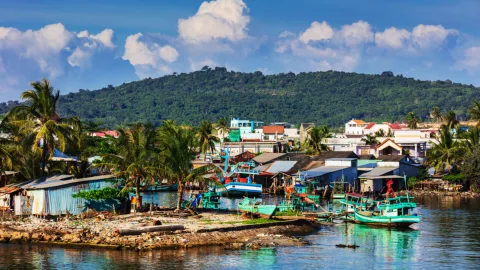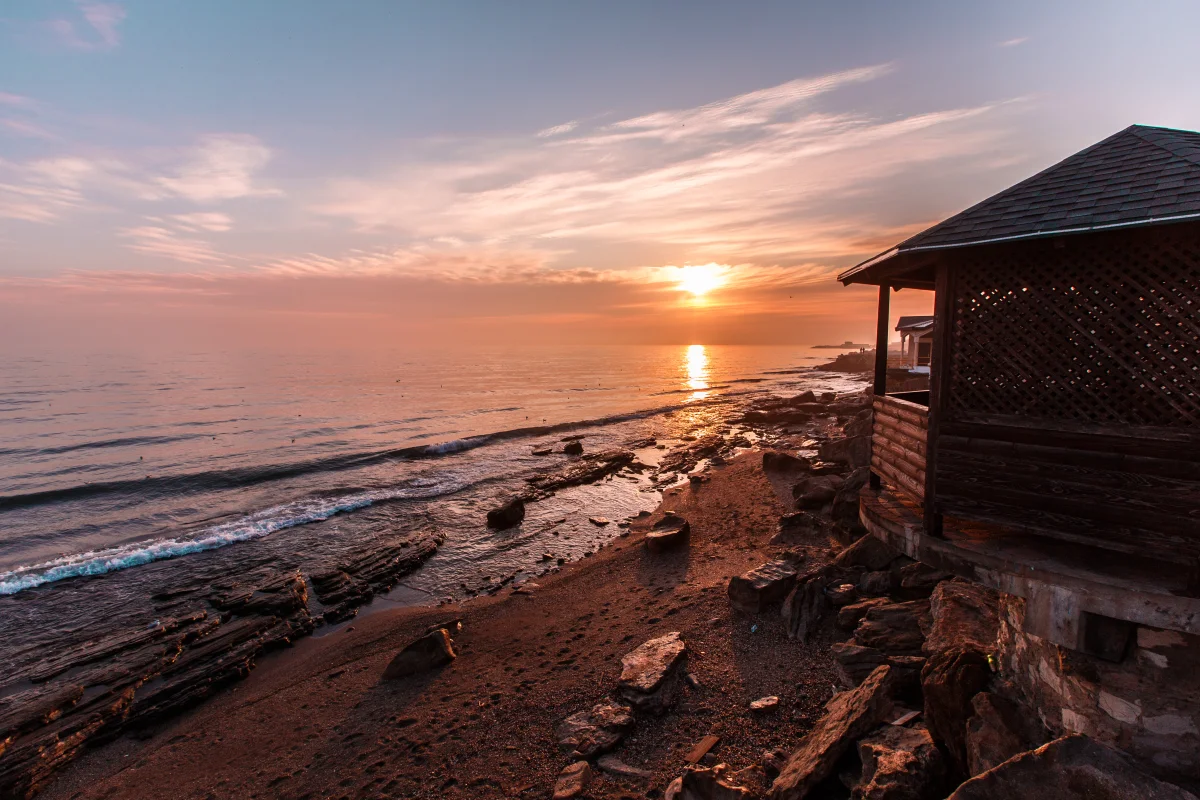
The Caspian Sea is the largest enclosed body of water on the planet, and swimming in it is every bit as good as the Black Sea. Water warms to +26°C, beaches are sandy, and the entry is gentle. But of the three Russian regions with Caspian coastline, only one is actually comfortable for swimming.
Technically, the Caspian isn't a sea at all — it's a lake: it has no outlet to the ocean, and its water level sits 28 meters below the World Ocean. But by area, it's larger than Germany, and storm waves reach several meters. For anyone coming for the beach, terminology doesn't matter — what counts is temperature, water quality, and infrastructure.
Three Stretches of Russian Coastline
Russia's Caspian coast runs 695 kilometers, divided among three regions: Dagestan, Kalmykia, and Astrakhan Oblast. The differences between them are fundamental.
Dagestan is the only region with fully developed beach infrastructure. The coastline stretches 530 kilometers, from Kizlyar Bay in the north to the Azerbaijani border in the south. Sandy beaches, gentle slope into the water, warm sea, and a growing network of hotels and guesthouses. This is where people come for a Caspian beach vacation.
Kalmykia — 108 kilometers of shore, but beach tourism here is virtually nonexistent. The coastline is desolate, barren, with no infrastructure. The water is shallow, the bottom silty, and access roads are scarce. Kalmykia's Caspian is territory for fishermen and wildlife enthusiasts, not vacationers.
Astrakhan Oblast — the Volga Delta, the largest river delta in Europe. From Astrakhan to the open sea is roughly 100 kilometers through channels. Swimming here means swimming in the river, not the sea. The water is murky, the current strong, and depths unpredictable. People come for the fishing, the lotus fields, and Caspian cuisine — but not for the beach.
The Dagestan Coast: Where Exactly to Swim
Dagestan is a large region, and the coastline is far from uniform. Water quality, beach convenience, and infrastructure vary from town to town.
- Izberbash
One of the cleanest stretches of coast. Wide sandy beaches, clear water, a gentle slope — waist-deep for tens of meters from shore. Excellent for families with children. Nearby is Pushkin-Tau, a mountain with the poet's profile visible on the rock face. Infrastructure is developing, but it's still a long way from Sochi levels.
- Derbent
Russia's most ancient city, with the Naryn-Kala fortress — and a decent beach coastline right next to it. Clean water, sandy beaches. The main advantage: combining swimming with excursions through a city that's two thousand years old.
- Makhachkala
Dagestan's capital, with the most developed beaches: equipped zones, cafés, and rescue services. But water quality is worse than farther south — the proximity of the port and city discharge takes its toll.
The best sections are south of the center, near the settlement of Turali.
- Kaspiysk
A satellite city of Makhachkala with a long promenade and sandy beaches. Water is cleaner than downtown Makhachkala, and the infrastructure is decent. In recent years, the city has been actively upgraded.
- Manas
A settlement with a sanatorium complex on the shore. Quiet, uncrowded, clean water. Suits anyone looking for a peaceful getaway without urban noise.
When to Swim in the Caspian
Swimming season on Dagestan's coast runs from June through September — roughly four months.
- June. Water warms to +20–22°C. Swimmable, but bracing. Air at +25–28°C, sunny, few tourists. A good window for those who dislike crowds and extreme heat.
- July–August. Peak season. Water +24–26°C, air +30–33°C. Hot, sunny, almost no rain. Beaches are loaded, prices at their maximum. Those who handle intense heat poorly should opt for June or September.
- September. Velvet season. Water still +22–24°C, air +24–27°C. The heat eases, tourist numbers drop, prices fall. Many consider September the best month on the Dagestan Caspian.
How the Caspian Differs From the Black Sea
The comparison is inevitable — both seas are accessible to Russian tourists, both are warm, both are in the south. But the differences are significant.
- Salinity
The Caspian is three times less salty than the Black Sea — roughly 13‰ versus 18‰. That's gentler on skin and eyes, but the water provides less buoyancy — you need to swim more actively.
- Nearshore Depth
The northern Caspian is one of the shallowest seas in the world. Off Dagestan's beaches, depth increases very slowly — you need to walk tens of meters before the water reaches your chest. Ideal for children; a bit dull for those who like to swim in deep water.
- Infrastructure
Black Sea resorts have decades of development behind them — hundreds of hotels, promenades, water parks. Dagestan's coast is still in its growth phase. Hotels are appearing, beaches are being equipped, but the service is simpler for now.
If you're looking for all-inclusive packages and animation — this isn't the place.
- Prices
The Caspian is noticeably cheaper than the Black Sea. Accommodation from 1,500–2,000 rubles per night, lunch at a café from 300 rubles, excursions from 1,000 rubles. For a budget beach vacation in Russia, Dagestan is currently one of the best deals available.
What Else Is Worth Knowing
Currents. The Caspian lacks the strong nearshore currents typical of the Black Sea. Swimming is safer, but you still shouldn't let your guard down — stick to equipped beaches.
Jellyfish. There are none in the Caspian Sea — the salinity is too low for them. For anyone who's tangled with Black Sea rhizostomes, that's a welcome bonus.
Water level. The Caspian is shrinking — over recent decades, the water level has dropped by several meters. This is reshaping the coastline and exposing new stretches of seabed.
It doesn't affect swimming quality yet, but in the long term it's a serious ecological concern.
Cuisine. After the beach — khinkal, chudu, kurze, fresh Caspian fish. Dagestan's cuisine is a standalone reason to visit the Caspian, and many tourists admit the food is just as memorable as the sea.