The short answer is yes, but only in the south. Vietnam stretches 1,650 km from north to south, and while Hanoi bundles up in jackets at +15°C, the island of Phu Quoc is sunbathing at +31°C and wading into water warmed to +27°C.
For Russian tourists, Vietnam is almost always a winter destination. The flight is long (9–10 hours), no visa is needed (up to 45 days), prices run below Thailand's, and the cuisine ranks among Asia's best. But when people hear "Vietnam in winter," most picture Nha Trang — and that's a trap. Nha Trang sits on the central coast, and precisely in winter it gets windy, choppy, and raw.
People buy a tour expecting "a warm resort" and get a storming sea with waves up to 3 meters and a sky choked in cloud. To avoid that mistake, you need to understand Vietnam's climate geography — simpler than it looks.
Three Vietnams: North, Center, South
Climatically, the country splits into three zones, and in winter they live in entirely different realities.
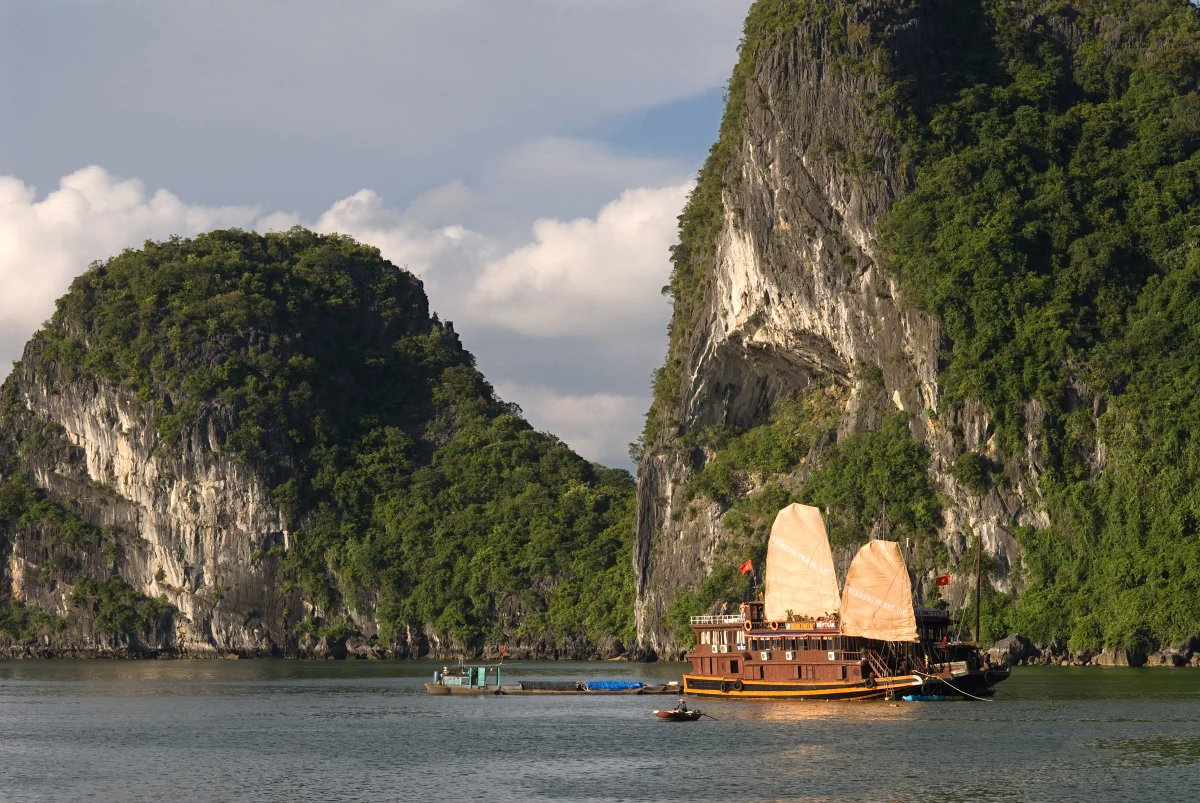
The North (Hanoi, Ha Long, Sapa) — subtropical climate with a distinct winter. December–February: air at +14–20°C, water in Ha Long Bay at +18–20°C. Damp, overcast, with frost possible in the Sapa highlands. Swimming — no. Visiting — yes, but for sightseeing, not the beach.
The Center (Da Nang, Hoi An, Nha Trang, Hue) — a transitional zone. Winter here means rainy, windy season. The northeast monsoon brings precipitation, waves, and gray skies. In Da Nang, December–January are the coldest months: air at +20–24°C, water at +22–23°C, but swimming is hindered by storms, not temperature. Nha Trang is a touch warmer, but the picture is the same: waves, wind, murky water. High season in the center begins in February–March and runs through August.
The South (Phu Quoc, Phan Thiet/Mui Ne, Ho Chi Minh City, Vung Tau, Con Dao) — tropical climate. Winter is the dry season: sunny, hot, almost no rain. Air at +28–33°C, water at +25–28°C. This is exactly where to fly for a winter beach.
Phu Quoc: The Prime Winter Resort
Phu Quoc Island is Vietnam's southernmost resort, located in the Gulf of Thailand near the Cambodian border. In winter, it has unambiguously the best weather in the entire country.
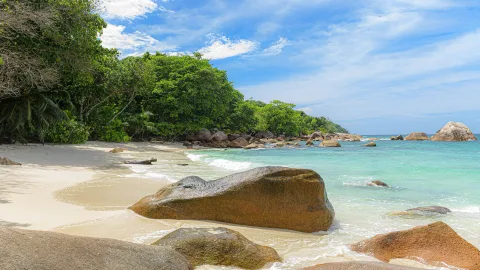
December–March: air at +30–31°C, water at +25–27°C, rainfall just 1–2 days a month. The sea is calm, wave-free, underwater visibility up to 15 meters. Gentle entry, white sand, palm trees — a postcard image that matches reality in winter.
Long Beach (Bai Dai) is the island's main and longest stretch — 20 km of sand along the west coast. Sunsets here are their own genre: the sun sets directly into the sea.
Snorkeling and diving are at their best in winter. The coral reefs around the An Thoi archipelago (Phu Quoc's southern tip) offer dozens of dive sites with turtles, rays, and moray eels. Winter visibility is at its peak.
Infrastructure on Phu Quoc has grown to Thai resort standards in recent years: VinWonders (an entertainment park with a water park and zoo), the night market in Duong Dong with seafood, and the cable car to Hon Thom Island — the longest overwater cable car in the world (7.9 km).
Phu Quoc is an island, and at the height of winter season (late December–January), hotels fill to 85–90%. Winter prices run 1.5–2 times higher than summer. Book 2–3 months ahead.
Mui Ne and Phan Thiet: Wind, Sun, and Surfing
Two neighboring resorts on the South China Sea coast, 200 km east of Ho Chi Minh City. Winter means dry season: air at +27–31°C, water at +24–26°C, almost no rain.
But there's a catch: wind. Mui Ne is one of Southeast Asia's best kite- and windsurf spots.
From November through March, a steady northeasterly wind kicks up waves and creates perfect conditions for a board — but not for peaceful beach lounging. Certain beach stretches make swimming difficult due to waves and undertow.
For calm swimming, choose Phan Thiet (farther south, its bay shielded from wind) or the beaches north of Mui Ne, where waves are weaker.
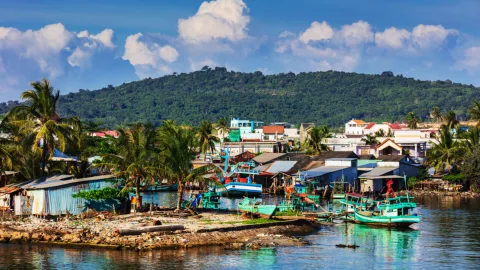
Worth seeing: the Red and White Sand Dunes (photogenic at dawn, half an hour from the resort), Fairy Stream (Martian-like landscapes, walkable barefoot), and the fishing harbor with its round basket boats.
Who it suits: active travelers, water sports enthusiasts, and anyone wanting to combine the beach with excursions to Ho Chi Minh City (3.5 hours by bus) or mountain Dalat (4 hours).
Con Dao: For Those Seeking Silence
The Con Dao archipelago — 16 islands, 230 km south of Ho Chi Minh City. Until recently, one of the hardest places in Vietnam to reach: accessible only by flight from Ho Chi Minh City (45 minutes) or ferry (several hours).
Winter brings +26–30°C, water at +25–27°C, calm seas. Beaches rank among the country's best: white sand, clear water, few people. Con Dao is a national park, so development is restricted, hotels are scarce, and the atmosphere is the complete opposite of Phu Quoc's.
Sea turtles nest here (season: June–September, but the park's information center runs year-round). Snorkeling and diving rank among the best in Vietnam.
Who it suits: couples, silence-seekers, and anyone wanting "authentic" Vietnam without mass tourism. Infrastructure is minimal — don't expect water parks or night markets.
What About Nha Trang?
Nha Trang is Vietnam's most "Russian" resort: Russian-language signs, Russian menus, tours led by Russian guides. That's exactly why many tourists book a winter tour there out of habit — and end up disappointed.
December is Nha Trang's worst month. The northeast monsoon brings rain, wind, and waves up to 2–3 meters. The sea turns murky, swimming becomes dangerous, and red flags go up on the beach. Air temperature runs +24–26°C, water +24°C, but the raw cloud cover and wind create a cold sensation. Reviews report that even hardy Russian tourists switch from shorts back into jackets.
January is a bit better, but the sea remains rough. Stable good weather in Nha Trang begins in February, with the ideal window running March through August.
If your vacation falls in December–January and you want "Russian service," it's better to fly to Phu Quoc, which has also grown Russian-speaking restaurants and excursions in winter — but with far better weather.
Month by Month: Where to Go in the South
December
Dry season begins in the south. Phu Quoc is ideal: +30°C, calm seas, no rain. Mui Ne/Phan Thiet: sunny but windy. Nha Trang: risky, with rain and waves. Con Dao: excellent, if you don't mind the remoteness.
January
The coolest month — but "cool" in southern Vietnam means +28–30°C. Phu Quoc is at peak season, with maximum prices. Mui Ne is at peak wind, a kiter's paradise. Nha Trang remains unreliable, though it eases by month's end.
February
The best winter month for most resorts. The south stays dry and sunny. Nha Trang's weather levels out, the sea calms, and swimming becomes possible. Da Nang and Hoi An are still cool, but storm-free. February is a golden window: weather matches January's, while prices already slide down from the New Year peak.
What to Consider Before Your Trip
Direct flights from Moscow to Vietnam in winter 2025–2026 served Phu Quoc, Ho Chi Minh City, Nha Trang, and Hanoi. Flight time: 9–10 hours. Time difference: +4 hours from Moscow. Jet lag is noticeable — adaptation takes 3–5 days.
Russians don't need a visa for stays up to 45 days. Your passport must remain valid for at least six months past the entry date.
The Vietnamese dong: 1 USD ≈ 25,500 VND (approximate — verify before your trip). Prices in dong look astronomical to Russians, but in practice, Vietnam is one of Asia's most budget-friendly countries.
Pho, banh mi, spring rolls, grilled seafood — Vietnamese food is lighter than Thai (less oil and spice), and stomach issues occur less often here. Still, caution helps in the early days: ice in drinks, unwashed fruit, and questionable-looking street food are standard Asian risks.
The main resort transport is scooters. Traffic in Vietnam is managed chaos — thousands of mopeds moving by their own logic. If you lack experience, start with Phu Quoc's quiet streets, not Ho Chi Minh City.
For anyone choosing between Vietnam and Thailand for winter: Vietnam is cheaper, its cuisine lighter, and its visa regime more relaxed. Thailand offers more polished infrastructure and a wider range of resorts. By winter weather, both destinations work equally well — as long as you pick the right coast.