Kakapo
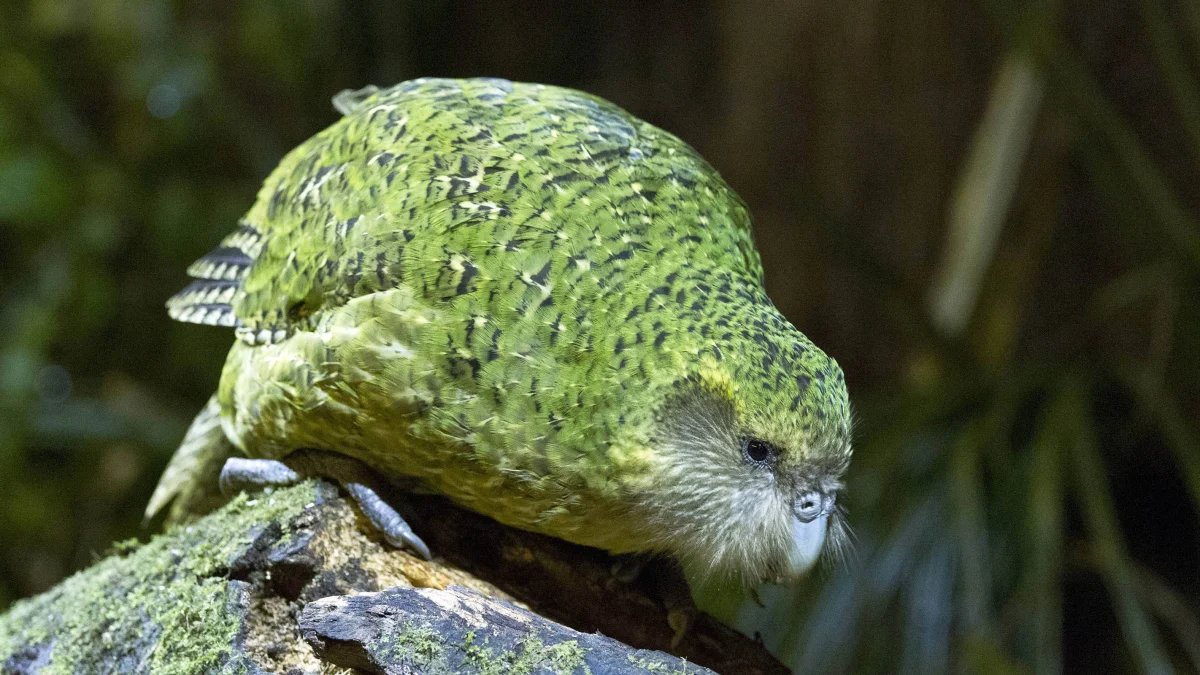
Endemic to New Zealand, the kakapo is the only flightless parrot in the world. Although kakapos cannot fly, they are excellent tree climbers. Sometimes these birds use their wings to glide short distances after leaping from a great height.
Kakapos are nocturnal and feed on grasses, seeds, fruits and tree sap. Because of hunting, deforestation and predator attacks, these parrots are today considered one of the rarest animals on Earth. At present only about 200 individuals remain in the wild, and all of them live in isolated island sanctuaries.
Ostrich
Although they cannot fly, ostriches are considered the fastest runners among birds and other bipedal animals. They can run at more than 70 km/h, covering up to 5 m in a single stride. Ostriches use their wings for balance when running, as well as for courtship displays.
Today only two species of ostrich remain in the wild, both of which live in Africa.

Steamer duck
Steamer ducks got their name from their habit of beating their wings and feet in the water. This behavior makes them look like a steamboat.
All four species of these ducks live in Chile and Argentina. And three of them cannot fly. They live along rocky shores and feed on mollusks, crustaceans, seeds, small fish and insects. Steamer ducks can behave very aggressively and often get into fierce fights with other ducks.
Weka
This flightless bird is native to New Zealand. They live in forests, sand dunes, rocky coastal areas and meadows. Their diet consists mainly of grasses, leaves, seeds and berries. Wekas nest on the ground, and the males and females take turns incubating the eggs.
Emperor penguin
Emperor penguins cannot fly, but they can swim to depths of up to 200 meters below the surface of the sea. While underwater they hunt for food, including crustaceans, krill, fish and squid.
These penguins live only in Antarctica. They make one of the most unique migrations in the world, traveling almost 16 km from the coast inland to breed. Males and females take turns incubating their single egg and feeding their chicks until they can care for themselves.
.jpg)
Galapagos cormorant
Flightless cormorants live on the Galapagos Islands and in some isolated areas of Ecuador. To get around, they rely on their webbed feet and strong legs. The flightless cormorant's diet consists mainly of fish and octopuses, which they catch at sea.
Emu
Native to Australia, the flightless emu is the second-largest bird in the world.
Emus live in savannas and forests and try to avoid arid regions. Thanks to their long, powerful legs, they can run at speeds of up to 45 km per hour.
Emus feed on seeds, grasses, fruits and insects. Unlike most birds, in this species it is the males who take responsibility for building the nest and incubating the eggs.
Kiwi
The kiwi is a symbol of New Zealand. Among birds that cannot fly, the kiwi has some unique features that set it apart from the others. Their wings are so small that they seem barely noticeable beneath their brown-gray feathers. They have a long, sensitive beak that helps them detect prey, and they have no tail.
Kiwis are mostly nocturnal. They feed on a varied diet of small invertebrates and amphibians, worms, insects, fruits and seeds.
Cassowary
The cassowary is another flightless bird. The three living species live in New Guinea, in northern Australia and on the Aru Islands.
.jpg)
Cassowaries have a fearsome reputation – they are also known as the «most dangerous bird in the world». The cassowary earned this title because of its large size, sharp claws and aggressive temperament.
Their small wings end in hard, keratinized quills, similar to porcupine quills but without barbs. Able to run at tremendous speed, cassowaries can also jump great distances and are good swimmers. Most of their diet consists of fruit, as well as small invertebrates, birds, rats and fish.
Takahe
The rare takahe is another flightless bird native to New Zealand. They have bright blue plumage and large orange beaks.
This is one of the rarest birds in the world. They were once even thought to be extinct in the wild. Today their population numbers around 418 individuals.
In summer takahe live in mountain grasslands, and in winter they move down to lower ground. They feed mainly on grasses, shoots and insects.