Every summer, thousands of tourists travel to Dagestan for its warm sea, mountains, and cuisine. And every summer, Rospotrebnadzor once again bans swimming at the city beaches — and people go into the water anyway.
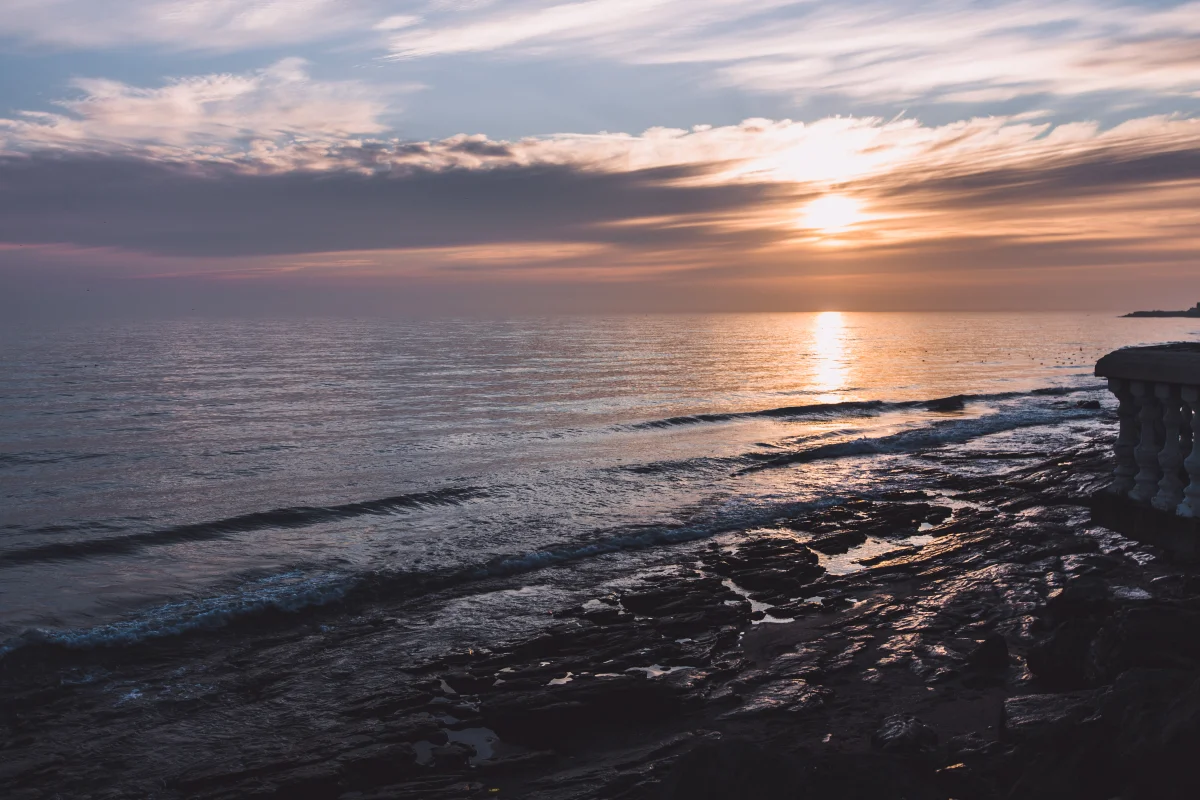
The social media picture looks beautiful: a turquoise Caspian Sea, mountains on the horizon, shashlik on the shore. In practice, a tourist who dives in at one of Makhachkala's city beaches risks coming home not with a tan, but with an intestinal infection. This isn't a new problem — it's been building for years, and in 2026 it's only gotten worse.
What Water Samples Showed in Summer 2026
In late May 2026, Rospotrebnadzor's Dagestan branch took control samples of seawater near the beaches of Makhachkala and Kaspiysk.
The results were predictably poor: coliform bacteria levels exceeded standards by a factor of two, E. coli by 3–7 times, and enterococci by a factor of 20.
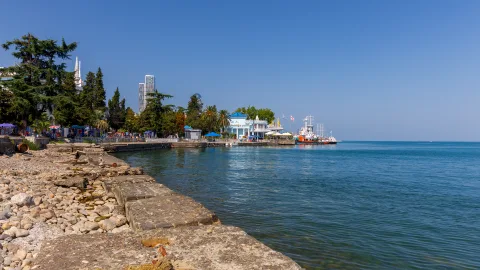
Since June 8, 2026, swimming has been banned at 13 city beaches across Makhachkala and Kaspiysk — including some of the most popular with tourists: Beryozka, Priboy, Dzhami, Chyorniye Kamni, and Oazis. The ban remains in effect "until further notice," with no lifting planned at this time.
Why the Water Contains So Much Bacteria
The cause isn't a seasonal spike or a one-off incident — it's a systemic sewage problem. Most of Makhachkala and Kaspiysk's wastewater flows into the Caspian Sea without treatment or disinfection. The cities' treatment facilities are either overloaded or simply can't keep up with the volume of sewage, which has grown alongside the population and tourist traffic.
According to an investigation by the outlet Kedr.media, Makhachkala and Kaspiysk alone discharge tens of millions of cubic meters of untreated wastewater into the sea every year. Locals have long nicknamed the city rivers flowing into the sea "Vonyaika" — roughly, "Stinky Creek."
Fatima Guseynova, press secretary for Rospotrebnadzor's Dagestan branch, confirms the pattern repeats year after year: microbiological deviations are consistently recorded in Makhachkala's coastal zone, and the risk of contracting an intestinal infection while swimming there remains high.
What You Could Actually Get Sick With
Water contaminated with sewage runoff carries pathogenic bacteria, enteroviruses, and rotaviruses. Swallowing even a small amount of this water — something that happens almost inevitably while swimming — can trigger an acute intestinal infection: diarrhea, vomiting, high fever, abdominal pain.
In children, dehydration from these symptoms sets in considerably faster than in adults. That's exactly why swimming with young kids at Dagestan's city beaches is a particularly risky idea, even when the water looks clean to the eye.
Is This Only a City Beach Problem?
For the most part, yes. The main source of contamination is sewage discharge from major cities — Makhachkala, Kaspiysk, Izberbash, Derbent. The further from urban development, the cleaner the water tends to be.
Beaches in villages south of Derbent, or stretches of coastline without major towns nearby, typically show normal sample results.
But there are no guarantees: runoff can spread along the shore via currents, and even small settlements don't always have functioning sewage systems. The only reliable reference point is current data from Rospotrebnadzor for the specific stretch of coastline you're considering.
A Second Problem: The Sea Is Retreating
Beyond bacteria, Dagestan's coastline faces another growing issue: the Caspian Sea is shrinking. Since 1995, its water level has been dropping by an average of 10 centimeters a year.
By 2025, the level had fallen to –29.4 meters — a historic low for the entire observation record. Over 30 years, the water's surface area has shrunk by 7.4%, meaning the sea has lost territory comparable in size to Albania.
For swimmers, this creates concrete inconveniences: familiar beaches now sit further from the water, the shallow zone widens, and the exposed seabed heats up in the sun, creating an environment where the same bacteria thrive even further. Hotels that recently stood right at the water's edge now find themselves dozens of meters away from it.
Where in Dagestan You Can Still Swim
You don't have to give up on the sea in Dagestan entirely — but the location needs to be chosen deliberately:
- The coastline south of Derbent — the villages of Inchkhe, Berikey, Mamedkala — sees less urban runoff, and the water is typically cleaner.
- Beaches between settlements, away from river mouths and municipal drains — check the map for any discharge points upstream before choosing a spot.
- Private beaches attached to hotels — some run their own regular water testing and publish the results.
Either way, it's worth checking the website of Rospotrebnadzor's Dagestan regional office before your trip, for the current list of beaches under a swimming ban — it gets updated throughout the swimming season.
What to Bring If You Do Go to the Sea
If beach time in Dagestan is part of the plan rather than the sole purpose of the trip, you can make it safer. Don't swim at beaches on Rospotrebnadzor's banned list — even if plenty of other people are in the water.
Avoid swallowing water while swimming, and don't let kids swallow it either. After the sea, shower with soap rather than just rinsing off. And pack sorbents and rehydration supplies, just in case an intestinal infection does catch up with you.
Dagestan is a destination with stunning nature, food, and hospitality, but in 2026, heading there specifically for a beach vacation is worth doing with a clear understanding of the coastline's actual situation — not just the beautiful photos on your feed.