The Red Sea at night is the same body of water, the same reefs, the same temperature. But the rules are completely different. After sunset, the creatures that hid in crevices during the day come out to hunt: sea urchins migrate into the shallows, sharks become more active, and venomous stonefish turn invisible against the dark seabed.
The night-swimming ban in Egypt isn't a formality or hotel-driven excess caution. It's an official recommendation from Egyptian authorities, reinforced after a series of incidents in 2022–2024.
Lifeguard posts close at sunset, red flags go up automatically, and beach security at most hotels physically blocks access to the water. The reasons are specific, and each one alone is enough to avoid the risk.
The Sea After Sunset Is a Different Ecosystem
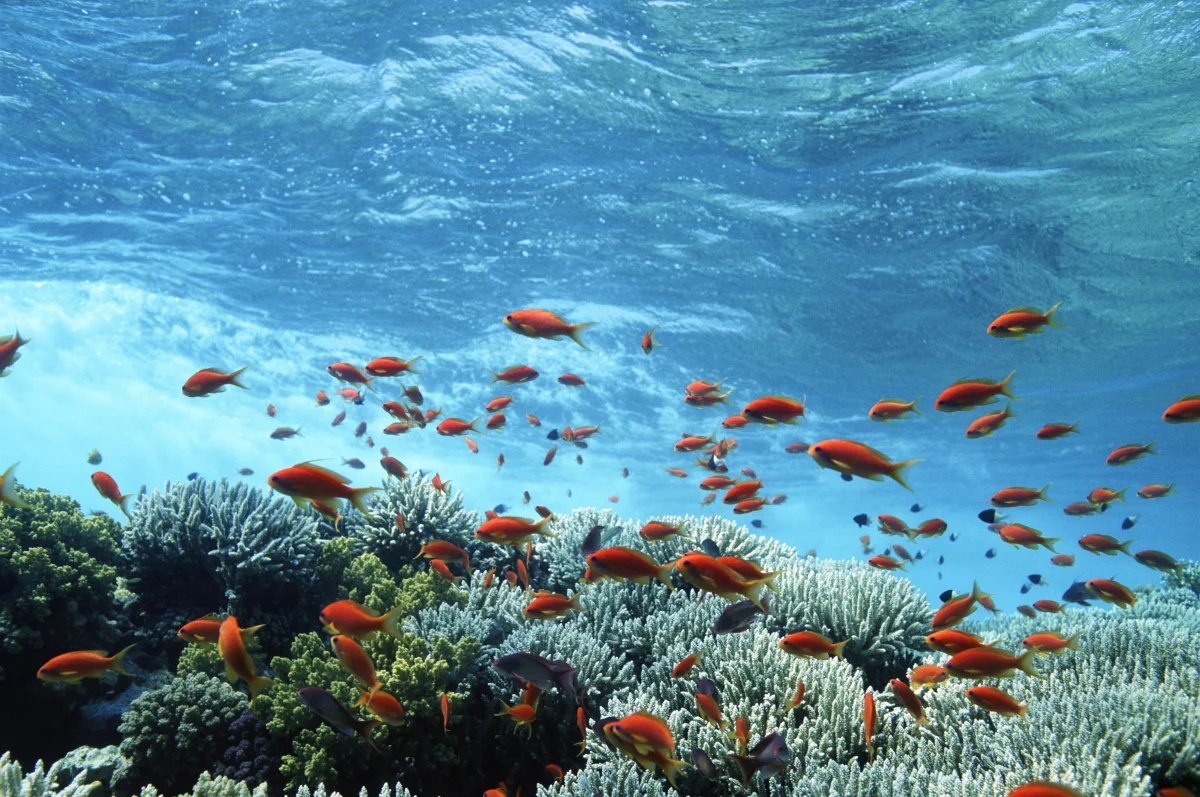
The Red Sea is one of the most densely populated on Earth: over 1,200 fish species and 250 coral species. During the day, a significant portion of this population hides — in reef crevices, under rocks, in the sand.
As darkness falls, the night shift begins: predators come out to hunt, bottom-dwelling creatures move into the shallows, and species that were harmless by day become unpredictable.
This isn't a metaphor — it's documented biology. The reef ecosystem operates on a two-shift schedule: daytime and nighttime species alternate with clockwork precision. A tourist who enters the water after sunset finds themselves in the middle of this nightlife — without any way to see it.
Sharks: The Main Argument
Most shark species inhabiting the Red Sea are more active at dusk and night. Both behavioral research and attack statistics confirm this.
Reef sharks, tiger sharks, oceanic whitetips — all hunt predominantly in low light. Their vision is better adapted to dim conditions than a human's: in twilight, a shark sees you long before you notice it. Human movements in dark water — splashes, vibrations — resemble the behavior of an injured fish, and the predator reacts instinctively.
After the 2022–2024 incidents, Egyptian authorities explicitly stated: swimming at dusk and night is the period of maximum risk for encountering large predators. The attack on Russian tourist Vladimir Popov in Hurghada in June 2023 occurred in the morning, but according to biologists' findings, the shark had been hunting since night and stayed near the shore.
Sea Urchins: The Invisible Threat Underfoot
During the day, sea urchins sit in reef crevices and under rocks. At night, many species crawl out into the shallows — onto the sandy bottom, onto pontoon steps, right up to shore.
Their spines are thin, sharp, and brittle. Stepping on one drives a spine through the skin of the foot, where it snaps off. Extracting the fragment is difficult even in a clinical setting — it crumbles when you try to grip it. Deeply embedded fragments cause inflammation and infection, and some urchin species are venomous, producing a stinging pain and swelling.
By day, an urchin is visible — a black spiny ball against a light seabed. At night, it isn't. Stepping on one in the dark, wading in knee-deep, isn't an exotic risk — it's a routine occurrence that dozens of tourists experience every season.
Fire Coral and Venomous Residents
Fire coral (millepora) forms colonies of venomous polyps that mimic ordinary coral. Touching it causes a severe burn — stinging pain, blisters, allergic reaction. During the day, it can be spotted and avoided. At night, it's indistinguishable from harmless reef.
Stonefish — one of the most venomous fish on the planet. It lies on the bottom, perfectly camouflaged as a rock or piece of coral. A spine sting causes unbearable pain, potentially leading to loss of consciousness. During the day, with good visibility, an experienced snorkeler might spot its outline. At night, there's no chance.
Lionfish — beautiful, with elaborate fan-shaped fins. During the day, it hovers motionless near the reef, easy to identify. At night, it actively hunts in the shallows, and an encounter can happen right at the shoreline. A sting from its spines is painful and dangerous.
Currents and Navigation
At night, the same currents operate in the Red Sea as during the day, but they're perceived differently.
During the day, you can see the shore, the pontoon, the buoys — reference points showing where you're being carried. At night, visibility drops to zero, and the current sweeps a swimmer along unnoticed. A person thinks they're staying in place, but has actually drifted 50–100 meters along the shore — or away from it.
In the Red Sea, tidal currents intensify near reef outcrops and pontoons. During the day, you can feel them and correct course. At night, you'll only discover it once the shore isn't where it should be.
Absence of Help
Lifeguard posts on Egyptian beaches operate only until sunset. After that — no lifeguards, no boats. If something goes wrong at night, there's no one to look for you.
Hotel security can call an ambulance, but response time at night runs significantly longer than during the day. For someone drowning or stung by a venomous fish, every minute counts.
There's also the insurance angle. Most travel policies include a clause requiring compliance with resort safety rules. Swimming under a raised red flag or during prohibited hours violates the terms.
If an injury results from nighttime swimming, insurance may deny the claim, leaving treatment (surgical removal of urchin spines, antivenom, resuscitation) to be paid out of pocket.
"But I Saw Other People Swimming at Night"
Yes, people break the rules. Tourists climb over barriers, slip past security, go in "just for a minute." Some come back unscathed and describe how "atmospheric" and "romantic" it was. Some end up in the hospital with urchin spines in their foot. A rare few don't come back at all.
Nighttime water looks inviting: warm, quiet, with bioluminescent plankton that glows with movement. The appeal is easy to understand. But the romance ends the moment a bare foot lands on an urchin, and the shore is twenty meters away in total darkness.
What to Do in the Evening Instead of Swimming
Nighttime Egypt isn't a reason to sit in your room. A few alternatives that are safer and no less impressive.
- The pool. Most hotel pools operate until 10 or 11 p.m., some around the clock. Illumination, warm water, a poolside bar — an evening swimming format without the risks.
- A walk along the pontoon. Many hotel pontoons are illuminated, and at night you can watch fish drawn to the light. Squid, octopus, parrotfish — a whole show that requires no entering the water.
- The night sky. The Egyptian desert is one of the best places on Earth for stargazing. Away from city light pollution, the Milky Way is visible to the naked eye. Some hotels organize astronomy evenings with telescopes.
- Guided night snorkeling. The only permitted format for nighttime diving — organized, with an instructor, lights, and in a group.
Dive centers offer night snorkeling tours in equipped areas, with lighting and supervision. It's safe — and more impressive than venturing into the dark alone.
One Rule Worth Accepting
Once the sun sets, get out of the water. Not "in five minutes," not "one more dip" — now. The Red Sea after sunset belongs to its residents, not to you. They're adapted to the darkness; you're not. They can see you; you can't see them. It's an equation where the human loses.
The sea will return in the morning — warm, clear, and safe. And between the evening sunset and the morning sunrise, there's the pool, the stars, the promenade, and the realization that these rules weren't written to limit your fun — they were written so you'd go home healthy.