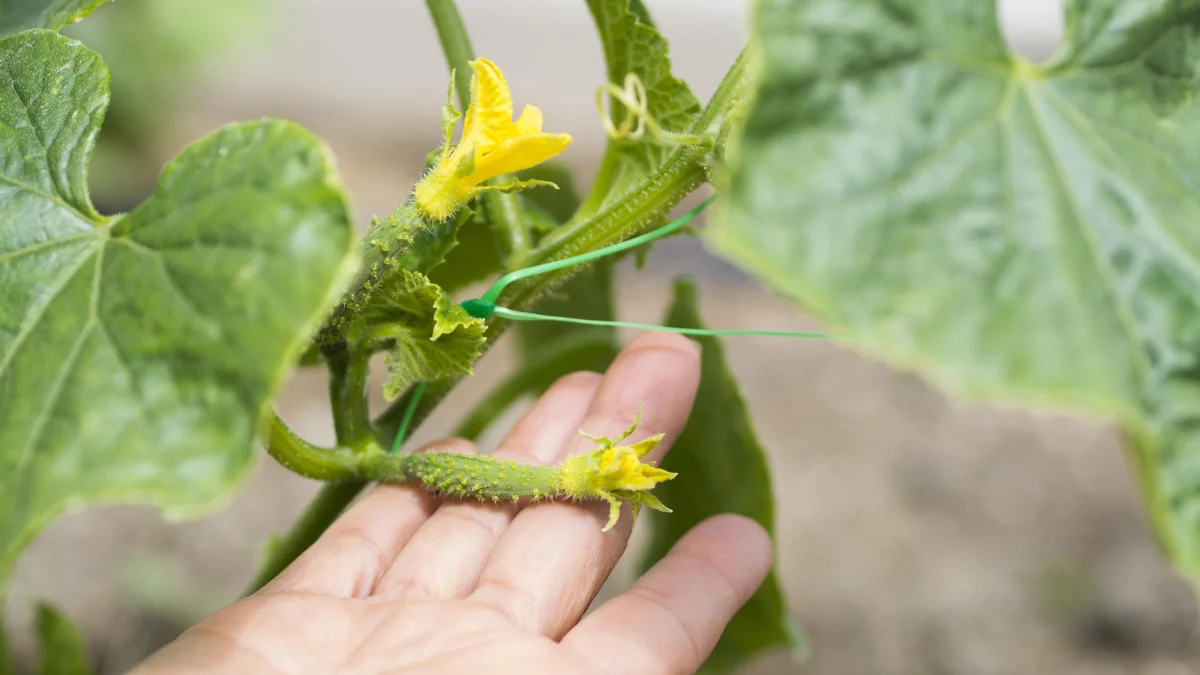
Cucumbers are a fairly easy vegetable to grow, but sometimes they can be finicky. For example, their leaves may suddenly start to wilt. There are several reasons for this.
Bacterial wilt
Bacterial wilt is caused by Erwinia tracheiphila, a bacterium found in cucumber beetles. These beetles feed on the plant, and when they do, they leave behind small «wounds». On the whole, this damage poses no threat. However, when beetle droppings come into contact with these wounds, the bacteria penetrate the plant – and the infection begins to spread. And just a single beetle is enough to infect a cucumber – the pest is easy to overlook.

The main sign of bacterial wilt is that individual leaves on one vine begin to dry out, then the wilting spreads throughout the entire plant, and the stems wither. Watering is useless – in the case of bacterial wilt it will not help.
There are, however, some preventive measures: an infected plant should be removed from the bed as quickly as possible so that the bacteria do not spread to neighboring bushes. Do not compost an infected plant and do not leave it near the beds; dispose of it somewhere far away – burn it, for example.
In addition, experts advise using a pest net, treating the plants with pesticides, and making sure that the cucumbers get enough nutrients from the soil: beetles are more likely to attack weakened or diseased plants.
Do not plant cucumbers next to other plants that cucumber beetles feed on – melons, corn, and goldenrod.
If you have run into the problem of bacterial wilt, do not plant cucumbers in the same spot for two or three years. Without food, the pests will simply starve to death or move on to another place.

Cold weather
Cucumbers do not like the cool, so it is no surprise that lower temperatures can lead to wilting. Cold can make it harder for plants to absorb water.
In addition, cold, damp soil is a breeding ground for many fungi, some of which can weaken cucumber plants. If the temperature drops below 10 degrees Celsius and the soil around the cucumbers is damp, check the base of the plants for signs of fungal growth.
You cannot control the weather, but you can soften its effects. If you know a cold front is approaching, add a layer of mulch around the cucumbers. This helps insulate the soil, keeping warmth at the roots and preventing the water in the soil from getting too cold.
Cover the cucumbers before a cold rain falls in order to protect the leaves from getting too cold. If the weather is cool but frost is still a long way off, then watering the cucumbers with room-temperature water instead of cold water can also help.
5 reasons why the capybara should become our totem animal
Drought and heat
Even though cucumbers love warm weather, at times it can get too hot for them.
Give the cucumbers a bit of shade: a canopy of branches, for example, works great. Another way to «treat» this type of wilting is to water the cucumbers more often. In hot, sunny weather water evaporates faster, so plants have less time to absorb the moisture they need. But you should water either early in the morning or in the evening after sunset – otherwise the soil will crust over, and droplets of water that land on the leaves will cause burns.