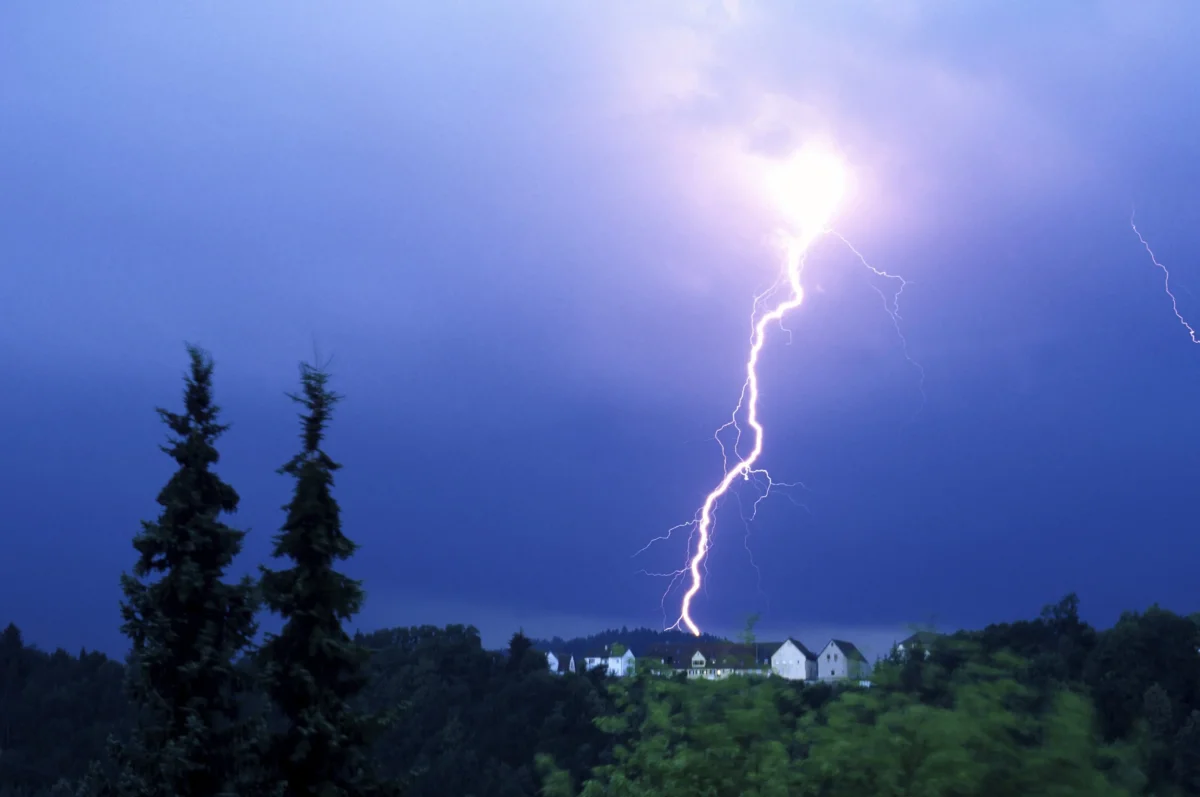
And we have always been intrigued by the mystery of its origin – that sudden crackling, brilliant burst of energy that seems to cleave a cloud in two.
It turns out that the source of a thunderstorm's birth is unevenly heated layers of air. For example, a warm flow rushes rapidly upward, as if pushing off from the ground. And cold air from the upper parts of the atmosphere descends.
The result is a storm cloud made up of an enormous quantity of vapour. Note that part of it is condensed from tiny ice crystals and minute droplets. By the way: the height of the clouds is several kilometres. At first glance, the approaching leaden storm cloud moves smoothly across the sky, as if reluctantly, and looks like a uniform mass. But this impression is deceptive. In fact, turbulent processes invisible to the eye are taking place inside it.

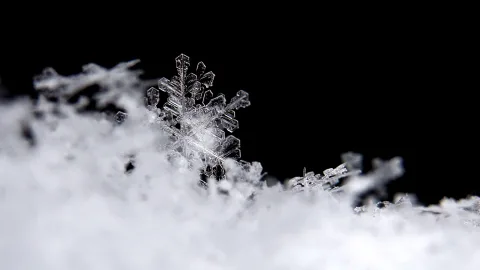
Small ice crystals, driven by the rising warm air, constantly collide with larger ones. This ultimately leads to electrification. Note that the large ice crystals now acquire a negative charge, and the small ones a positive charge. And the collision of these charges produces a flash – lightning, peals of thunder, and a downpour or light rain.
In winter the temperature difference between the ground and high altitude is not as significant as in spring and summer. Therefore the electric charge does not change at all, remaining negative. And one only recalls thunderstorms during the long winter evenings.
Best landscape of 2022: a Chilean photographer received $10,000 for a shot of the Andes That said, this does not mean it cannot happen even in a bitter frost. Thunderstorms do occur in winter after all! But this is considered a natural phenomenon that meteorologists are still puzzling over.
For example, every winter in North America about six cases of thunderstorms are recorded. Scientists explain this phenomenon by the proximity of ice-free seas and an abundance of large lakes.
Curiously, in Murmansk snowfall has always been accompanied by thunderstorms. And the residents, it must be said, have already grown used to this natural phenomenon. The birth of a thunderstorm and its display in all its splendour and might was explained by the proximity of the relatively warm Barents Sea. And cold Arctic air masses are almost the perfect conditions for a real thunderstorm to cut loose for once.
By the way
It turns out that December and February are considered thunderstorm months in the Caucasus, in the Stavropol Territory and in the Kuban. Nature here seems to play tricks on people, creating the illusion of an approaching spring. Flashes of lightning, claps of thunder – and heavy snowfall – are a familiar sight for these parts. The same goes for the residents of the northwestern coast of Japan. The number of thunderstorm days here is greater in winter than in summer.