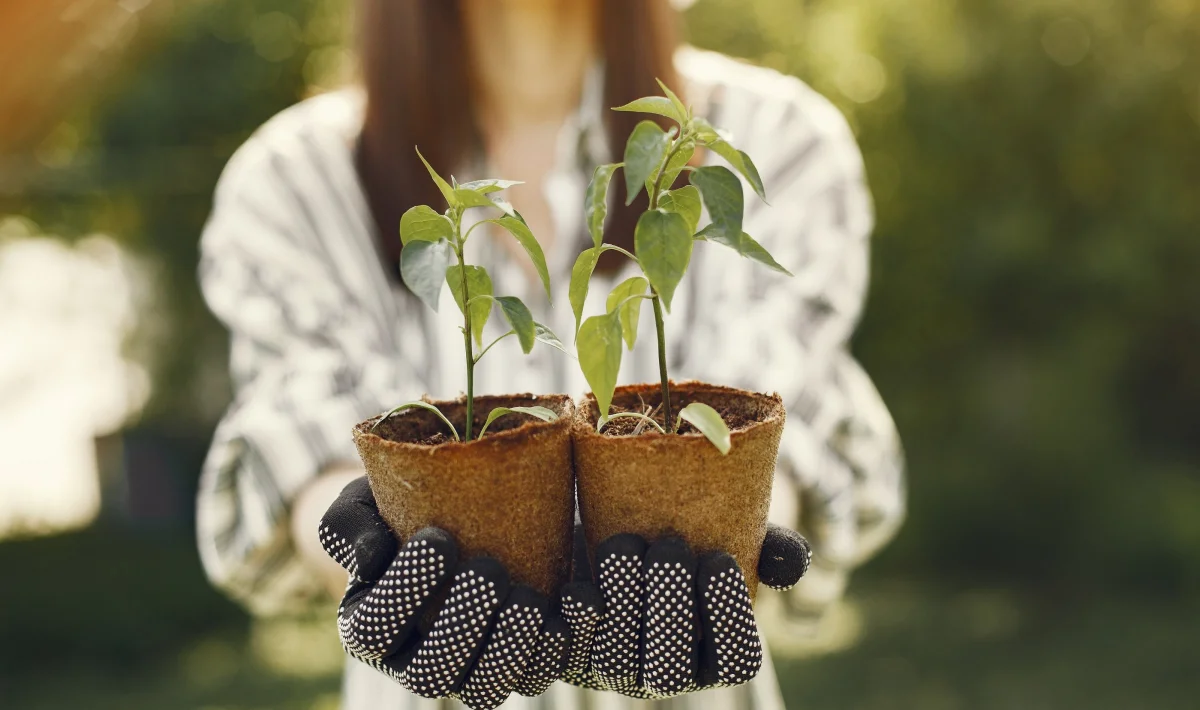
Young sprouts are sensitive to every mistake a gardener makes, and every little detail matters – we explain how to water seedlings correctly so that they grow to the envy of your neighbors. Here it is important to pay attention to water quality, the abundance and frequency of watering.
General rules for watering seedlings
Seedlings can be very capricious; drought or excessive watering can ruin weeks and months of a gardener's work. According to statistics, the loss of seedlings caused by improper watering is far higher than the losses that arise from an incorrect choice of growing conditions. So as not to be disappointed when the future cabbage and tomatoes grow feeble and wilt, let's figure out how to water seedlings properly.
At first glance, the recipe is simple: you need to precisely meet the seedling's water needs without any deviation. But questions immediately arise: how do you know when to water the seedlings? How do you tell how much and how often to water them? A lot depends on the conditions in which they are kept. Let's consider all these points in order.
Watering seedlings on the windowsill
- Choose a window that faces south – that way the seedlings will receive ultraviolet light and extra warmth.
- If necessary, additionally insulate the windowsill and eliminate drafts – spring nights are still cold.
- The first time you water the seedlings is when you sow the seeds, the second – when the seeds sprout, and from the third onward you do ordinary watering.
- The main thing when watering is that the soil does not dry out. Drying out depends on the air temperature – if it is hot in the house, water more often.
- But be careful not to overwater, otherwise there is a risk of developing parasitic fungi and the appearance of damping-off.
- Water in the morning hours, so that by evening the plants themselves and the soil have dried out.
- Use water at a comfortable temperature – 20-25 degrees.
Watering seedlings in the greenhouse
The choice of watering method depends on the type of plant. For cucurbits, greens, and root vegetables, sprinkling is more suitable, that is, watering with a garden watering can or with a hose fitted with a special nozzle. Sprinkler systems are also used, however such a method requires additional spending on special equipment. The advantage of the sprinkling method is that, along with moistening the soil and the root system, the air and the plants themselves are also moistened, and dust is washed off the leaves. Sprinkling should be done in the morning so that by evening the plants have had time to dry out – an excess of moisture will lead to the appearance of fungi.

Photo: jcomp/Freepik
For nightshades (tomatoes, peppers, potatoes, eggplants), watering at the root is more suitable, since with sprinkling and the moistening of the leaves the air humidity also rises and there is a risk of developing late blight, a disease dangerous to the plant. Can seedlings be watered at the root from a watering can or hose? Yes, but water must not get on the leaves. Water in the evening.
The third watering method in a greenhouse is called reverse. For it you need to spread film around the plant and cover it with a layer of soil 3-4 cm thick. When the soil heats up, the film prevents moisture from evaporating, and at night the moisture condenses on the film and again moistens the soil. Reverse watering is done in the morning so that the layer of soil above the film has time to dry out by evening, otherwise condensation will form on the film, which will lead to waterlogging and plant diseases.
Watering seedlings in open ground
2-3 days before transplanting the seedlings, stop watering them, but then water abundantly right before transplanting, which will help avoid damaging the roots. After transplanting, water again, and cover or mulch the soil, which prevents moisture from evaporating. How often to water seedlings afterward depends on the type of vegetable:
- After transplanting, water for the first time 10-15 days later, after which go by the type of plant.
- Water tomatoes rarely, once a week, with three liters of water at the root of each plant.
- Peppers are moisture-loving, so in dry weather water them daily with 1-2 liters at the root.
- Water eggplants weekly if the weather is not very dry, and once every 3-4 days in extreme heat.
- Cucumbers require abundant watering – from 6 to 10 liters of water per square meter of bed once every few days.
How often to water seedlings
Too much water is also bad; here it is important to keep a balance.
- Until the sprouts appear, soak the soil daily.
- Spray the soil with a spray bottle – this will prevent the formation of a soil crust.
- When the plants sprout, water once every few days. After the roots have strengthened, loosen the soil and thin out the seedlings.
- After that, the frequency of watering depends on the specific vegetable or flower crop.
What water to use for watering seedlings
Ordinary tap water is suitable, but only filtered or settled. The preferred water temperature is room temperature, at most 1-2 degrees colder. But it is better to avoid boiled water – such water has a reduced oxygen content, and this is not good for plants.

Photo: Freepik
Melted and frozen-out water also has advantages – unlike hard tap water, they contain no salts, so when watering and drying no crust forms on the soil. For melted water, take snow (just do not use snow from city streets – it is very dirty there), and for frozen-out water – ordinary water, which is frozen by 80-90 percent, and the remaining water, which contains the salts – is poured off. Is it mandatory to water seedlings with such water? No, but if there is the opportunity and the time, then why not.
If the soil is alkaline, that is, it contains an excess of lime, then the question «what to water the seedlings with» should be addressed first of all. In this case it is better to use acidified water. Citric or acetic acid (no more than 1 g per 10 l) will help save plants for which an alkaline environment is fatal.
The abundance of watering seedlings
The volume of water for watering depends on the volume of the containers in which the seedlings are planted. A 100 ml cup with a plant requires about 15 ml of water (a tablespoon), and a half-liter container – about 100 ml of water. The figures are approximate – pay attention to keeping the soil moist, but not excessively so.
What you can water seedlings with for growth and strengthening
The first feeding is done when no fewer than 2-3 leaves appear on the stems. What to water seedlings with so they grow faster? Experts recommend alternating different types of fertilizers.
Ammonia solution
It contains 82% nitrogen, which is easily absorbed by plants – dissolve 1 teaspoon in 10 liters of water.

Photo: Freepik
Eggshells
They contain a lot of calcium; an infusion is used: the shells of several eggs are poured with 3 liters of warm water, infused for 3 days, and then diluted 1:3.
Coffee grounds
They help plants absorb nutrients from the soil. Before use they should be rinsed, dried, and then dug in around the plant.
Yeast
With its help both the plants become stronger and the soil microflora improves. Take 100 g per 10 liters, add 2 tablespoons of sugar, and after a day, dilute 1:5. Water at the root.
Aspirin
Although it is a medicine, it contains no chemicals at all, since it is made from tree bark. It strengthens plants, stimulates growth, and helps them tolerate temperature fluctuations. One tablet is dissolved in a liter of water, and watering is done with one teaspoon at the root. This solution can also be used to spray plants.
Hydrogen peroxide
This substance is not in itself a feeding, but it is useful for plants, as it saturates the soil with oxygen and prevents the appearance in the soil of harmful microorganisms and pests. A tablespoon of peroxide per half-liter of water, each plant watered with one teaspoon at the root.
Zircon
It stimulates plant growth and increases their resistance to disease. 1 drop is diluted in a liter of water, each plant requires no more than 1 teaspoon of solution.