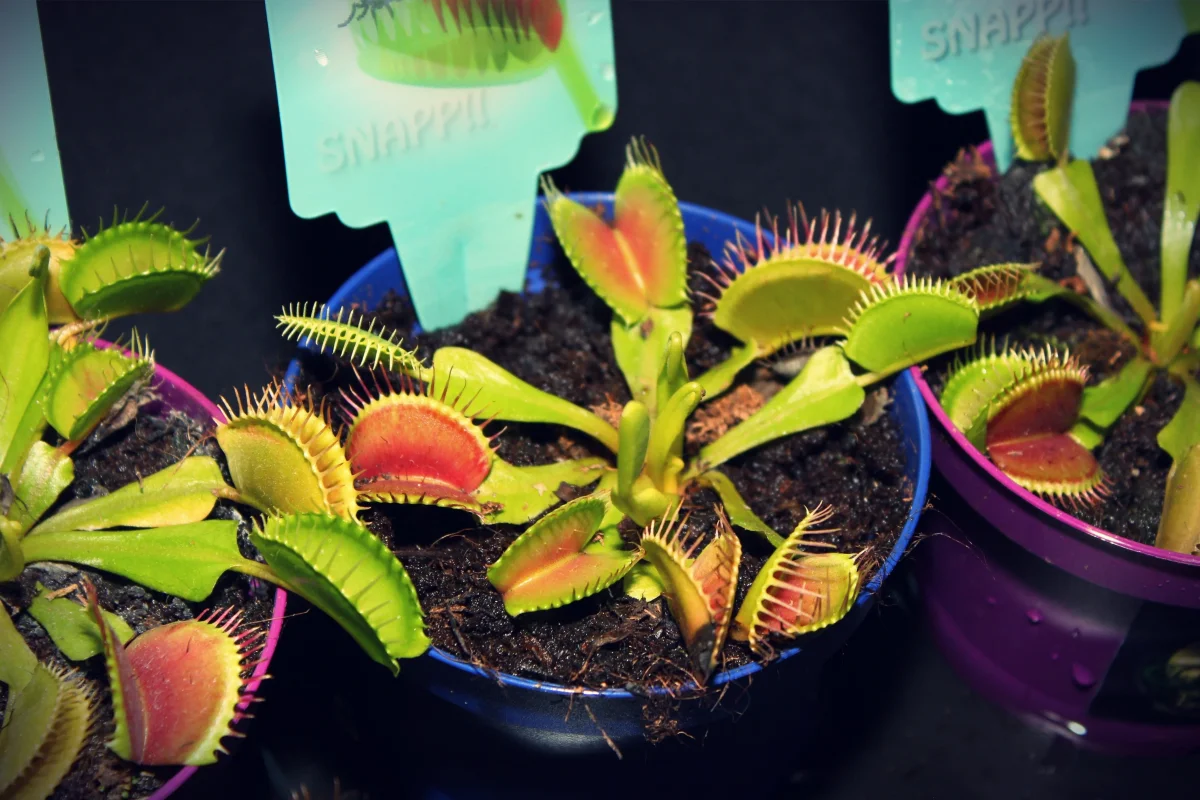
Venus flytrap
The most famous carnivorous plant is hard to mistake. Its toothy traps seem to be itching to bite your finger. But there is no need to fear them – they are dangerous only to flies and other insects. This predator's homeland is America, but it takes root quite well in our home conditions too.
The Venus flytrap loves sunlight, but not direct rays. So you need to choose a windowsill away from the scorching sun. But you shouldn't push the Venus flytrap into the shade either. In winter it is better to install a special grow lamp, otherwise the plant will suffer from a lack of sun and fall ill. However, the Venus flytrap can survive winter just fine, the main thing being to keep the temperature at no less than 10 degrees. We water the plant, like any other, with settled water. But there is a small difference in watering – you need to pour the water into the pot's tray, not into the soil itself. The predator will take the moisture it needs.
The flytrap needs to be fed once every ten days. And every trap should be treated. But it is also important not to overfeed it – if you drop several flies into a trap at once, then, once full, it will eventually begin to die off. Only flies and gnats are suitable as food, while hard beetles and worms are contraindicated. The flytrap simply will not digest them.
The Venus flytrap is absolutely safe for children. The little teeth on its traps are soft, and the juice it secretes is not allergenic. However, the flytrap occasionally gives off an unpleasant smell, since its traps may contain not fully digested remains of insects. On the plus side, this predatory plant even blooms, usually in May or June.
Sundew

Another carnivorous plant – the sundew, takes root at home wonderfully. Although in appearance it does not look as menacing as the Venus flytrap, this does not make it any less bloodthirsty. On the sundew's thin hairs glisten droplets of dew, which are a sticky mixture. The moment a careless fly lands on a dewdrop, it sticks fast. The fly struggles, and the sundew receives a signal – it's mealtime. The little leaves close, and reopen only after a few days. Not a trace of the fly remains. There's no need to feed it specially; water and its own catch are usually enough for the sundew.
Like the Venus flytrap, the sundew loves dim sunlight and needs additional lighting in winter. In everyday life it is undemanding and adapts to any conditions. It should be watered once a week, and you can additionally spray it, since the sundew is very fond of humidity.
The sundew is safe for humans, but its dewdrops can cause an allergic reaction if they get on a mucous membrane. It is better not to let children near it.
Sarracenia

This predator will especially appeal to those who do not like caring for plants. It is extremely undemanding in home conditions. Its pitcher traps are not dangerous to humans, and at the same time are death for small insects. Sarracenia loves sunlight, direct rays included. So you can place the pot on the sunny side. It does not need additional lighting or humidification. But it adores water – as with the flytrap, you need to keep topping it up in the pot's tray. Sarracenia catches insects on its own and does not wait to be fed. By the way, some varieties of sarracenia can cause allergies and irritation, so be careful when choosing.