In Yakutia's Oymyakon district, there's a lake where the water never climbs above +8°C, even in the hottest summer. Nine months under ice, and the remaining three are unlikely to tempt even the most hardened swimmers.
The lake is called Vorota. It's located in the Oymyakon district of Yakutia — the very area known as the North Pole of Cold. The only way to reach it is by all-terrain vehicle, horseback, or helicopter.
There are no permanent settlements nearby, no roads, no cell signal. What there is: ice-clear water, tundra landscapes in every direction, and a local legend about a creature reminiscent of Scotland's Loch Ness Monster.
Why the Water Never Warms Up
Vorota lies in the permafrost zone — the ground around the lake is frozen to a depth of hundreds of meters.
In winter, air temperatures here plunge to –50 to –60°C, and summer lasts a matter of weeks. Even in July, when the air might warm to +20–25°C, that's catastrophically insufficient to heat the body of water.
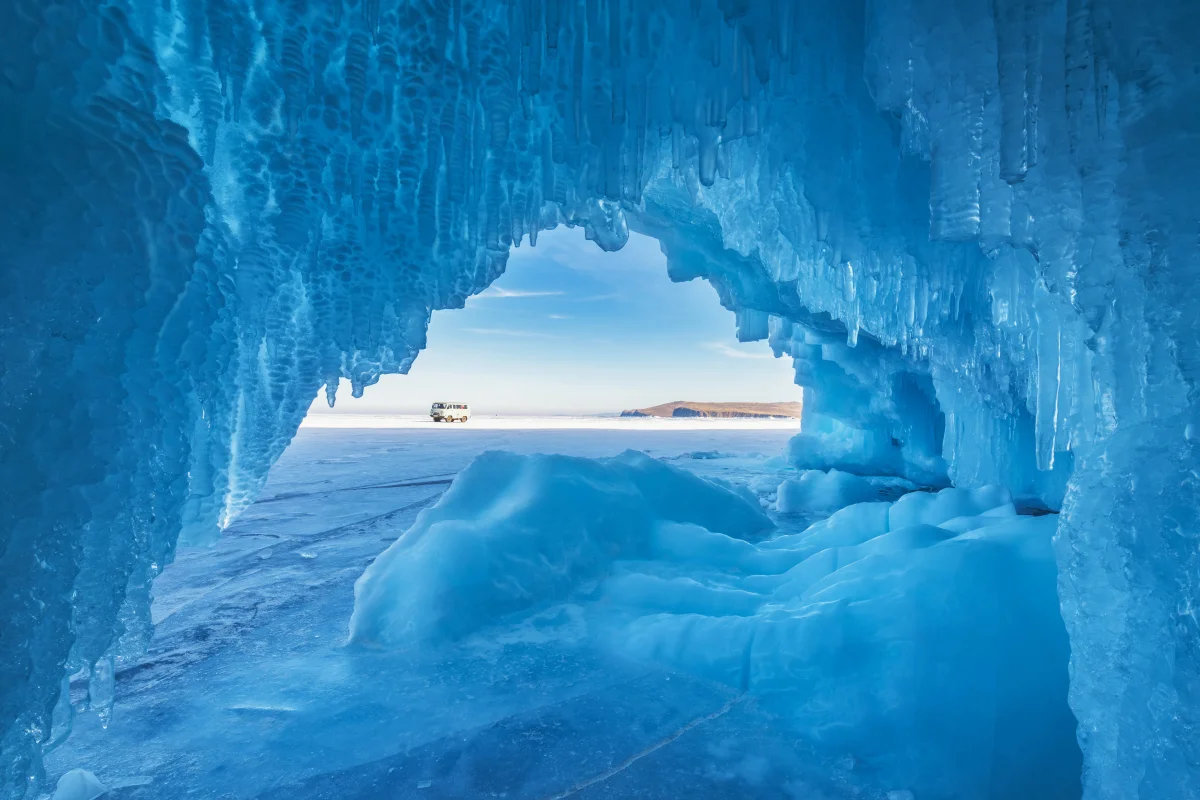
The lake is covered in ice for most of the year — it doesn't break up until mid-June, and by September it's already freezing over again. Three months without an ice shell is simply too short for meaningful warming. The sun sits low, nights are cold, and the permafrost beneath the lakebed acts as a giant refrigerator, continuously pulling heat from the water down into the frozen ground.
Neighbors in the Cold
Vorota isn't the only frigid lake in the Oymyakon district. In the same area lies Labynkyr — a lake famous not so much for its temperature (also no higher than +8°C in summer) as for legends of a giant creature supposedly lurking in its depths.
Local Evens call it the "Labynkyr devil," and expeditions return with stories of strange sounds and splashes. Science has yet to confirm the creature's existence — but hasn't managed to disprove it either: the lake is simply too remote for comprehensive research.
Next on the list of cold lakes is Taymyr in Krasnoyarsk Krai. The largest lake above the Arctic Circle, comparable in area to Liechtenstein.
Its average depth is just 2.8 meters, but even such shallow water in Arctic conditions only warms to +8°C in August. The lake is locked under ice nine months of the year, and there are no permanent settlements on its shores.
Baikal: The Cold Giant
Baikal won't beat Vorota's record, but it deserves its own mention as the coldest among the world's famous lakes. Water temperature in the open part, even at the height of summer, sits at +7–9°C. At depth, it's a steady +3.5°C year-round.
The reason is the colossal volume of water. Baikal holds 23,600 cubic kilometers of fresh water — one-fifth of the world's supply. Warming that mass during a short Siberian summer is a physical impossibility. The sun heats a thin surface layer, while beneath it lie kilometers of ice-cold water storing winter's chill.
That said, in shallow bays — the Little Sea, Chivyrkuy Bay — water in July–August can rise to +20–24°C. But swim a hundred meters from shore, and the temperature drops by a factor of three.
Ladoga: Cold Right Next to St. Petersburg
You don't have to fly to Yakutia to encounter a frigid lake. Ladoga — the largest lake in Europe — doesn't warm above +4°C in its central part, even in summer.
Near the shores, it can reach +18–20°C in a good year, but the thermocline is abrupt: swim just a little farther out and your legs plunge into ice-cold water.
In autumn and spring, Ladoga exhibits a unique phenomenon — the thermal bar: a density front that divides the lake into two worlds. One part operates in summer mode, the other in spring mode. The boundary shifts slowly, and it's what determines which section of the lake is warmer on any given day.
What Cold Lakes Have in Common
All the record-holders share common traits:
- Depth or volume. The more water there is, the longer it takes to warm. Baikal, Ladoga, Taymyr — these are water masses that simply can't heat up during a short summer.
- High latitudes. The farther north, the less solar energy reaches the surface. In the Oymyakon district, the sun sits low even in June.
- Permafrost or a cold bottom. Frozen ground is a natural refrigerator that continuously siphons heat from the water.
- Ice-fed tributaries. Mountain rivers and streams fed by snowmelt and glaciers keep mixing cold water in all summer long.
Why People Go There Anyway
None of these lakes offer beach vacations in any conventional sense. But people make the journey regardless — for a spectacle they can't see anywhere else.
Vorota and Labynkyr draw visitors seeking absolute wilderness: no people, no roads, no signal. These are among the most inaccessible lakes in the country, and for a certain kind of traveler, that's the entire point. Taymyr attracts those after tundra landscapes and Arctic fishing. Baikal draws people for its sheer scale and an energy that no photograph can capture.
Swimming in these lakes isn't advisable — at least not without a wetsuit. But standing on the shore of a lake where the water is colder than a winter tap, knowing this landscape hasn't changed in thousands of years — that's a feeling worth freezing for.