The most fascinating things always happen in the ordinary real world – not everyone is just lucky enough to see amazing natural phenomena with their own eyes. And perhaps that is for the best.
Sailing stones
The amazing phenomena observed in the American Death Valley National Park (California) and on Little Bonnie Beach in the state of Nevada give you pause and even make you afraid.

Photo: Paul Brady/Legion-Media
Floating, creeping, rolling, drifting, sailing stones – there are many names for this geological phenomenon. The stones move across the clay bed of the lake without any influence from animals or humans, leaving clear tracks behind them. And the weight of the stones is impressive – up to 300 kg.
Until the early 20th century these natural phenomena were explained solely by the action of supernatural forces, but in our time scientists have finally figured out the reasons for the movement of the stones. The cause lies in thin sheets of ice covering up to tens of square meters, into which the lake water turns on frosty nights. The floating ice, under the influence of wind and a current beneath the ice, moves the stones.
Catatumbo lightning

Photo: Global Look Press
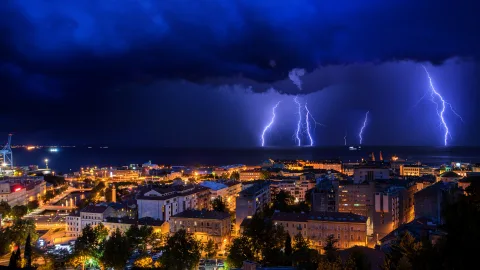
These unusual atmospheric phenomena, also called the «everlasting storm», are observed in Venezuela, at the mouth of the Catatumbo River, which flows into Lake Maracaibo. The world's largest natural producer of tropospheric ozone switches on 140-160 nights a year, and this «celestial illumination» can be seen from a distance of more than 500 kilometers. Flashes of lightning from thunderclouds at an altitude of 5 kilometers last 10 hours a day at a rate of 280 flashes per hour.
Scientists have no single theory explaining why thunderstorms occur so often in this area, but there are hypotheses:
- A closed circulation of wind in this area;
- The collision of warm and cold air masses at the river mouth;
- A high content of uranium in the soil;
- Oil deposits and methane produced by the marshes of the Catatumbo River delta.
The pink lake

Photo: Jaimen Hudson / Esperance Island
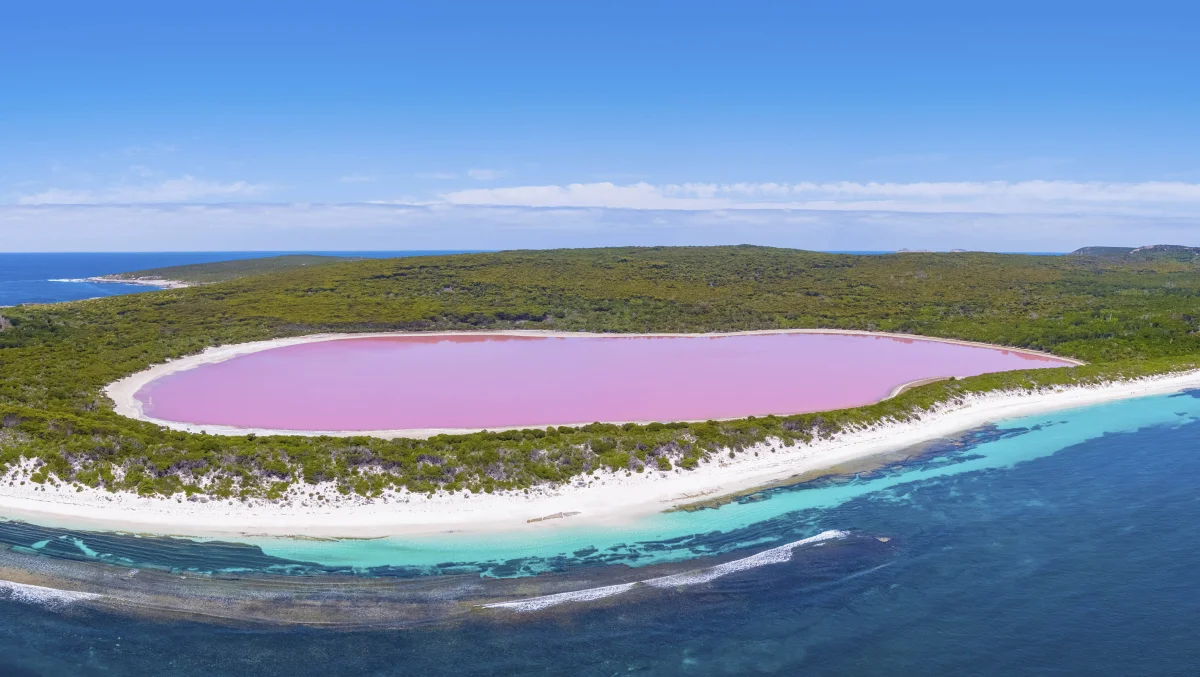
It is no accident that Australia's Lake Hillier is included in lists of the most amazing natural phenomena – there are no other bodies of water with such bright pink water on the planet. The astonishing lake with pink, salty water, 600 meters long and 25 meters wide, was discovered in 1802 by the British navigator Matthew Flinders.
For a long time it was believed that the pink color of the water was caused by increased salinity and the presence of microorganisms in it, but in the mid-20th century, after tests conducted by scientists, this theory was not confirmed. In 2016 metagenomic studies of the water were carried out, which revealed that the shade is given to the water by the presence of the algae Dunaliella salina. The algae produces carotenoids – a pigment that is also found in carrots.
Ball lightning

Photo: wikipedia.org
One of the most amazing natural phenomena – very rare, it still has no scientific explanation. Descriptions of glowing balls appear in eyewitness accounts beginning in the 19th century, but ball lightning occurs rarely, in unpredictable places, and does not last long. For these reasons, there can be no talk of serious scientific research, and scientists have so far failed to recreate the phenomenon artificially.
There are eyewitness accounts, some of which say that such lightning behaves strangely, in ways not explained by any known laws of nature. Ball lightning behaves in various ways: sometimes it disappears quietly, but in half of the cases it explodes.
No serious research into the nature of the formation of ball lightning has been conducted, but this does not stop scientists from building hypotheses. For example, these:
- It appears as a result of shortwave electromagnetic oscillations between the surface of the earth and thunderclouds;
- At the core of the lightning is a solid core of plasma filaments;
- It is generated by reactions occurring in water vapor in the presence of a strong electric field.
So far none of the hypotheses has become the leading one: each has inconsistencies and an inability to explain the behavior of this unique natural phenomenon.
St. Elmo's fire

Photo: wikipedia.org
Sailors of past centuries would surely have chosen this very one among the most amazing phenomena. The electric glow that surrounded a ship's masts before a storm was for centuries considered a sign of divine intervention – for the conquerors of the seas of the past, the glow symbolized the hand of St. Elmo, the patron of seafarers.
A description of this phenomenon appears both in the logbooks of travelers and in the literary works of that time. Sailors encountered this phenomenon more often, but the fires appear not only on the masts of ships, but also on any other tall, pointed objects as a storm approaches, as well as during blizzards in winter, and during sand and dust storms. The reason is that during these natural phenomena an increased intensity of the electric field arises in the atmosphere.
Scientists have developed ways to produce a similar discharge artificially, and some are suitable even for home conditions. If you take off a synthetic undershirt and then, in the dark, bring a needle close to the clothing, a visible electric discharge will appear at the tip with a characteristic crackling. The same effect can easily be achieved by bringing a needle up to the screen of a color television with a picture tube, only it is already problematic to get hold of such a device.
Noctilucent clouds

Photo: Peter Kovesi/Legion-Media
Mesospheric, or noctilucent, clouds appeared among the most amazing natural phenomena relatively recently; the first records of them date to 1885. This phenomenon is rare, occurs at an altitude of 76-85 km, and is observed with the naked eye during deep twilight.
Noctilucent clouds have been studied with the help of rocket probes, but their nature still cannot be fully explained. Scientists have concluded that ice crystals form around particles suspended in the air, but the nature of these particles remains unclear: meteoric, volcanic, or perhaps crystals of sea salt. It is also unclear why they move at a speed that is much higher than that of cumulus clouds.
Another hypothesis links the appearance of the clouds to global warming, which partly explains why this phenomenon was not observed in past centuries. 130 years ago the concentration of methane began to grow in the atmosphere; this gas, owing to its lightness, rises into the upper layers of the atmosphere, where it interacts with meteoric dust, turning into ice crystals.
Frozen methane bubbles

Photo: Global Look Press
Among the unusual natural phenomena there are some that are visually impressive but at the same time dangerous to humans. Frozen methane bubbles are among them. The bubbles appear in winter on Lake Abraham in Canada's Alberta. Methane gas, rising from the bottom of the lake, becomes trapped in an icy snare – the water envelops the bubble and freezes. The bubbles vary in size, from a few millimeters to ten centimeters in diameter.
This natural wonder should be observed with caution. Methane ignites easily, and at a high concentration even a single lit match can cause an explosion. In spring, with the onset of warmth, the bubbles burst naturally as the ice melts.