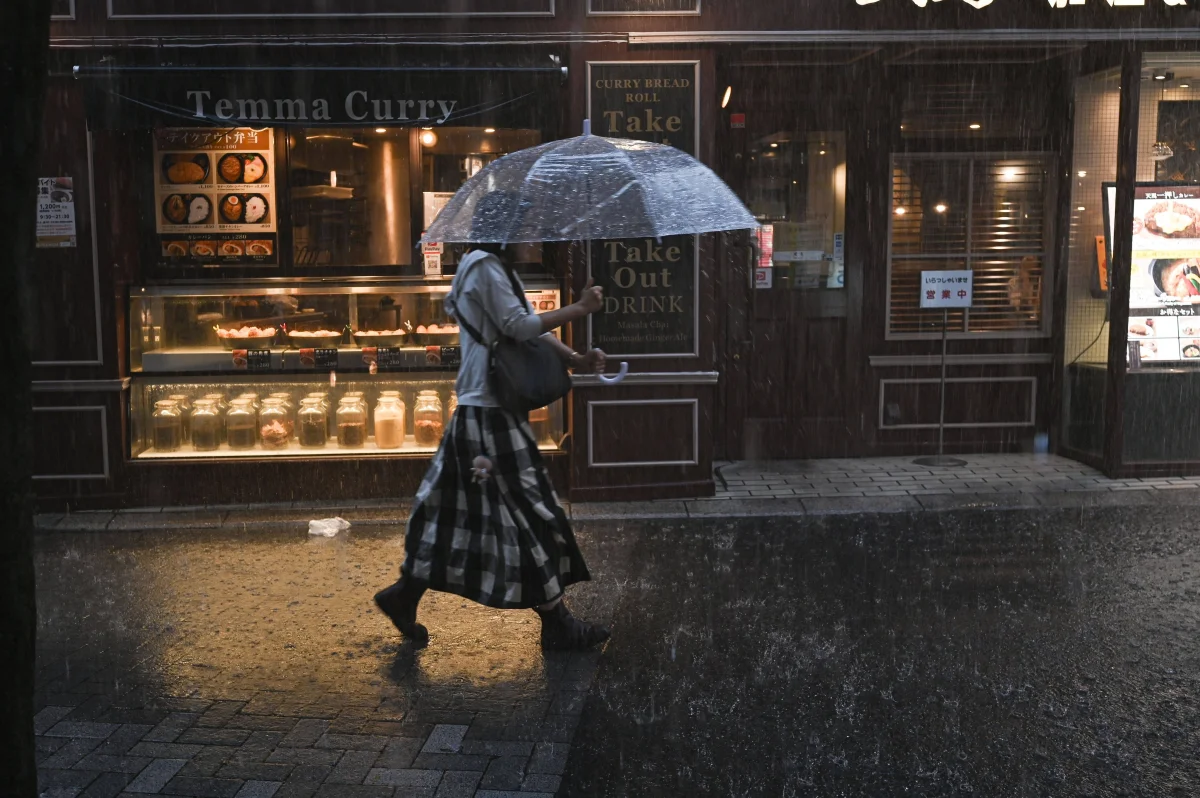
June, Kyoto: hydrangeas in full bloom, temple gardens wrapped in mist, not a single tour group on the streets. A light rain is falling, and the city looks like it's been painted in watercolor. This is exactly why some travelers choose to visit Japan specifically during its "bad" season.
Tsuyu, Japan's rainy season, scares off tourists with its name alone. The mental image is one of nonstop downpours: soaked sneakers, canceled walks, ruined photos.
In practice, tsuyu isn't a flood — it's a few weeks of elevated humidity with rain that doesn't fall constantly, doesn't fall all day, and doesn't fall evenly across the country. And for anyone willing to embrace the wet weather, it reveals Japan from an unexpected angle: quiet, green, and nearly empty.
What Tsuyu Actually Is
The word "tsuyu" (梅雨) literally translates to "plum rain" — the season coincides with the time plums ripen. The cause is a collision between warm, moist air moving up from the south (the Pacific Ocean) and cold, dry air coming down from the north (Siberia and the Sea of Okhotsk).
The two fronts meet over Japan and form a stationary atmospheric front — the so-called Baiu front — which parks itself over the archipelago for several weeks, bringing extended cloud cover and rain.
This isn't tropical downpour weather — it's a different type of rain: often light, drizzly, and long-lasting. It can fall all day or stop for a few hours before starting again. Occasionally it brings heavy downpours, especially on Kyushu and in western Honshu. But more often, it's simply gray skies, humidity at 80–90%, and the feeling that you could wring out the air itself.
When It Starts, and How Long It Lasts
Tsuyu moves from south to north — like cherry blossoms, just in reverse.
- Okinawa: late May to mid-June. The earliest start and the earliest finish — by the time rain reaches Honshu, Okinawa is already dry and hot.
- Kyushu and western Honshu (Hiroshima, Fukuoka): early June to mid-July. Rain here runs heavier than in the east, since proximity to the East China Sea adds extra moisture.
- Kanto and Kansai (Tokyo, Kyoto, Osaka): roughly June 7–10 through July 20. This is the "classic" tsuyu — three to four weeks of drizzle with occasional breaks of sunshine. Tokyo sees around 15–20 rainy days in June, though "rainy" doesn't always mean rain all day long.
- Tohoku (northern Honshu): mid-June to late July. Rain arrives here later and lingers longer.
Hokkaido is largely untouched by tsuyu. Japan's northernmost island sits outside the Baiu front's reach, and its June climate leans cool and cloudy rather than rainy. If avoiding rain is the priority, Hokkaido in June works.
Dates shift from year to year: tsuyu can start a week earlier or later than the seasonal average. The Japan Meteorological Agency (JMA) officially announces the start and end of the season — check their forecasts before your trip.
What Tsuyu Actually Feels Like
The real enemy isn't the rain — it's the humidity. At 77–82°F (25–28°C) with 85–90% humidity, even without any rain, it can feel like standing in a sauna. Clothes stick to your skin, glasses fog up the moment you step out of an air-conditioned room, and a hotel towel never quite finishes drying.
The rain itself is unpredictable. Mornings can be clear, afternoons drizzly, evenings pouring, and nights dry again — or the reverse: two straight days of gray, wet skies followed by a sunny day as if nothing happened. You can't predict any single day, but the overall backdrop stays gray and humid.
Even in Tokyo, it doesn't rain every day during peak tsuyu. Statistically, out of 30 days in June, 10–12 stay dry — you just never know which ones in advance. A collapsible umbrella in your bag is essential, and locals carry one year-round.
Should You Cancel Your Trip?
Short answer: no. Longer answer: it depends on your priorities.
Cancel if your only goal is the beach. Okinawa's beaches in late May and early June are drenched in rain, and on Honshu, beach season doesn't start until July anyway. If sunbathing is the entire plan, tsuyu is a bad match.
Don't cancel if you're going for temples, cities, food, and culture. All of that works fine in the rain — and in some ways, works better:
- Far fewer tourists
June falls between cherry blossom season (April) and summer vacation (July–August). Fushimi Inari in Kyoto, a solid wall of people in April, sits half-empty in June. Temples run without lines, trains have open seats, and ryokan often offer pleasant discounts.
- Hydrangeas in full bloom
If cherry blossoms symbolize spring, then ajisai (hydrangeas) symbolize tsuyu. Blue, purple, and pink flower clusters cover temple hillsides and parks. In Kamakura, Meigetsu-in temple transforms into the "hydrangea temple" — a spectacle that draws photographers from everywhere. In Tokyo, the Bunkyo Ajisai Matsuri festival celebrates the same bloom. The flowering lasts throughout June.
- Greenery at its peak
The moss gardens of Kyoto (Saiho-ji, better known as Koke-dera) look richer and more vivid in the rain than in dry weather — the moss absorbs moisture and seems to glow from within. The Arashiyama bamboo grove wrapped in fog produces a shot you simply can't get on a sunny day.
- Lower prices
Hotels in Kyoto and Tokyo run 20–30% cheaper than during April or October–November.
What to Wear and What to Pack
Tsuyu is a season where your wardrobe choices really matter.
Waterproof footwear is essential. Sneakers soak through within half an hour. Lightweight membrane trekking shoes or rubber ankle boots are the way to go. During tsuyu, Japanese locals widely switch to foldable rubber boots, sold at any Uniqlo or Don Quijote.
Always carry a compact folding umbrella. In Japan, umbrellas are practically part of the culture — every store entrance has an umbrella stand, and every convenience store sells clear plastic umbrellas for 500 yen (roughly 300 rubles) in case you forgot yours.
Light, breathable, quick-drying clothing is your best bet. Skip cotton — it absorbs moisture and never quite dries. Synthetic or blended fabrics work better. A lightweight rain jacket with a hood is more practical than an umbrella if you're climbing temple staircases.
A thin Japanese tenugui towel comes in handy — wrap it around your neck, dry your hands, dab your face. Sold everywhere for 300–500 yen, it becomes indispensable during tsuyu.
A ziplock bag or waterproof case for your phone and camera will save you a lot of trouble in this weather — humidity kills electronics slowly, but rain kills them fast.
What to Genuinely Watch Out For
Tsuyu isn't purely aesthetic drizzle. In some years, the season brings catastrophic downpours, particularly in western Japan. In July 2018, Kyushu and western Honshu received more than 500 mm of rain over three days — flooding, landslides, and over 200 fatalities. That's not typical tsuyu, but it's not impossible either.
Practical takeaways: monitor JMA warnings, avoid mountain routes during heavy rain days, and steer clear of areas near rivers and slopes. Trains and domestic flights can be canceled during extreme precipitation — build flexibility into your itinerary.
Where to Go If You Want to Minimize Rain
If your travel dates are locked into June and you'd rather stay dry, you do have options.
- Hokkaido
Tsuyu doesn't reach here. June brings 59–68°F (15–20°C) and cloudy skies, but no extended rain. The lavender fields of Furano haven't bloomed yet (that's July), but the landscape is fresh and green. Sapporo, Otaru, and Daisetsuzan National Park are all fully accessible.
- Okinawa in late June
Tsuyu on Okinawa wraps up by mid-June — earlier than it even begins on Honshu. Late June into early July brings hot, sunny, dry weather to Okinawa, with beach season in full swing.
The Overall Map: When's Best to Visit Japan
- March–May. Cherry blossoms (late March–April), mild weather, tsuyu still far off. April is the most popular month, with prices and crowds at their peak.
- June–mid-July. Tsuyu. Cheaper, quieter, hydrangeas in bloom — ideal for anyone unbothered by rain who wants to see Japan without the crowds.
- Late July–August. Hot (91–95°F / 33–35°C), humid, festival season (Gion Matsuri in Kyoto, fireworks nationwide). Typhoons possible starting in August.
- September. Typhoons, but good weather in between — a riskier but rewarding month.
- October–November. Momiji (red maple leaves). Comfortable, beautiful, dry. November in Kyoto is the second most popular period after cherry blossom season.
Tsuyu isn't "bad weather" — it's a different Japan. One where temples drown in hydrangeas, moss glows under the rain, and you walk the streets of Kyoto with an umbrella in hand, with no one around you except the city itself — a city that's more than a thousand years old.