The Black Sea, sandy beaches with no sudden drop-offs, and prices your wallet won't wince at. Bulgaria stopped being a "budget substitute" long ago, and here's why people keep going back.
You're scrolling through summer holiday options: Turkey is expensive and stifling, Sochi is expensive and crowded. And then Bulgaria pops up in the results. Your first reaction: "Is it actually any good?" Your second, after the trip: "Why didn't I go sooner?"
A wide sandy shore, a gentle slope into the water where a child can stand waist-deep twenty metres out, and dinner for two for €30–45, wine included. Here's when to go, where exactly, and what Bulgaria offers that Turkey doesn't.
When the Season Starts, and When the Sea Is Actually Warm
Officially, the beach season on the Bulgarian coast starts in late May — early June. But "starts" and "comfortable for swimming" aren't the same thing. In early June, the water is still 20–21°C, and after your third dip you'll be heading for the shore.
The real swimming season runs from the second half of June to mid-September.
Here's what the coast looks like month by month:
-
June. Air 25–27°C, water 21–22°C. The first half of the month is still too cool for long swims; the second is comfortable. The beaches are half empty and prices are below peak.
-
July. Air 28–30°C, water 24–25°C. Peak season: hot, crowded, with prices at their highest. There's little rain — five or six days of it a month on average.
-
August. Air 28–30°C, water 25–26°C, the warmest of the year. The driest month, with rain on four or five days on average. The big resorts (Sunny Beach, Golden Sands) are packed.
-
September. Air 24–26°C, water 22–23°C. The velvet season, as Russians call the mellow late summer: fewer tourists, the sea still holding its warmth, and fruit at the markets for next to nothing. By the end of the month the evenings get cool, but the first two or three weeks are fine for swimming.
If your goal is warm water without the crowds, the best windows are the second half of June and the first half of September.
Why Not Turkey?
It's the question people ask most. Turkey is a tried-and-tested option, with all-inclusive deals and the warm Mediterranean. Why switch? Here are a few reasons people choose Bulgaria, and keep coming back.
-
A Sea for Children
The Bulgarian coast is made up of gently sloping sandy beaches with an easy way in. At resorts such as Albena, Sveti Vlas or Nessebar, a child can walk ten or fifteen metres out and still be only knee-deep. You'll find that in Turkey too, but drop-offs and rocks are more common on the Aegean and Mediterranean.
-
Lower Prices
According to Eurostat, Bulgaria remains one of the cheapest countries in the EU: price levels for hotels and restaurants are around 53% of the EU average. Lunch at a café costs €8–15, and dinner for two with wine €30–45. A beer in a bar is €2–3, and less than a euro in a shop.
A similar dinner at a Turkish resort restaurant outside the all-inclusive system will cost noticeably more.
-
Europe in Your Pocket
On January 1, 2026, Bulgaria switched to the euro. The lev is history: no more calculators and exchange rates, no more "so how much is that in real money?" For travellers from the eurozone there's no conversion at all, and for everyone else there's one clear exchange rate.
-
A Familiar Language
Bulgarian is a Slavic language written in Cyrillic. You can read the signs without a dictionary, the restaurant menu makes intuitive sense, and it's easier to talk to staff than in most European countries. In Turkey, the language barrier is lower than in Asia, but higher than in Bulgaria.
-
No "Factory" Feel
Turkey's all-inclusive mega-hotels are a conveyor belt: wristband on, straight to the pool. Bulgaria works differently: small hotels, apartments and guesthouses. You can rent a flat on the seafront and eat at a different mehana (a traditional tavern) every evening. For anyone tired of the "never leave the hotel" format, it's a breath of fresh air.
What Turkey Does Better
To be fair, not everything is in Bulgaria's favour.
On the Antalya coast, swimming is comfortable from May to October, almost half the year. In Bulgaria, the sea is swimmable from mid-June to mid-September, a noticeably shorter season. If your holiday falls in May or October, Bulgaria isn't an option.
The Mediterranean off Turkey reaches 27–29°C in summer. The Black Sea off Bulgaria peaks at 25–26°C in August. A difference of three or four degrees is noticeable, especially if you like to spend hours in the water.
Turkey's all-inclusive system has been perfected: for a fixed price you get food, drinks, entertainment and the pool. Bulgaria has all-inclusive too, but the choice is more limited, and the savings are less obvious, because eating out is already cheap.
Where to Go: Resorts for Every Taste
The Bulgarian coast covers about 380 km of Black Sea shoreline, with a dozen or so resorts. Here are the main ones and how they differ.
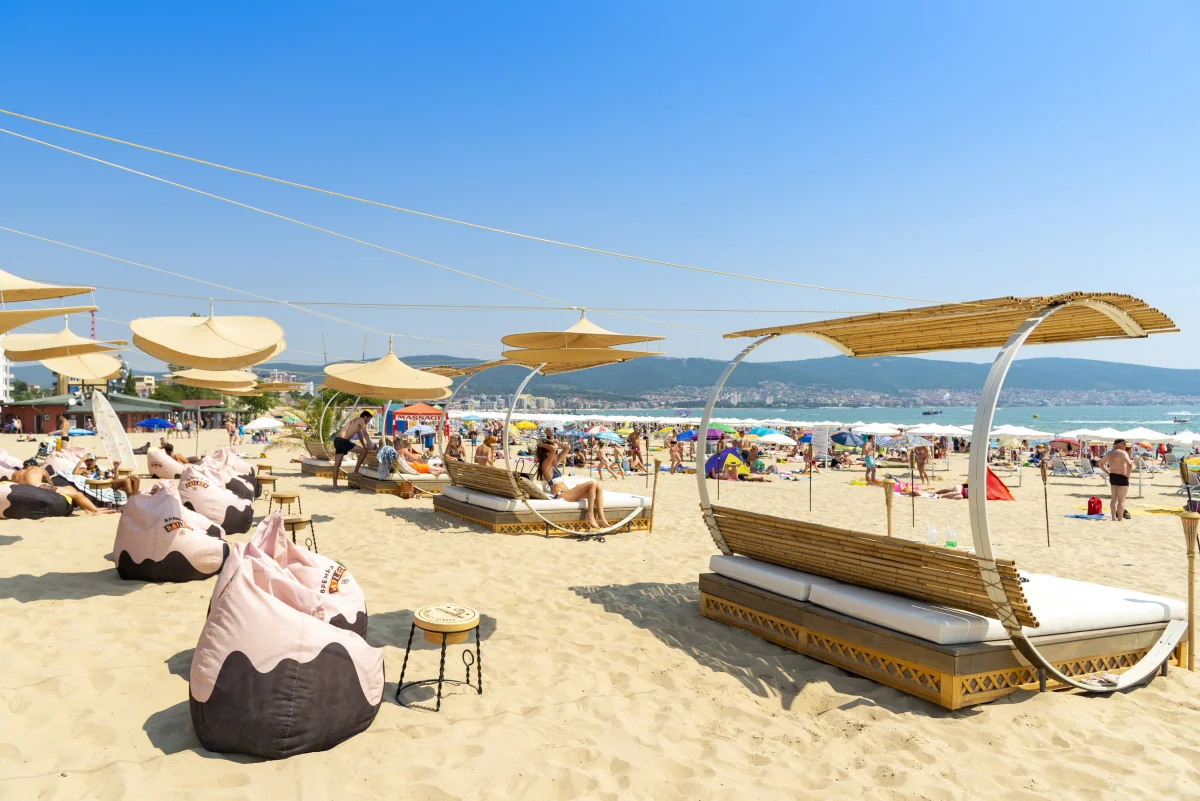
Sunny Beach is the country's biggest resort. The beach is about 10 km long, with fine golden sand. The facilities are second to none: water parks, clubs and restaurants. But in summer it's very crowded, and the nightlife is loud.
It suits young people and anyone who likes a buzz. Families with small children are better off in the southern part of the resort, which is quieter.
Golden Sands is the second-largest resort, north of Varna. A wide beach with a nature park behind it. Hotels at every level and plenty to do, but the atmosphere is a little calmer than at Sunny Beach. Good for an active beach holiday and trips into Varna.
Nessebar is a town rather than just a resort. Its Old Town on a peninsula is a UNESCO World Heritage Site: cobbled lanes, medieval churches (the oldest dating from the 5th century) and little fish restaurants with sea views. The beaches are more modest than at Sunny Beach, but there's atmosphere and history. Ideal for anyone who wants more than just lying on the sand.
Sozopol is "Bulgaria's Dubrovnik," though the comparison is a stretch. An old town on a headland, two main beaches (Central and Harmanite), and plenty of fish restaurants and galleries. Quieter and more intimate than Sunny Beach. Good for couples and families who value a cosy feel.
Sveti Vlas is a small resort next to Sunny Beach, but without the noise. A yacht marina, mountains behind it and clean beaches. Popular with families with children and those who want peace and quiet with access to the facilities of the neighbouring resort.
Albena is an "everything for families" resort: a wide beach with the gentlest of slopes into the water, green grounds and playgrounds. It's a gated resort, and cars are left at the entrance. The downside: there are few places to stay outside the resort's own hotels.
Pomorie is a small town between Burgas and Nessebar, known for its therapeutic mud and laid-back atmosphere. The beaches are narrow but uncrowded, and prices are lower than at the big resorts.
Getting There
There are currently no direct flights from Russia to Bulgaria. You can get there with a connection, most often via Istanbul or Belgrade. Total journey time depends on the connection.
The coast has two main airports: Burgas (for the southern resorts: Sunny Beach, Nessebar, Sozopol and Pomorie) and Varna (for the northern ones: Golden Sands, Albena, and Saints Constantine and Helena).
Visas
Bulgaria is a member of the Schengen Area. Russians need a Schengen Type C visa. If you already have a valid Schengen visa issued by another country, you don't need a separate one.
The consular fee is €90, plus a VFS Global service fee of around €30. Children under 12 are exempt from the consular fee. Processing takes at least 15 calendar days.
When Is the Best Time to Go?
-
The second half of June: the sea has warmed up, the beaches aren't packed yet and prices are moderate. The best start to the season.
-
July–August: maximum heat and sunshine, but also maximum crowds and prices. Suits those tied to the school holidays.
-
The first half of September: the velvet season. Water 22–23°C, comfortable air temperatures, prices down by a third and fruit at the markets for a song. Perhaps the best time for adults who aren't tied to school holidays.
Bulgaria doesn't compete with Turkey head-on; it offers a different kind of holiday. Not "wristband and pool," but a town, a market, an evening promenade and mussels in the mehana round the corner. The sea is simpler and the season shorter, but the prices are gentler, the beaches wider, and the feeling of being on holiday rather than on a conveyor belt is worth a lot.