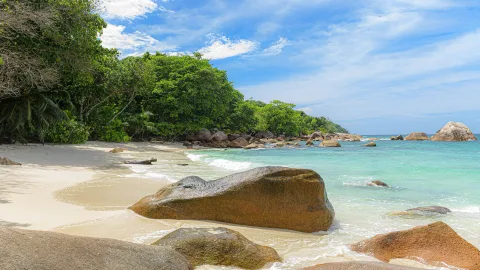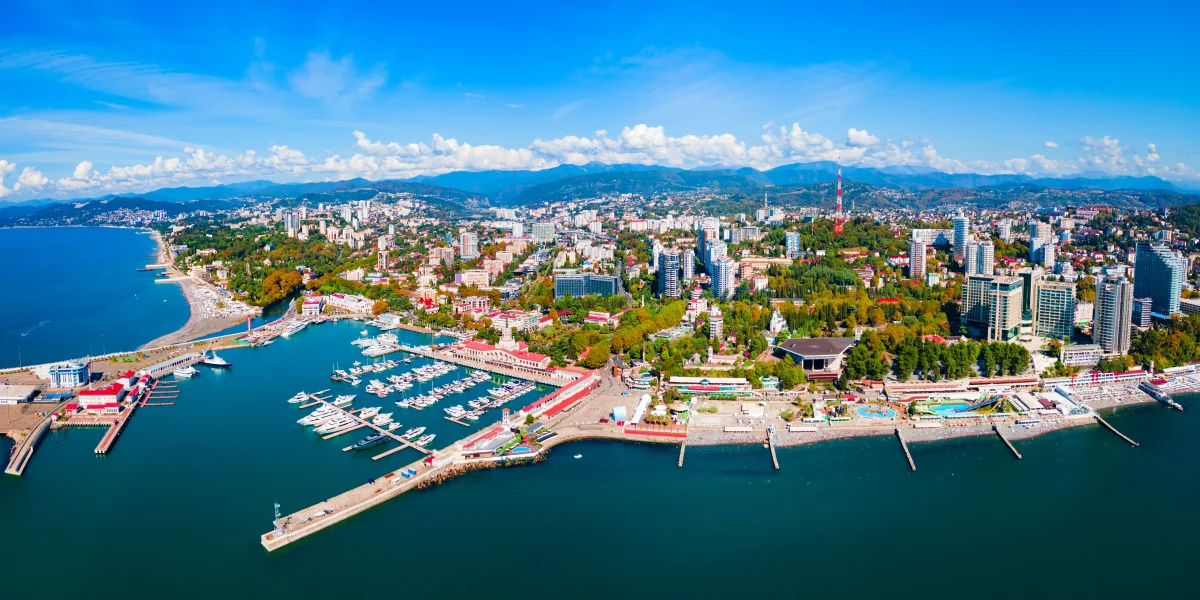
Swimming season in Sochi is one of the longest in Russia: roughly five months, from late May through mid-October. But the gap between "you can get in the water" and "you never want to get out" is nearly two months.
Sochi is the country's southernmost major city. The Caucasus mountain range shields the coastline from northern winds, creating a humid subtropical microclimate. The sea here warms up earlier and cools down later than in Anapa or Crimea.
But even on the warmest stretch of the Black Sea, the swimming season isn't a flat line — it's a curve with a slow start, a short peak, and a gradual decline.
May: The Formal Opening
Officially, beach season kicks off on June 1 — EMERCOM sets up lifeguard posts, lounger rentals open, and beach cafés start serving. But in practice, the first brave souls wade in by late May.
Water at this point is +17–19°C. Bracing. Most people go in knee-deep and walk right back out. Sunbathing is already comfortable — air at +22–25°C, bright sunshine — but proper swimming is still premature.
The upside of May: prices and empty beaches. Hotels cost half of what they do in July, the promenade isn't jammed, and restaurants have open tables.
June: The Real Start
By mid-June, the water reaches +21–23°C — the threshold where swimming shifts from an act of courage to a pleasure. Air temperature hits +25–28°C, rain is scarce, and daylight stretches long.
The first half of June is the best window for anyone wanting to combine sea and tranquility. School holidays haven't started yet, and there are few families with children. By the second half, the influx ramps up sharply.
July and August: The Peak
The hottest and busiest months. Air at +28–33°C, water at +25–28°C. In August, the sea hits its annual maximum — reaching +29°C in places. You can swim from early morning until late evening.
The flip side of the peak:
- Humidity at 75–80% turns the heat from pleasant to punishing. Sochi isn't dry Crimea — you sweat even standing in the shade.
- Beaches are overflowing. Finding a free lounger by noon is a rarity. Wild beaches between Loo and Lazarevskoye are a less crowded alternative.
- Jellyfish. In August, moon jellies and rhizostomes move toward shore. The former are harmless; the latter sting noticeably. In some years there are so many that swimming becomes an exercise in evasion.
- Prices at their ceiling. Hotels, food, excursions — everything runs 40–60% higher than in June.
September: Velvet Season
For many seasoned travelers, September is the best month in Sochi. The heat eases to +24–27°C, the sea is still warm at +23–25°C. Humidity drops, breathing becomes easier. The jellyfish leave.
Tourist numbers thin out noticeably: children are back in school, the family wave has receded. Beaches are more spacious, prices slide downward. Markets fill with figs, persimmons, loquats, and grapes. Evenings are warm enough for a promenade dinner in a T-shirt.
The only risk: brief downpours. Sochi is one of the rainiest cities in Russia, and autumn storms can be intense. But they pass quickly — an hour or two, then sunshine again.
Can You Swim in October?
In the first half of October, water holds at +20–22°C. That's the level of the Baltic in June — not bathwater, but perfectly comfortable for adults. Many Sochi locals swim through mid-month and consider it entirely normal. Air sits at +20–23°C during the day, the sun is gentle, evenings turn cool.
By the second half of October, the sea drops to +18–19°C, rains become more frequent, and wind picks up. Swimming becomes a pursuit for enthusiasts only. By November, water falls to +15–16°C — the season is effectively closed.
October suits those coming for more than just the beach: walks through the Yew-Boxwood Grove, a trip to Krasnaya Polyana (ski season hasn't started yet, but the cable cars are running), excursions into Abkhazia. A morning swim on a warm day is a pleasant bonus — but not a guarantee.
November and Beyond: Not Anymore
In November, water is +14–16°C, air +12–16°C, and rain is frequent. Beach infrastructure shuts down. A few hardened swimmers enter the sea through December, but calling it a swimming season would be a stretch.
On the upside, November brings the lowest prices of the entire year. For anyone who wants spas, restaurants, and mountain hikes without needing the sea, it's an excellent window.
Choosing Your Month
Want guaranteed warm sea — July or August, but brace for heat, crowds, and peak prices. Want comfort without extreme congestion — June or September. Want quiet and low prices while the sea is still swimmable — the first half of October.
And if your schedule allows for just one week — put your money on the second half of September: the sea is +23°C, the beach is free, the figs at the market are fresh, and all of it comes at half the price of the August peak.