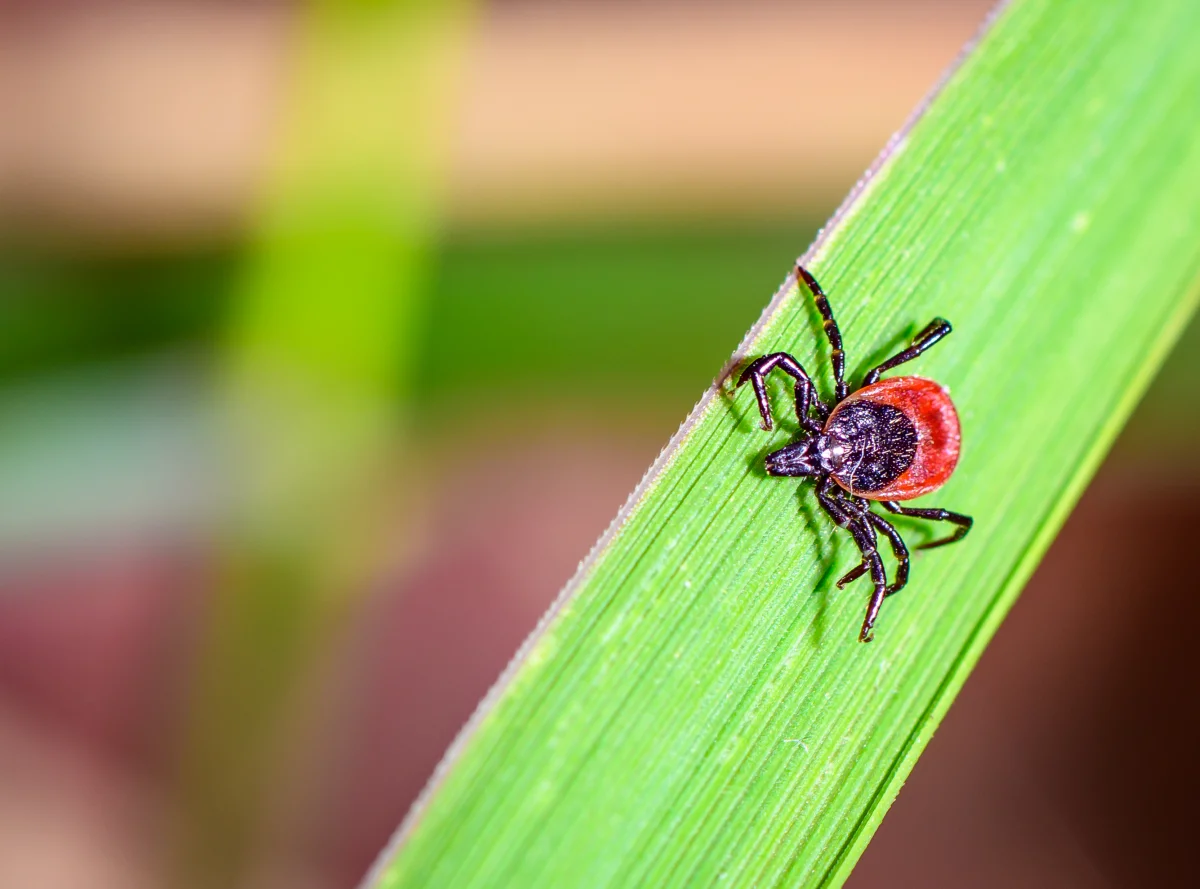
Ticks in Russia are active from April through October. But May and June alone account for more bites than the other five months combined. After winter hibernation, the parasites are hungry, aggressive, and climb up onto grass blades to wait for a victim at the exact moment people flock to picnics and their dachas.
The 2026 tick season started earlier than usual — a warm March woke the parasites up as early as late March in southern regions, and by mid-April they were active across all of central Russia. According to Rospotrebnadzor, by early summer more than 43,000 Russians had sought medical attention — and the season is far from over.
Two Activity Peaks Per Season
Ticks aren't equally active all summer. Their activity has two distinct peaks, separated by a relative lull.
The first: May–June. The main and most dangerous peak. Ticks have overwintered in the forest floor, hungry and ready for their first feeding. Temperatures of +15–22°C and high humidity after the snowmelt create ideal conditions. These two months alone account for 60–70% of all seasonal bites.
Then comes a July lull. Ticks dislike hot, dry weather — at +30°C and low humidity, they retreat into the leaf litter and reduce activity. July in central Russia is relatively safe, though "relatively" is the operative word — bites still happen even in the heat.
The second peak: August–September. Nights turn cooler, humidity climbs, and ticks return to the grass. This second wave is weaker than the first, but it catches people off guard — many assume the danger has passed by autumn.
The season ends decisively with the first sustained frosts — usually in October, or November in southern regions.
Why Spring Ticks Are More Dangerous Than Autumn Ones
It's not about the number of parasites — it's about their infection rate. A tick that survived winter carries pathogens accumulated over the previous season. Tick-borne encephalitis virus and Lyme disease bacteria persist in the tick's body all winter and transmit with the first spring bite.
Spring brings out adult ticks — large, hungry, and capable of remaining attached for a long time. By autumn, nymphs join them — small, nearly invisible, and precisely for that reason treacherous: their bite is easy to miss.
The second factor is timing overlap with human activity. May is dacha season, barbecues, picnics, forest walks, gathering the first spring greens. People flood into tick habitat exactly when the parasites are most active.
Where and How Ticks Attack
A common myth is that ticks jump from trees. They don't jump and they don't fly. A tick perches on a grass blade or shrub at a height of 20–80 centimeters and waits for a warm-blooded creature to pass by.
Sensing warmth and carbon dioxide from breathing, it grabs onto clothing or skin and crawls upward, toward areas with thin skin and good blood supply.
Favorite attachment sites on the body:
- The groin area.
- The armpits.
- The neck and behind the ears.
- The scalp.
- The bends of elbows and knees.
Between landing on clothing and actually biting, 30–60 minutes pass — the tick crawls upward, choosing a spot. That's the window in which you can spot and remove it. This is exactly why checking yourself every 1–2 hours is the most effective prevention.
What Diseases Ticks Carry
A tick isn't just an unpleasant parasite — it's a vector for more than ten infections, two of which pose serious health risks.
Tick-borne encephalitis. A viral disease affecting the central nervous system. Severe cases can lead to meningitis, paralysis, or death. Mortality with the Far Eastern subtype reaches 20–30%. A vaccine exists and works, but must be administered in advance — at least two months before the season begins.
Borreliosis (Lyme disease). A bacterial infection far more widespread than encephalitis — infected ticks turn up even in regions not classified as encephalitis-endemic.
A telltale sign is a ring-shaped rash around the bite site (erythema migrans), though it doesn't always appear. Left untreated, the disease affects the joints, heart, and nervous system. There's no vaccine, but it's treatable with antibiotics — provided the diagnosis comes in time.
In 2026, specialists noted the expanding range of Hyalomma ticks — large, fast-moving parasites that carry Crimean-Congo hemorrhagic fever. Previously confined to the south, they're now being recorded in Voronezh, Volgograd, and Rostov oblasts.
How to Protect Yourself From a Tick Bite
Tick protection operates on four levels, each reinforcing the last.
- Clothing
Light-colored (easier to spot a tick against it), with long sleeves and pants. Pants tucked into socks or high boots — sounds ridiculous, works reliably. Snug cuffs on sleeves. The main goal is preventing the tick from reaching skin at all.
- Repellents
DEET-based products go on skin; permethrin-based products go on clothing. Permethrin doesn't just repel — it kills ticks on contact. Treated clothing retains its protective properties through several washes. This is the most reliable chemical defense.
- Checks
Every 1–2 hours outdoors and immediately upon returning. Inspect your entire body, including the scalp, behind the ears, and skin folds. If you're with someone, check each other. A tick crawls upward, and if undetected, it will attach within an hour.
- Vaccination
The tick-borne encephalitis vaccine is for anyone living in endemic regions or planning outdoor trips. The course is two doses spaced 1–7 months apart, with a third dose a year later. Booster shots every three years.
What to Do If a Tick Bites You
If you find an attached tick, act calmly but without delay.
Extract it with a twisting motion — using tweezers, thread, or a specialized tick remover. Don't yank — the head will tear off and remain in the skin. Don't squeeze the abdomen — its contents will enter the wound. Don't apply oil, gasoline, or nail polish — none of this helps, and it makes the tick release more saliva carrying pathogens.
After removal, place the tick in a container with a damp cotton pad and take it to a lab for testing. Results will show whether it's infected and with what. Lab addresses are listed on your regional Rospotrebnadzor website.
See a doctor within 72 hours. If tick-borne encephalitis is confirmed, immunoglobulin is administered. For borreliosis, a course of antibiotics. The sooner treatment begins, the higher the chance of avoiding complications.
When You Can Actually Relax
Fully — never, as long as it's above +5°C and you're outdoors. But risk level shifts by season. The safest period is mid-July during a hot, dry summer: ticks hide from the heat.
With the first sustained frosts (usually late October–November), the season ends. Ticks retreat into the leaf litter to overwinter — and wake up the following spring, hungry and ready for a new season. The cycle repeats year after year, and the one thing that keeps changing is the range boundary: with each passing decade, ticks push further north, tracking the warming climate.