Karelia is one of the few places in Russia with no "wrong" season. Summer brings white nights and warm lakes. Autumn brings golden forests and baskets full of mushrooms. Winter brings frozen waterfalls and the northern lights. Even spring, when everything melts, draws visitors who come specifically for the ice breakup on the Suna River and the first white nights.
The republic stretches from Lake Ladoga to the White Sea — 180,000 square kilometers of forest, rock, and water. It has 27,000 lakes and nearly 30,000 rivers. The climate is northern, unpredictable, and honest: it doesn't pretend to be southern or promise warmth it can't deliver. But every season offers something you can't get any other time.
Summer: The Most Popular and Shortest Season
Karelian summer runs from mid-June through late August — ten weeks, of which only five or six are genuinely warm. Temperature: +18–25°C, reaching +28°C on good days. White nights run from late May through mid-July: the sun barely touches the horizon before rising again, and at two in the morning it's as bright as day.
Summer is when everything people typically travel to Karelia for becomes available.
- Kizhi
The open-air museum on an island in Lake Onego — 18th-century wooden churches on the UNESCO list. Reachable by hydrofoil from Petrozavodsk (1 hour 15 minutes). In season, several departures a day.
- Valaam
An archipelago on Lake Ladoga with an active monastery. Rocky shores, coniferous forest, and a silence that rings in your ears. An hour by boat from Sortavala.
- Ruskeala
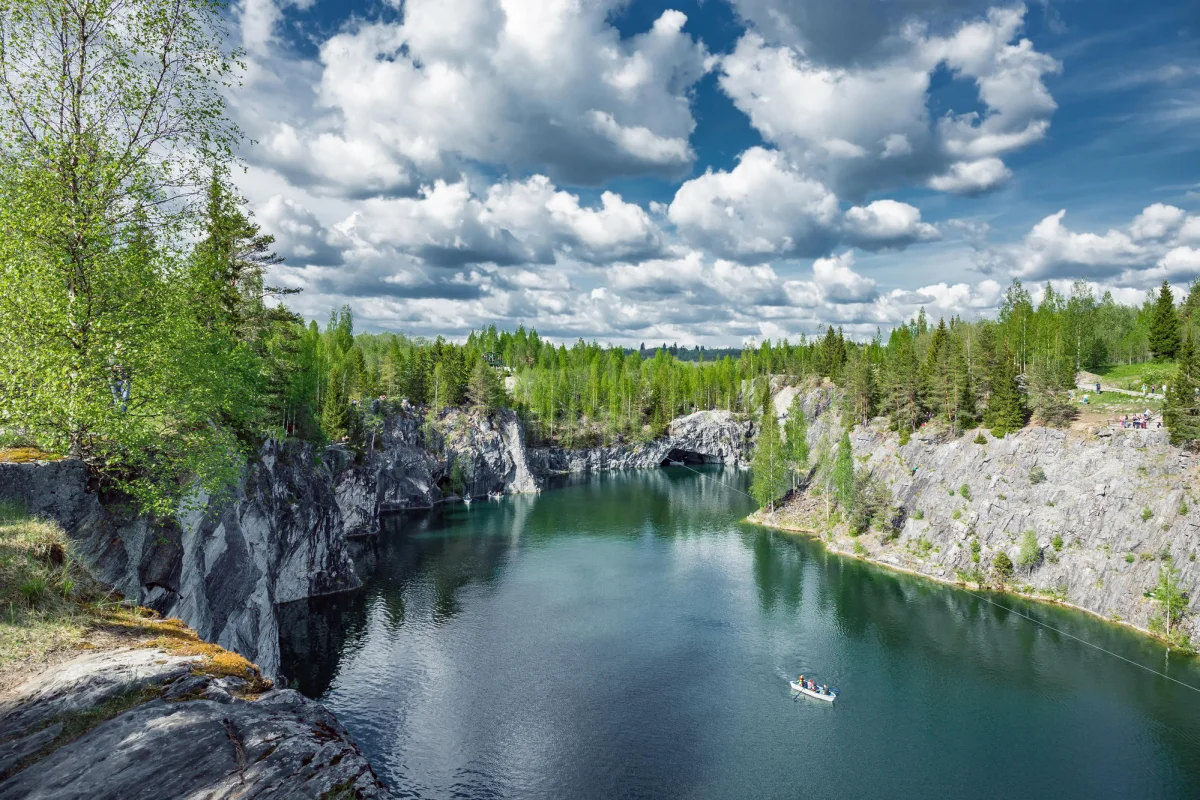
A marble canyon flooded with turquoise water. Boat rides, a zipline, underground galleries. Crowded in summer — book entry tickets in advance.
- Rafting
The Shuya, Suna, Chirka-Kem, and Okhta rivers offer routes ranging from gentle (family-friendly) to serious whitewater (experienced only). July–August is the best window: water is high and the rapids are running.
- Swimming
Lakes warm to +20–24°C by late July through early August. Syamozero, Lososinnoye, Urozero, and Koionsaari Island on Ladoga are the best spots for warm water. Onego and Ladoga in their open reaches stay cold even in summer.
Summer's biggest downside is mosquitoes and black flies. From mid-June through late July, biting insects hit peak activity. Repellent and a head net aren't precautions — they're a condition for comfort. By August, the situation improves markedly.
The second downside is crowding. July–August is peak demand: popular lodges and glamping sites get booked months out, roads to Ruskeala jam up, and lines form at the Kizhi ferry dock.
Autumn: For Those Who Value Silence and Color
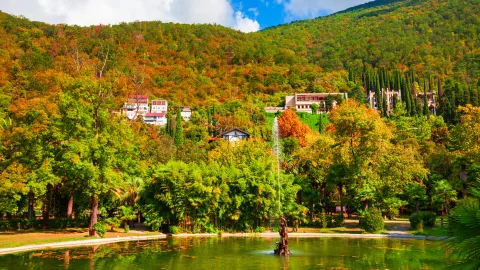
September and the first half of October are one of the best periods, if you're not tied to swimming. Mosquitoes are gone, tourists have dispersed, and forests blaze in gold and crimson.
Karelian autumn is restrained and noble. Birches turn yellow, aspens turn crimson, and conifers add dark-green contrast. Kizhi in October has no tourists at the dock. Valaam sits shrouded in mist over Ladoga. Ruskeala shows the autumn forest reflected in the canyon's turquoise water.
A separate joy is mushrooms and berries. Porcini, birch boletes, aspen boletes, chanterelles — September forests hold so much that your back tires before your basket fills. Lingonberries and cranberries in the bogs are at peak harvest.
Weather runs +8–15°C in September, +3–8°C in October. Rain is possible, but between showers come clear golden days when light breaks through the foliage and every clearing looks like a Levitan painting. A warm jacket, waterproof shoes, and a thermos are essential gear.
Accommodation prices run 20–30% below summer rates. Lodges operate, but some close by mid-October.
Winter: Unexpectedly Popular
Just five years ago, winter Karelia was a niche destination. Today it's one of the fastest-growing seasons: New Year's and January tours sell out by November.
Winter here isn't Siberian-harsh — it's moderately cold: –10 to –15°C in January, occasionally down to –25°C. Snow is abundant, lakes freeze over, and waterfalls turn into ice sculptures.
Daylight is short (5–6 hours in December), but it's compensated by the northern lights, visible in the republic's northern districts from November through March.
Winter activities unavailable at any other time:
- Dog sledding. Husky farms operate near Petrozavodsk, Sortavala, and Kalevala. Routes range from hour-long rides to multi-day expeditions across frozen lakes.
- Snowmobiling. Routes through forests and across lakes reach places inaccessible by boat in summer. Touring the Ladoga skerries by snowmobile is an experience of its own.
- Ruskeala in winter. According to park staff, the canyon is more beautiful in winter than summer: ice on the cliffs, illumination, frozen waterfalls. Far fewer people.
- Ice fishing. Onego, Ladoga, and smaller lakes yield smelt, perch, pike, burbot. For some tourists, ice fishing is the main reason for the trip.
- Sauna. A Karelian sauna on the shore of a frozen lake, complete with an ice hole for plunging, is a format worth trying at least once. Many lodges include it in the stay.
Spring: For the Patient and the Curious
April–May is shoulder season, and you have to accept that going in. Snow melts, roads turn to mush, lakes break up. Many lodges close for maintenance, and some routes become impassable.
But spring has advantages found no other time.
April brings the ice breakup: rivers and lakes shed their icy shell, and the spectacle is powerful. Kivach Waterfall after the snowmelt is at maximum force: water pours over the ledge and spray flies for dozens of meters. In summer, Kivach is more modest.
May marks the start of white nights. Daylight expands rapidly — by month's end, darkness disappears entirely. Nature awakens: first greenery, first flowers, first birds. Tourists — almost none. Prices — the lowest of the year.
The main downside is ticks. From May onward, they're active, and Karelia falls within an encephalitis-endemic zone. Vaccination or a permethrin-based repellent are essential.
How to Get There
Petrozavodsk is Karelia's capital and the starting point for most itineraries.
From Moscow: by train (12 hours, the overnight "Arktika" or "Karelia" trains), by plane (1.5 hours, but limited flights), or by car (1,000 km, 10–12 hours). From St. Petersburg: the "Lastochka" train (5 hours) or by car (430 km, 5–6 hours).
Sortavala is the second most popular entry point: the ferry to Valaam departs from here, and Ruskeala is nearby. From St. Petersburg: train (4 hours) or car.
Which Season for Which Format
- Kizhi, Valaam, rafting, swimming — summer (July–August). Maximum activities, but maximum crowds too.
- Golden forests, mushrooms, silence — September. No mosquitoes, few tourists, nature at its most beautiful.
- Snowmobiling, dog sledding, northern lights, sauna — winter (January–February). Fairytale landscapes and activities unavailable in summer.
- New Year's in a snow-covered forest — the last week of December. Magical atmosphere, but book months ahead.
- White nights without crowds — June. Night never falls, lakes are still cold, but the scenery is bathed in special light.
- A budget trip — May or November. Rock-bottom prices, no tourists. But the weather is a gamble.
And if you're picking just one season for your first introduction — late August or early September. Lakes still hold their summer warmth, mosquitoes are gone, forests are just starting to turn gold, the roads are clear, and Karelia shows itself not in its packed peak mode, but in the form that's truly its own: quiet, beautiful, and endless.