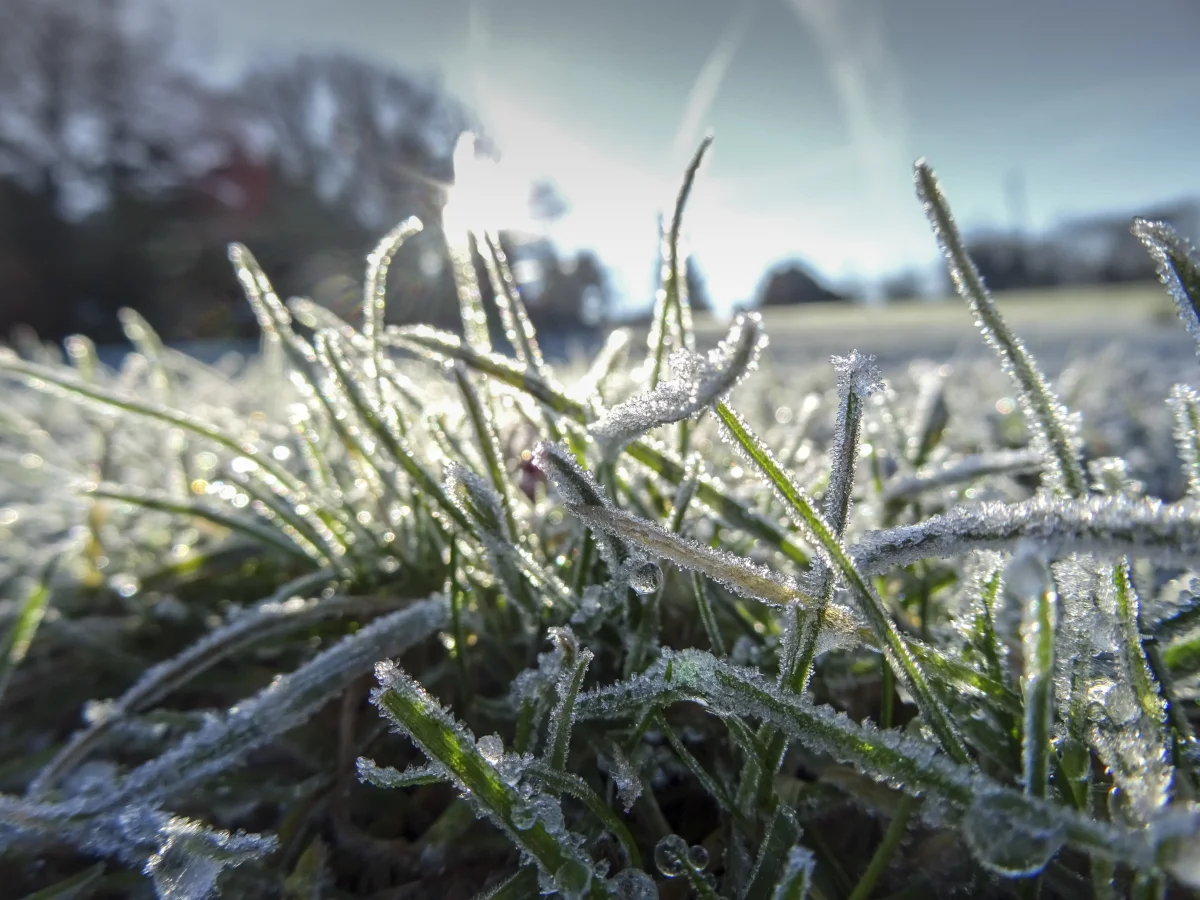
There's no single answer to "which summer was the coldest" — it depends on the era and the region. Chronicles describe snow lying on Moscow ground for several days in July 1604, with people traveling by sled. In the era of instrumental observation, the capital's cold record for summer belongs to June 1, 1916: –2.3°C.
A summer cold enough to bundle up in a jacket is rare in Russia, but far from anomalous. Over the past century and a half, the country has endured at least five such seasons, each leaving its mark on agriculture, the economy, and collective memory. And four centuries before instrumental observation began, things got even worse: crop failures, famine, regime change.
Let's trace the chronology of cold summers — from medieval chronicles to 2026's fresh paradox, when July became simultaneously the hottest in the country's history and entirely unremarkable for Moscow.
The 17th Century: Snow in July and the Start of the Time of Troubles
The most catastrophic cold summer in Russian history occurred in the early 1600s — the peak of the so-called Little Ice Age.
The cause was the eruption of Huaynaputina in Peru on February 19, 1600 — one of the largest in South American history. Volcanic ash and aerosols reached the stratosphere and blocked sunlight for several years, lowering global temperatures.
Historian Ruslan Skrynnikov, in his book "Minin and Pozharsky: A Chronicle of the Time of Troubles," describes the consequences: the summer of 1601 turned out remarkably cold; prolonged rains prevented grain from ripening, and early frost destroyed the harvest. In 1602, the pattern repeated. In 1603, again.
The peak came in 1604: snow lay in Moscow for several days in July, and residents traveled by sled. Thermometers didn't exist yet, but based on the descriptions, temperatures at the height of summer held around or below zero. Three consecutive crop failures led to a famine that killed, by various estimates, up to half a million people — becoming one of the triggers of the Time of Troubles.
1816: "The Year Without a Summer"
The next global climate catastrophe struck two centuries later. In April 1815, Mount Tambora erupted on the island of Sumbawa (modern-day Indonesia) — the most powerful eruption in 2,000 years. Approximately 150 km³ of rock and ash were ejected into the atmosphere. The resulting aerosol cloud enveloped the planet and lowered average global temperature by roughly 0.4–0.7°C.
In Europe and North America, the summer of 1816 became infamous for June snowfalls, July frosts, and widespread crop failure.
Russia was affected less severely than Western Europe — its continental climate softened the blow — but the cold, rainy summer still damaged agriculture in the western provinces.
1916: The Absolute Recorded Minimum
By the early 20th century, Russia already operated a network of weather stations, and extreme temperatures were recorded instrumentally. On June 1, 1916, thermometers in Moscow read –2.3°C — the all-time low for the summer period across the entire observational record. This record stands unbroken to this day.
The temperature rose the following day, and the summer overall wasn't abnormally cold. But the fact itself — subzero on the first day of summer — shows what atmospheric circulation is capable of: Arctic air broke through to central Russia and, for a few hours, turned June into March.
1994: The Summer That Never Was
For anyone living in Moscow in 1994, that summer is synonymous with the word "hopeless." Average monthly temperatures across all three months held 2–4°C below normal. Rainfall came in three times the usual amount. Warmth, essentially, didn't happen: people wore jackets and sweaters through all of June, July, and August.
On certain July days, Moscow's daytime temperature failed to reach +15°C. For comparison, the norm for Moscow's July is +18–20°C on average, with a typical daily maximum of +23–25°C. A gap of five degrees or more feels like a shift in season.
The cold, wet summer hit agriculture hard: grain harvests across European Russia fell significantly below average. City dwellers simply lost their summer — no tans, no swimming, no evening walks in a T-shirt.
2003: "Something That Happens Once Every 30 Years"
The summer of 2003 went down in history as abnormally cold. Russia's Hydrometeorological Center stated at the time that a temperature deviation of this scale occurs no more than once every 30 years. June and early July were damp, cool, with prolonged rain. In the dachas around Moscow, tomatoes rotted on the vine, and strawberries never ripened.
The paradox: that same 2003, Western Europe was gripped by record heat — thousands died from overheating in France. Meanwhile, in Moscow, during those exact days, people were pulling autumn jackets off the shelf. The distance between the two points: 2,500 km, and an entirely different atmospheric circulation pattern.
2017: The Second-Coldest June of the 21st Century
Late spring and early summer 2017 in European Russia turned out to be the coldest since 1994. Average June temperatures dropped 2–3°C below normal.
By month's end, daytime temperatures in parts of the Central Federal District never rose above +12–14°C.
The Hydrometeorological Center noted that June 2017 became the second-coldest of the 21st century. Muscovites, accustomed to early warmth, were baffled: June felt like a prolonged April.
2019: The Coldest July of the 21st Century
Summer 2019 didn't set any historical record, but it delivered an unpleasant surprise in August. Average July temperature in Moscow came to +16.8°C — 1.4°C below normal. That made it the coldest July of the 21st century and the coolest since 1987 (which posted the same average, +16.8°C).
And on the night of August 5, Moscow's thermometer dropped to +6.7°C — the lowest August temperature in 50 years.
Regional Records
Russia is vast, and a cold summer in Moscow doesn't mean a cold summer in the Urals or Siberia. A few regional records:
- The Urals, 2006 — average summer temperature was just +16°C, the coldest summer on record for the region.
- Perm, 2014 — the coldest June in 90 years. Four days recorded average daily temperatures below +10°C. Nighttime lows dropped to 0°C, and heavy snow fell. During the same days, sleet fell in Murmansk.
- Moscow, July 4, 1897 — daytime temperature dropped to +4.4°C. And between 1894 and 1896, on July 5–6, the thermometer read around +5°C — at the height of summer.
2026: The Paradox of the Century
A fresh example of how statistics can deceive perception. In August 2026, the Hydrometeorological Center announced: July 2026 became the hottest in Russia across all 135 years of observation since 1891, breaking the records of 2010 and 2024. But residents of Moscow and St. Petersburg never noticed.
The reason lies in the geography of the record. Abnormal heat struck the eastern Volga region, the Urals, and Siberian federal districts: average monthly temperatures exceeded normal by 2–3°C, and in Tyumen Oblast, by a full 4°C. Meanwhile, July across European Russia turned out cooler than normal — in places, by 1°C or more.
Moscow's anomaly came to +0.2°C above normal; St. Petersburg's, –0.1°C. An ordinary, unremarkable month. Siberians suffered from the heat, while Muscovites debated why summer had failed to arrive yet again.
This paradox illustrates the question of "coldest" or "hottest" summer well: national averages can conceal opposing realities across different regions.
What Determines a Cold Summer
A cold summer is always the result of anomalies in atmospheric circulation. Several specific mechanisms are at play:
- A blocking anticyclone in the wrong place
In 2010, an anticyclone parked itself over central Russia and kept rain away for weeks — the result was heat. In cold years, the anticyclone shifts elsewhere, and a series of Atlantic cyclones moves in to take its place, bringing cool, moist air.
- Arctic incursions
Cold air from the Barents or Kara Sea breaks southward, dropping temperature by 10–15°C within 24 hours. This is exactly how June frosts and July snow occur.
- Volcanic eruptions
Stratospheric aerosols reflect sunlight — global temperature drops. The effect lasts 1–3 years after a major eruption. In the 1600s and 1815, this mechanism triggered multi-year climate catastrophes.
- Ocean cycles
La Niña (cooling of the equatorial Pacific surface) can influence circulation at northern latitudes too, though the connection to a specific Moscow summer's temperature isn't direct.
Could It Happen Again?
Climatologists note that against the backdrop of global warming, average summer temperatures in Russia are rising. Recent decades run consistently warmer than the first half of the 20th century. But that doesn't rule out individual cold seasons: the climate isn't just getting warmer — it's getting more contrasting. Heat waves alternate with cold waves, and the spread between extremes is widening.
A volcanic eruption on the scale of Tambora could happen at any moment, plunging the planet into another "year without a summer." And Arctic incursions that crash temperatures in June occur regularly — the only question is whether the cold air lingers a week or departs within a day.