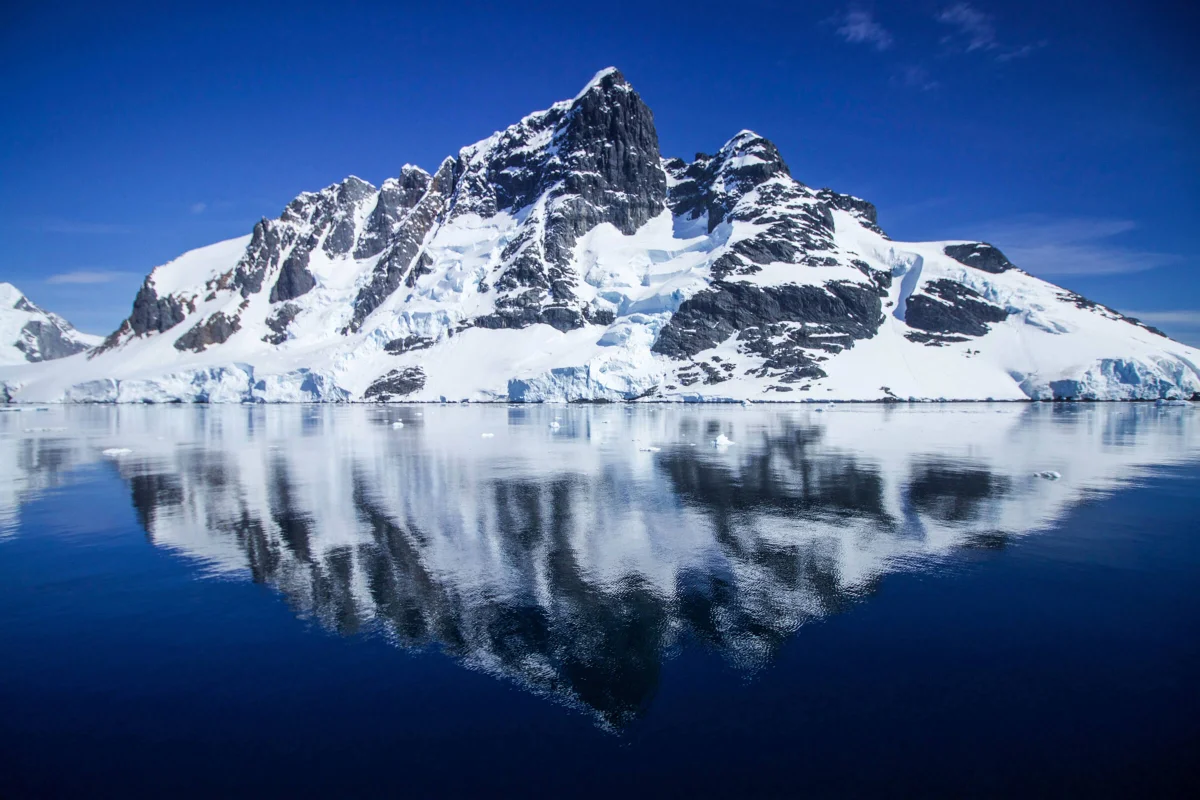
The continent of eternal ice drew many explorers to itself. To be the discoverer of new corners of Antarctica meant entering world history and inscribing one's name on one of its pages.
However, a journey to the icy expanses of the continent was, in every case, fraught with deadly risk. Even now, with modern outfitting and the most up-to-date equipment, hardly anyone would dare to set out on a dangerous journey across Antarctica.
The history of the expeditions
It must be said that in the last century interest in it was far higher than today. The desire to visit the land of permafrost at least once consumed every scientist. And harsh romance, unfortunately, sometimes prevailed over common sense. Apsley Cherry-Garrard – one of the survivors of Captain Scott's failed expedition to the South Pole – reminded people of the danger that lurks at every step for the daring. According to the explorer, the wild swings in temperature in Antarctica once caused his teeth to crack. And clothing, mostly woolen, readily absorbed moisture. Not even the high-calorie food made from a mixture of rendered fats, called pemmican, protected against scurvy.
The treachery of the continent was also well known to the famous geologist Douglas Mawson, who became the leader of the Australasian Antarctic Expedition, which set out on its long journey in 1911. At first glance, the expedition pursued scientific goals. But Mawson very much wanted to map the most unexplored places of Antarctica.
The start of the expedition
.jpg)
The polar explorers would reach a rocky bay, which they would name Commonwealth. It was from this point that they would begin their icy trek deep into Antarctica. But first they would have to spend the winter here. As it happened, the members of the Australasian expedition found themselves in the most turbulent spot on the planet. The speed of the squally wind in the bay, which cut right through them with a terrible cold, at times reached 230 kilometers per hour.
After the end of the winter, Douglas Mawson would divide the expedition into eight small parties, which would follow a set route. His companions would be the Swiss skier Xavier Mertz and the British officer and dog handler Belgrave Ninnis.
Bad omens
Early in the morning on December 14, 1912, Mawson would record that they had covered almost 500 kilometers, crossing two glaciers along the way. And here, for the first time, Douglas felt a vague unease. One night his father appeared to him in a dream. Anxiety would grip Mawson: he did not yet know that his parent had unexpectedly fallen ill and died suddenly. And then there was the pregnant husky, which killed her newborn pups right before their eyes. This weighed heavily on the psyche of the expedition members. Then, out of nowhere, a petrel flew in and struck Ninnis's sledge, and Ninnis suddenly fell ill for a time with snow blindness.
Deadly traps

Most of all, Douglas Mawson feared crevasses in the ice covered by snow. These deadly traps were encountered at almost every step. And one day tragedy struck. Belgrave Ninnis, who was walking last, plunged into the abyss. Along with him into the icy depths went all the equipment, as well as the provisions, the tent, and the sledge with the six best dogs.
Mawson and Mertz called out to their companion for five hours, faintly hoping that he had survived at such a great depth. And it was strange that, unlike the other members of the polar expedition, Ninnis did not make it past this crevasse. Douglas blamed himself for everything, although he had repeatedly warned the Briton that it was best to stand on the runners of the sledge rather than run alongside on skis.
«All that's left are the sleeping bags and food, which will last a week and a half»,– Mawson wrote in his diary. And the decision was made to return to Commonwealth Bay.
Now they had to ration the pemmican and the remaining biscuits, cocoa and raisins. Soon the specter of death by starvation, looming before Mawson and Mertz, forced them to shoot the weakened sledge dogs and eat their meat.
On their last breath

Trouble never comes alone: Xavier Mertz suddenly fell gravely ill. And advancing toward the longed-for bay became even harder. After the last exhausted dog died, Mawson dragged the sledge with the sick polar explorer himself. And it became piercingly clear to him that just a little more – and he would lie dead on the ice of Antarctica, cruel and merciless toward all living things.
Mertz would die on January 8, 1913. Mawson would bury his friend in his sleeping bag beneath a little pyramid of ice blocks cut from the ground. And in the pitch-black snowy darkness, driven on by the storm wind and the searing frost, he would set off toward the saving bay. Every kilometer came with wild pain. In his diary Mawson would note: «My whole body, apparently, is rotting from a lack of proper nutrition – frostbitten fingertips, festering sores, the lining of my nose is gone, the salivary glands of my mouth refuse to work, the skin is peeling off my entire body».
Rescue
But Mawson's ordeals would not end there. By a miracle he would climb out of an icy crevasse, expending the last of his strength. On January 29, barely able to stand, he would notice a low pyramid of stones. There he would find a note from members of the expedition and a supply of food. Douglas Mawson would reach Aladdin's Cave, which was quite close to the base camp. In the stone shelter he would find three oranges and a pineapple left on the table by his caring comrades. And for the first time Douglas would weep, realizing that his sufferings had come to an end. He would return to Australia on February 14, 1914. The whole country would greet him as a national hero.
In 2007, director Malcolm McDonald's film «When Hell Freezes Over» would be released, based on the story of the Antarctic pioneer Douglas Mawson.
Vanished into the Amazon jungle: the story of the disappearance of the famous explorer Percy Fawcett