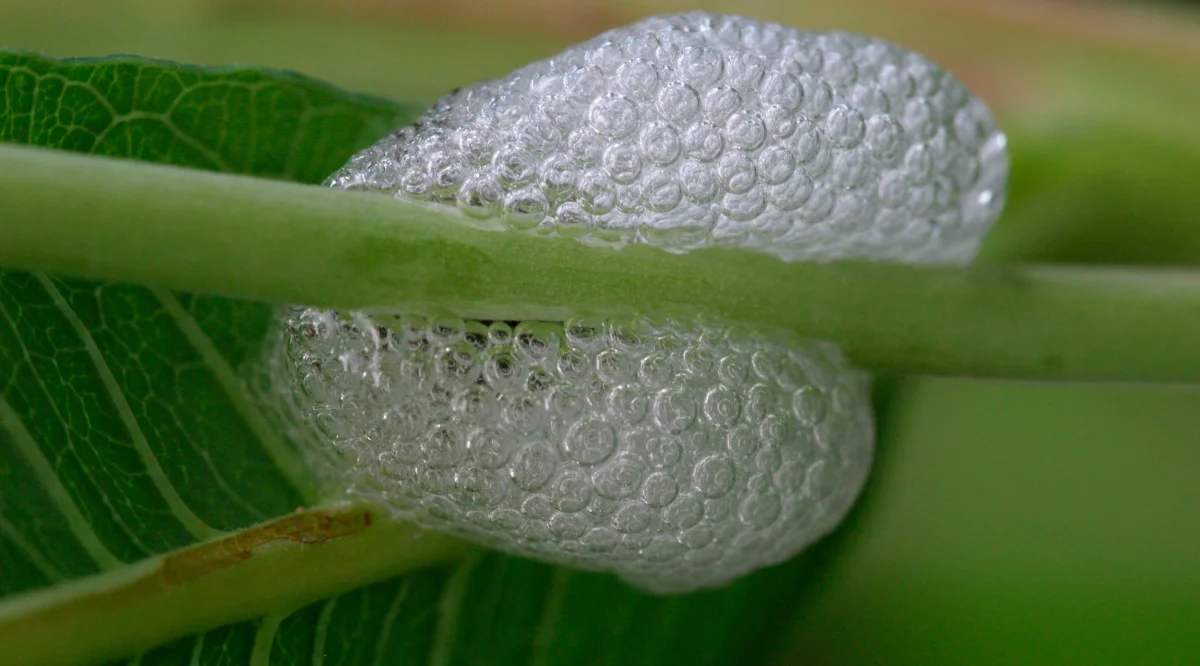
But we hasten to reassure you – for humans this phenomenon is harmless. Yet it can destroy the entire harvest not only on your plot, but on neighboring ones as well. This foam is a byproduct of an insect parasite called the spittlebug, or froghopper. It especially likes to settle on strawberry beds, on raspberries, currants, grapes, and flowers.
The spittlebug covers itself with foam as a protective barrier. In this way it lives and feeds on plant sap for a short time, and then dies. However, so-called froghoppers hatch from the foam – also pests. They continue to ruin the harvest. The spittlebug is active in May and June.
But the foam is dangerous not so much because of the insects as because of the Xylella infection, which affects neighboring crops. For example, last year this disease destroyed entire olive groves in Italy. Local growers were forced to burn the plantations so that the infestation would not spread.
Gardeners advise examining plants more carefully, promptly removing the balls of foam, and treating the crops with garlic spray.
A simple way to instantly get rid of flies: all you need is a piece of cotton wool