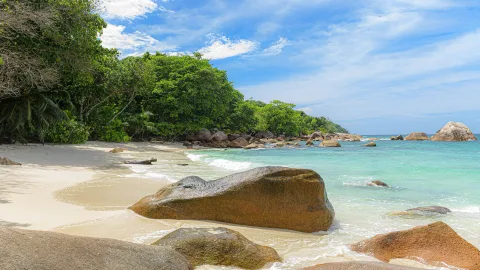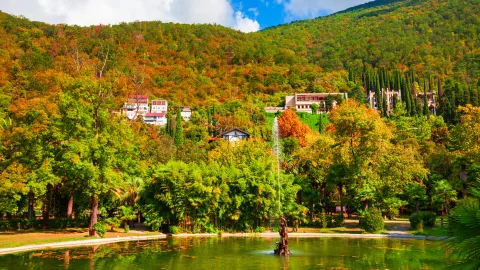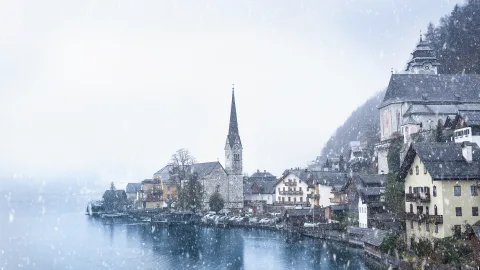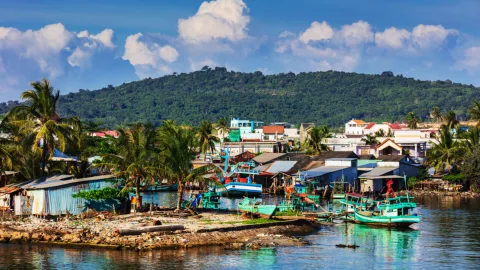
The five places on the planet where people live notably longer than everyone else are spread across completely different climate zones — from subtropical Japan to the semi-arid scrublands of California. This calls into question the most persistent myth about longevity: "move somewhere warm and you'll live longer."
In the early 2000s, demographer Dan Buettner, working with National Geographic, identified five regions on the world map with an abnormally high concentration of centenarians. He circled them with a blue marker — and the term "Blue Zones" was born.
In all five, the share of people over 90 and 100 exceeds global averages by several times over. Climate in these places does play a role — but not the one most people assume.
Five Blue Zones, Five Different Climates
- Okinawa, Japan
A subtropical island between Kyushu and Taiwan. Out of every 100,000 residents, 68 reach the age of 100 — ten times the global average. Warm, humid climate, mild winters at +16°C, hot summers at +30°C. Typhoons from June through October.
- Sardinia, Italy
The mountainous province of Ogliastra on the island's east side. One in ten families has a centenarian. Mediterranean climate: dry, hot summers and mild winters. But the long-lived don't reside on the coast — they live in mountain villages at 500–1,000 meters' elevation, where it's cooler and windier.
- Ikaria, Greece
An island in the Aegean Sea, off the coast of Turkey. One in three residents lives to 90. Classic Mediterranean climate, but with pronounced windiness — stormy winters, breezy summers. Mineral springs and hot radon baths.
- Nicoya Peninsula, Costa Rica
Tropical climate, heat year-round at +30–35°C, a pronounced rainy season. Men here are 2.5 times more likely to reach 90 than men in the United States. The hottest and most humid of all the Blue Zones — and yet one of the most successful.
- Loma Linda, California, USA
Semi-arid climate: dry, hot summers and mild winters. The air is dry, rainfall is scarce. A community of Seventh-day Adventists living here outlives the national average by 7–10 years.
What These Places Share — and It's Not Temperature
- The climate across all five zones is fundamentally different: from Costa Rica's tropical humidity to California's dryness. Mediterranean, subtropical, semi-desert — there is no single "longevity climate." But a few climatic factors do genuinely overlap.
The first is mild winters. In none of the Blue Zones does the temperature stay below freezing for long. The absence of harsh winters reduces strain on the cardiovascular system and allows people to spend time outdoors year-round. This doesn't extend life directly, but it removes one mortality factor — the winter spikes in heart attacks and strokes typical of cold regions.
The second is sunshine. All five zones receive 200+ sunny days per year. Sunlight stimulates vitamin D production, regulates circadian rhythms, and improves mood. Vitamin D deficiency is linked to elevated risk of cardiovascular disease, osteoporosis, and depression — all things that shorten lives.
The third is the ability to move outdoors all year long. Blue Zone centenarians don't go to the gym. They work in gardens, herd goats, walk mountain paths, and swim in the sea. A climate that allows this 365 days a year isn't the cause of longevity, but it's a necessary condition for the lifestyle that leads to it.
What Matters More Than Climate
Buettner's research showed that climate is far from the primary factor. All Blue Zones share things that have nothing to do with the weather.
- Diet
In all five zones, the foundation of the diet is plant-based: legumes, vegetables, greens, whole grains. Meat is rare; portions are small. On Okinawa, the principle of "hara hachi bu" applies — stop eating when your stomach is 80% full.
- Social Bonds
On Okinawa, there are "moai" — groups of five close friends who support one another for life. On Sardinia and Ikaria, the elderly live with their families, not in nursing homes. Loneliness is a proven factor in early mortality, and in the Blue Zones it's virtually nonexistent.
- Natural Physical Activity
Not workouts — everyday movement: walking mountain trails, tending a garden, manual labor. In Sardinia's mountain villages, shepherds cover 10–15 kilometers of rugged terrain daily — and keep doing it into deep old age.
- A Sense of Purpose
On Okinawa they call it "ikigai" — "the reason you get up in the morning." In Nicoya it's "plan de vida." Research links having a life purpose with a 15–20% reduction in mortality risk.
The Skeptic's View
In 2019, Oxford researcher Saul Newman published a paper that cast serious doubt on the Blue Zones concept. He found that regions with the highest concentration of centenarians often overlap with regions that have poor record-keeping: high poverty, low literacy, unreliable civil registry documentation.
In Japan, birth and marriage records were historically kept by families by hand — errors and falsifications can't be ruled out. In Costa Rica and Sardinia, paperwork was incomplete for decades. Newman suggested that some "centenarians" are statistical artifacts: people whose real age is inflated due to clerical errors or pension fraud.
This doesn't negate the fact that Blue Zone residents do indeed live long. But the scale of the phenomenon may be overstated, and climate is just one of many variables in an equation where what matters most is food, movement, and the people around you.
What About Russia?
Russia has its own geography of longevity — and it, too, is poorly explained by climate alone. Dagestan and Kabardino-Balkaria consistently rank among the regions with the highest share of people over 90. Mountain air, fresh food, strong family ties — a set of factors strikingly similar to Sardinia's.
Moscow, despite the stress, polluted air, and gray skies, shows one of the highest life expectancy figures in the country — thanks to the quality of healthcare and income levels.
Climate helps, but it doesn't decide. Moving to the seaside won't add ten years to your life if everything else — diet, movement, social connections, medical care — stays the same. The Blue Zones don't teach us where to live. They teach us how.