It all began in 1921, when the famous Canadian Arctic explorer Vilhjalmur Stefansson set out to organize a new expedition. This time – to the shores of Wrangel Island. Preparations for it proceeded at an accelerated pace, and soon a group of participants for the Arctic journey was determined. There were four of them: three Americans – Lorne Knight, Fred Maurer, Milton Galle – and the Canadian Allan Crawford. Only the first two members of the upcoming expedition had experience exploring the Arctic. The other two were newcomers.
Stefansson, as a seasoned polar explorer, assured everyone that the journey to Wrangel Island would be almost a pleasure stroll. According to him, the place was full of game, animals, and fish – and one could even forget about hunger. But he was clearly being disingenuous: the Canadian explorer's undertaking was largely political in nature. The island of polar bears was at the time considered something of a no man's land. And Stefansson very much wanted the British or Canadian flag to fly over it.
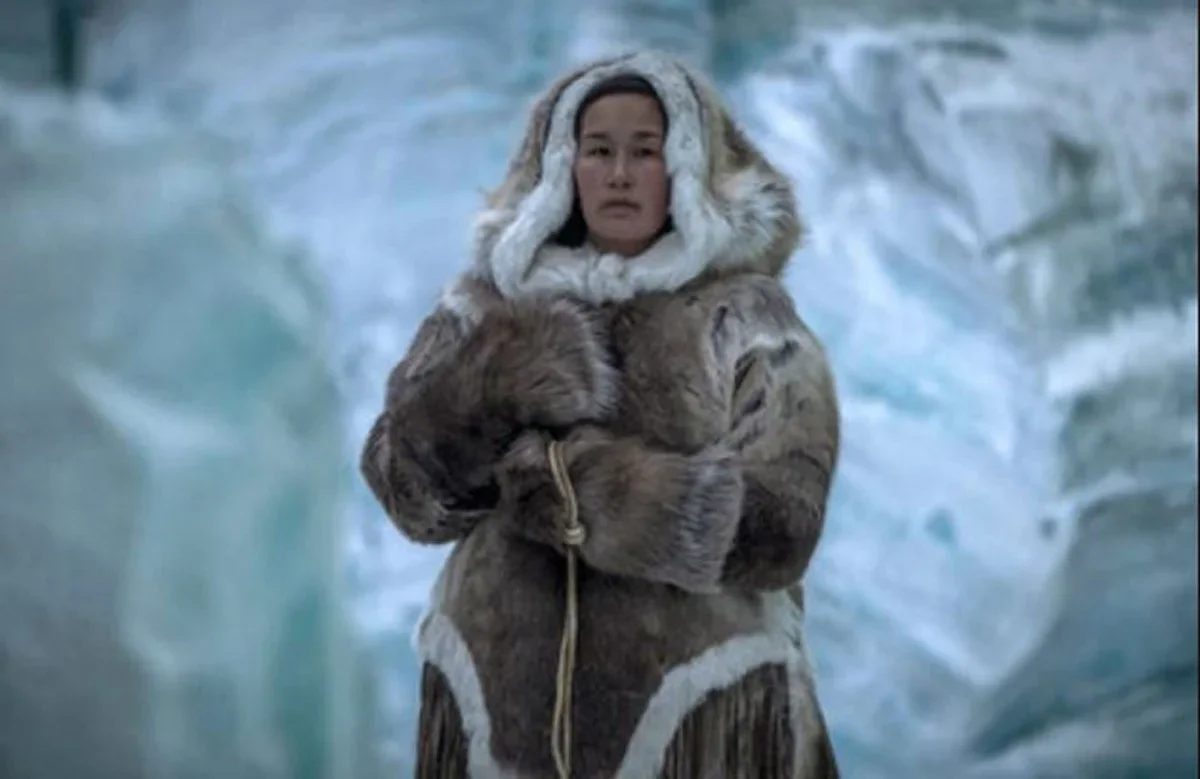
He was not sparing with his promises, but one thing can be counted to his credit. The expedition was equipped with the most essential gear and had a six-month supply of food. It was Stefansson who advised taking along the 23-year-old Inuit woman Ada Blackjack.
Who was Ada Blackjack?

The young woman, born in Alaska in the Inuit settlement of Spruce Creek, at first declined the risky journey. She was frightened by the unknown and by separation from her only son, Bennett, who was ill with tuberculosis. Ada was also afraid of the polar bears that inhabited Wrangel Island.
She differed from ordinary Inuit women in that she had received an education at a missionary school. Ada Blackjack could read, write, and conduct herself like a European woman. It is unknown what natural skills characteristic of the Inuit tribe Vilhjalmur Stefansson saw in her. But he was convinced that Ada was capable of becoming a true help to the young polar explorers in the conditions of the Arctic.
Love for her son and the desire to treat him in Seattle, where good doctors worked, determined Ada's choice. For 50 dollars a month she agreed to take part in the expedition.
The start of the expedition
On September 14, 1921, the team of polar explorers reached Wrangel Island. Only the men rejoiced at this event. Ada was dismayed by the scene that opened before her: the icy silence, unbroken by any movement, filled the woman with horror. She involuntarily recalled the words of the shaman from her native settlement, where she had been before her departure. He had warned Ada that a game with death lay ahead of her.
And at first the woman nearly lost her mind. Her condition caused concern among the expedition members. The most displeased of all was the former whaler Lorne Knight. This giant told her straight to her face that she – was a real burden to the polar explorers. By a sad irony of fate, it was Ada Blackjack who would later care for the ailing Knight, who would come down with scurvy.
Ada quickly overcame her despondency and longing for her son. Now she baked bread, cooked food, washed dishes, and sewed clothes from the bear skins they obtained.

By that time the polar explorers, relying on Stefansson's reassuring promises, were squandering food. And there turned out to be little game on the island, but this did not alarm the expedition members. They did not yet know that Stefansson, who was traveling around America giving paid lectures, had been late with his decision. And he had lost precious time. For this reason, the supply ship was unable to break through the solid ice floes.
The realization of the impending disaster brought anxiety and confusion to the ranks of the polar explorers. Lorne Knight, who had fallen ill with scurvy, only made the situation worse. Taking most of the meager supplies with them, Maurer, Crawford, and Galle decided to travel across the ice to Siberia. They planned to return with people who would rescue the two remaining expedition members from their plight. When they set off, a snowstorm broke out, driven by a bitter frost. The polar explorers vanished forever into the pitch-black icy darkness…
Alone in the snowy Arctic
Ada Blackjack was left alone on the island with the dying Knight. Now she was both a devoted caregiver and a huntress procuring food. Surprisingly, the diminutive Ada (she was 150 cm tall) seemed to find new strength, refusing to surrender to the treacherous Arctic. Once a huge polar bear stalked her. And Ada even closed her eyes, bidding farewell to life, as the beast almost breathed into the woman's face. But, by a happy chance, it noticed the carcass of a seal she had killed.
After Lorne Knight's death, Ada's loneliness was relieved by a cat named Vic, who had once followed along with the expedition. With each passing day the woman felt herself growing weaker. She even drew up a will, in which the money she had earned was to go to her mother and sister. On the condition that they take care of her son.

With her last strength, Ada hunted Arctic foxes, believing that the animals' pelts – were a valuable commodity. The fifth month of her «Robinson Crusoe ordeal» on Wrangel Island was already drawing to a close.
703 days after the start of the ill-fated polar expedition, on August 19, 1923, the schooner «Donaldson», commanded by Harold Noice, would finally appear on the horizon. It would be met only by an emaciated, exhausted woman with tears in her eyes, who would faint from joy.
Ada would return to her son and take him out of the orphanage. The brave woman would never receive the promised money in full. Ada raised most of the funds spent on her son's treatment from the sale of those very Arctic fox pelts.
Ada's later fate

Ada would marry a second time and give birth to another son, Billy. But her personal life would not work out. After her divorce, the «Woman Robinson», as journalists called her, would withdraw to her native settlement, away from noisy fame. Here she would take up hunting and gather berries, trying to avoid people. Ada Blackjack would die at the age of 85. On her gravestone was carved: «Heroine of Wrangel Island». Thus Billy Johnson – Ada's younger son, honored the memory of his mother, a simple Inuit woman who challenged the harsh and merciless Arctic.
Vilhjalmur Stefansson published a bestseller, «The Adventure of Wrangel Island», in which he used the diaries of the polar explorers and of Ada. He mentioned her heroism, but devoted most of the pages to justifying his own mistakes. In doing so, he earned a whole fortune from the publication.
Five days trapped in a sandy canyon: the rescue story of Aron Ralston, which was made into a film