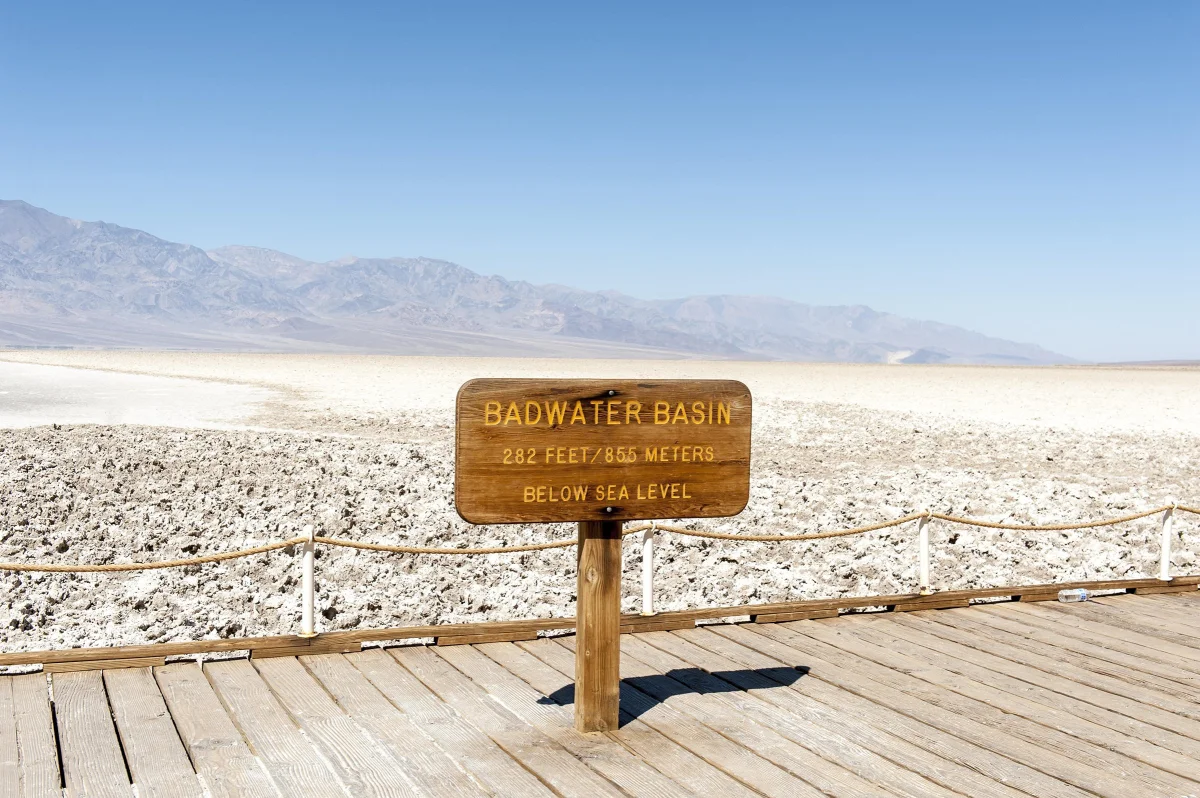
Death Valley is considered one of the hottest regions in the world. And yet more than 300 people call this area home. Most of them are employees of the National Park Service and of local hotels.
What is it like to live in such extreme temperatures?
«On most days in July and August, it feels like you are stepping out of your house straight into an oven, – said Brandi Stewart, a resident of the Furnace Creek station and a public affairs officer for Death Valley National Park. – You step outside and immediately feel it on your skin. It is dry, you don't even feel yourself sweating, because the sweat evaporates instantly.»

Nevertheless, despite the scorching heat, residents manage to work, socialize and even exercise outdoors. Patrick Taylor, head of interpretation and education at Death Valley National Park, told how he and his wife live in one of the hottest places on Earth.
According to him, Taylor's first summer in Death Valley was very hard. When the body is not adapted to extreme heat, high temperatures can quickly overwhelm it, causing profuse sweating and exhaustion, and then even more severe consequences, such as heatstroke.
However, the body adapts within a few weeks, primarily through increased sweating, a lowering of the internal temperature and changes in the blood vessels to increase blood flow to the skin.
By Taylor's estimate, it took him – and most others – about a year to fully adapt to the temperature highs. In total, he and his wife Stewart have been living in Death Valley for seven years now.

Cow Creek, the Timbisha Shoshone village and Stovepipe Wells, the three main points of Death Valley, are remote from major settlements: the nearest relatively large town is an hour's drive away. Some local children take an hour-long bus ride to school, but Taylor and his wife homeschool their five daughters.
According to Taylor, the Cow Creek complex has about 80 houses, most of which are a few minutes' walk from one another. There is a gym club, a playground and a county library. Most houses have two types of air conditioners: regular air conditioners and «swamp» or evaporative coolers, which draw in the dry hot air and filter it through wet pads to cool it.
But not all residents use a cooling system. «Some employees go without air conditioning to save money on utilities,» Taylor said.
A very strange winter: see what the Alps looked like last year – and what they look like now Residents in this area have created community groups – there is a book club, a crafts club, and a community of people who love to run.
Yes, the residents of Death Valley run. Even in July.
«We never advise tourists to run in Death Valley in summer,» Taylor said. – But if you go out for a run every day and your body is used to running at 40 degrees, then at 50 you won't feel much of a difference.»
In summer, because of the heat in Death Valley, even simple actions become dangerous. Taylor and his family never leave home without a spare satellite phone in case the cell signal drops.
Stewart does not even drive to the grocery store without a huge bottle of water. She also constantly inspects her car to avoid a breakdown like the one that once left her stranded in a remote area. «The biggest fear is getting a flat tire and being left in an immobile car in the blazing sun, far from people,» she shared.
Because of overall climate change, Death Valley has been getting even hotter in recent years. «We used to walk at night, and now we can't go out as often as before. A few years ago, my neighbors and I held barbecues in the summer, and now it is too hot to do that for at least a few months of the year,» Taylor said.