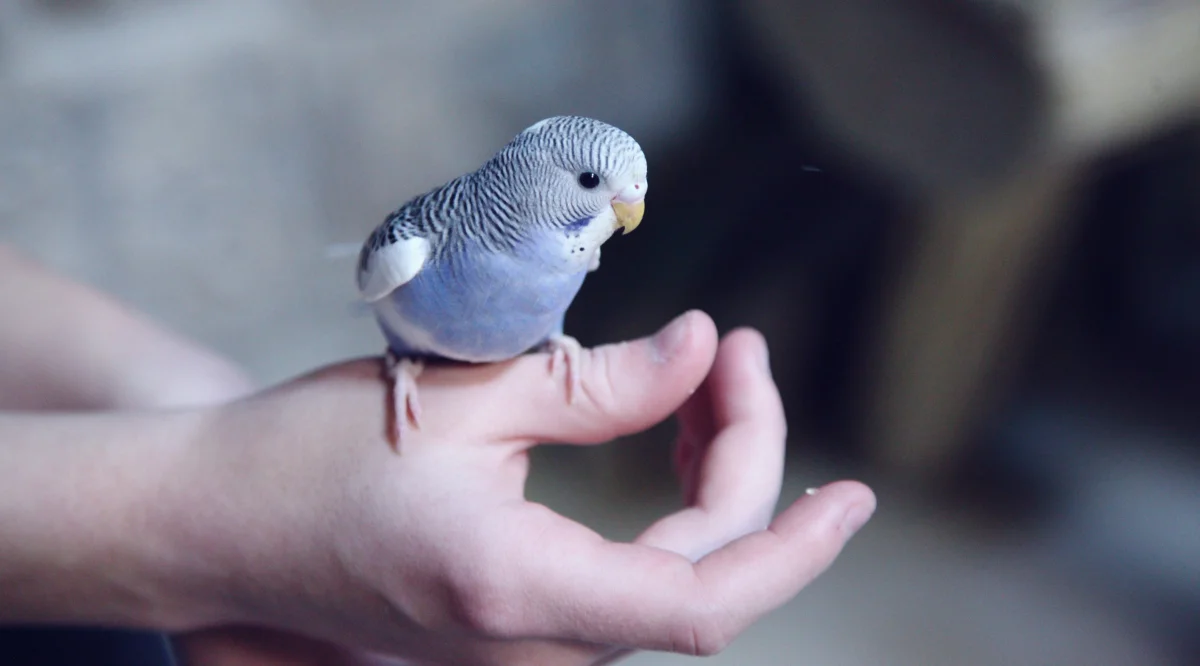
It’s important to remember that parrots are very sociable pets; they value and love attention. And if they don’t get enough of it, they’ll remind you of themselves with displeased chirping. Despite the fact that Australian budgerigars are fairly undemanding, you need to know a few rules.
What should you keep a budgerigar in?
In a cage, of course. At the same time, it needs to be prepared in advance, before settling in your pet. It must have a feeder, a drinker, a perch stick, and a mineral block so the bird can clean its beak. You can hang a little bell, which the bird will happily play with, as well as a swing, a ladder, and other toys. Some people hang a small mirror. But keep in mind that if you want to teach the parrot to talk, it’s better to do without the mirror. Otherwise it will talk to its own reflection in its own language and won’t learn human words.
At first, you need to give your pet time to adapt and get used to its new home and surroundings. So place the carrier or box you brought the parrot in in front of the open cage door – place it right up against it, so the pet doesn’t fly out. It will move into the cage on its own and start exploring its new home.
.jpg)
Leave it in peace for a couple of days; the bird needs time to get over the stress. But don’t forget to change the water. And talk to it – quietly, gently. Don’t behave loudly, and try to protect your pet from sharp sounds. And, of course, don’t try to pet the parrot – that way you’ll only frighten the poor thing.
The cage should be set up in a room with windows, so that air and light come in. Parrots love the sun, but direct rays are dangerous for them. Also avoid drafts so the bird doesn’t catch a cold. The parrot’s home should be away from radiators, even in the winter season.
The most optimal type of cage – is a cage with a pull-out tray. This way it will be more convenient for you to clean.
What to feed a budgerigar

The ideal option – is to buy ready-made grain mixes, which are sold in any pet store. Also, don’t forget about mineral and vitamin complexes – here you need to consult a specialist.
You can also add to the diet:
- Raw vegetables: cabbage, broccoli, Chinese cabbage, grated carrot, cucumbers, a little tomato, beets, zucchini.
- Fresh fruits: bananas, apples, pears, kiwi, peaches, oranges, melon, watermelon, pomegranate.
- Fresh berries: strawberries, raspberries, cherries, wild strawberries.
- Dried fruits: raisins, dates, dried apricots.
- Fresh greens: celery, arugula.
- Tree branches – rowan, willow, apple, birch, sea buckthorn. First they need to be washed and steeped in boiling water for several hours, and only then offered to the parrot.
- Porridges cooked in water: buckwheat, millet, rice, oatmeal, pearl barley. But only real porridges, not the instant kind.
What you must not feed a parrot:
- nuts and seeds;
- mushrooms;
- meat, fish, offal;
- onion, garlic, sorrel;
- sugar;
- dairy products;
- chips, crackers.
How to care for a budgerigar

The bird should have a schedule that is adapted as much as possible to yours. Otherwise the parrot may burst into song at night and doze during the day. Cover the cage at night with an air-permeable cloth.
Every week you need to clean the cage tray, and the feeders and drinkers every day. Make sure your pet always has fresh, clean, filtered water. By the way, parrots really love to bathe, so set out a small bath with warm water and your pet will happily splash around in it.
Let the bird out to fly for a couple of hours – this needs to be done every day. But first close the door to the room, check whether the windows are closed, and turn off household appliances. It’s advisable to draw the curtains. Some birds don’t see the transparent barrier and crash into windows – this way they can injure themselves. Don’t leave the parrot alone during its outing. Parrots are extremely curious and may try to taste wires, cords, and houseplants. And cover especially valuable items with film – the bird doesn’t control its natural bodily functions during flight.
If all the care rules are followed, a budgerigar can live at home for about 20 years.
How to teach a budgerigar to talk

Here everything depends on the level of your patience and, however strange it may sound, the talent of the parrot. Indeed, some individuals learn quickly and pick everything up on the fly, while others are slow for a long time or even never start talking at all.
It’s known that the most active, cheerful, and curious parrots, the ones that can’t sit still, quickly begin to speak human language. You need to start teaching them to talk almost from a young age, and you can succeed if the parrot lives with you alone, not in a pair.
Lessons are held daily in the morning for half an hour. Be sure to give a «grade» for the bird’s efforts and treat it to its favorite snack. Start with simple words, for example, «hello». Just repeat it constantly over the course of half an hour. After the first positive results, move on to simple phrases («Gosha is good», «Give me food»).
Don’t rush, don’t get nervous, and under no circumstances raise your voice. Speak softly but clearly. And, by the way, budgerigars react more actively and with more interest to a female voice.