A tick can't jump, can't fly, and barely crawls, yet every spring it manages to strike fear into millions of gardeners, mushroom foragers, and parents taking their kids to the nearest park.
Ticks are usually assumed to be a taiga problem, confined to remote forests. In practice, bites get reported in Moscow's Bitsevsky Park, Sokolniki, the Krylatskie Hills, and even on lawns outside apartment buildings in the suburbs. Let's break down exactly when the risk peaks, why it tracks the weather, and which regions call for extra caution.
When Ticks Wake Up
Ixodid ticks — the species that transmits encephalitis and Lyme disease — emerge from winter dormancy as soon as the soil warms to 34–41°F (1–5°C). Snow can still sit in low-lying areas while ticks are already active.
In central Russia, this typically happens in late March to early April; in the south, even earlier — in Krasnodar Territory and Crimea, the first bites of 2026 were already recorded in early March.
Ticks start biting once average daily temperatures reach around 41–45°F (5–7°C). But genuinely widespread activity kicks in later — once the air consistently warms to 59–68°F (15–20°C).
The Main Peak: May and June
The most dangerous period across nearly all of Russia runs from early May through the end of June. These two months account for the overwhelming majority of hospital visits following bites.
Two reasons drive this: ticks are hungry after winter and at peak activity, while people flood outdoors en masse — May holidays, barbecues, garden plots, the first picnics of the season.
According to Rospotrebnadzor, more than 6,000 people sought medical help nationwide in just the first weeks after the May holidays in 2026. In the Moscow region alone, the number of reported cases exceeded 15,000 by autumn.
After the June peak, activity gradually declines — July and August see fewer ticks, though they don't disappear entirely. In autumn, September–October brings a second, milder surge, as ticks build up reserves before winter.
Why the Timing Shifts Every Year
Ticks aren't calendar-driven creatures — they're temperature-driven. Their activity depends directly on how fast the soil and air warm up in spring. A warm March shifts the start of the season a month earlier; a prolonged cold spring pushes the peak back to early June.
There's an upper threshold too: above 82–86°F (28–30°C) with low humidity, ticks become sluggish and retreat into leaf litter. That's exactly why there are noticeably fewer ticks during a scorching July than during a cool, damp May.
Ideal conditions for a tick are 64–77°F (18–25°C) with humidity above 70%. Morning dew, an overcast day after rain, grass up to your waist — that's tick paradise.
Is It True You Can Pick Up a Tick in a City Park
Yes, and it's far from rare. Vadim Maryinsky, a researcher at Moscow State University's Department of General Ecology, explains that ticks live in city parks that resemble forest in structure, or that directly border wooded areas.
In Moscow, that includes Losiny Ostrov, Bitsevsky Park, Izmailovsky Park, the Botanical Garden, the Krylatskie Hills, and the forest parks of Zelenograd and New Moscow.
The mechanism is simple: small rodents, hedgehogs, stray dogs, and birds carry ticks into parks. If a park has undergrowth, tall grass, and damp leaf litter from last year, that's enough for a tick to thrive. On a mowed lawn in the city center, the risk is minimal — but on a path through overgrown brush in a forest park, it's entirely real.
Where in Russia the Risk Runs Highest
Rospotrebnadzor publishes an annual list of territories endemic for tick-borne encephalitis. In 2026, that list includes 49 regions — more than half of the country's federal subjects. Risk runs especially high in the Urals, Siberia, the Far East, and the Northwestern Federal District.
Broken down by region, the picture looks like this:
- The south (Krasnodar Territory, Crimea, Stavropol) — ticks wake up earliest, already in March, peaking in April–May.
- Central Russia (Moscow, the Moscow region, Tver and Yaroslavl oblasts) — peak in May–June, season running through October.
- The Northwest (St. Petersburg, Leningrad Oblast, Karelia) — peak in late May to mid-June, with encephalitis occurring more often than in central Russia.
- The Urals and Siberia (Sverdlovsk, Chelyabinsk, Novosibirsk, Tomsk, Kemerovo oblasts, Altai) — the country's most endemic territories, peaking in May–June, with the season stretching into September.
- The Far East (Primorye, Khabarovsk Territory) — peak in May–June, with ticks here carrying not just encephalitis but several other infections too.
How a Tick Actually Gets Onto a Person
A common myth holds that ticks drop from trees. In reality, they can neither jump nor fly. A tick perches on a blade of grass or a low shrub (usually no higher than 50–80 cm off the ground), extends its front legs, and latches onto whoever passes by. From there, it crawls upward along clothing, searching for exposed skin — a process that takes anywhere from a few minutes to an hour.
That's exactly why checking yourself every 15–20 minutes during a walk through forest or park is the simplest and most effective way to catch a tick before it attaches.
What's Within Your Control
Tick season overlaps with the best months for being outdoors, and avoiding forests and parks entirely would be a strange trade-off. But a few habits noticeably reduce the risk:
- Light-colored clothing with long sleeves and pant legs tucked into socks — it sounds absurd, but works well. A tick stands out immediately against pale fabric.
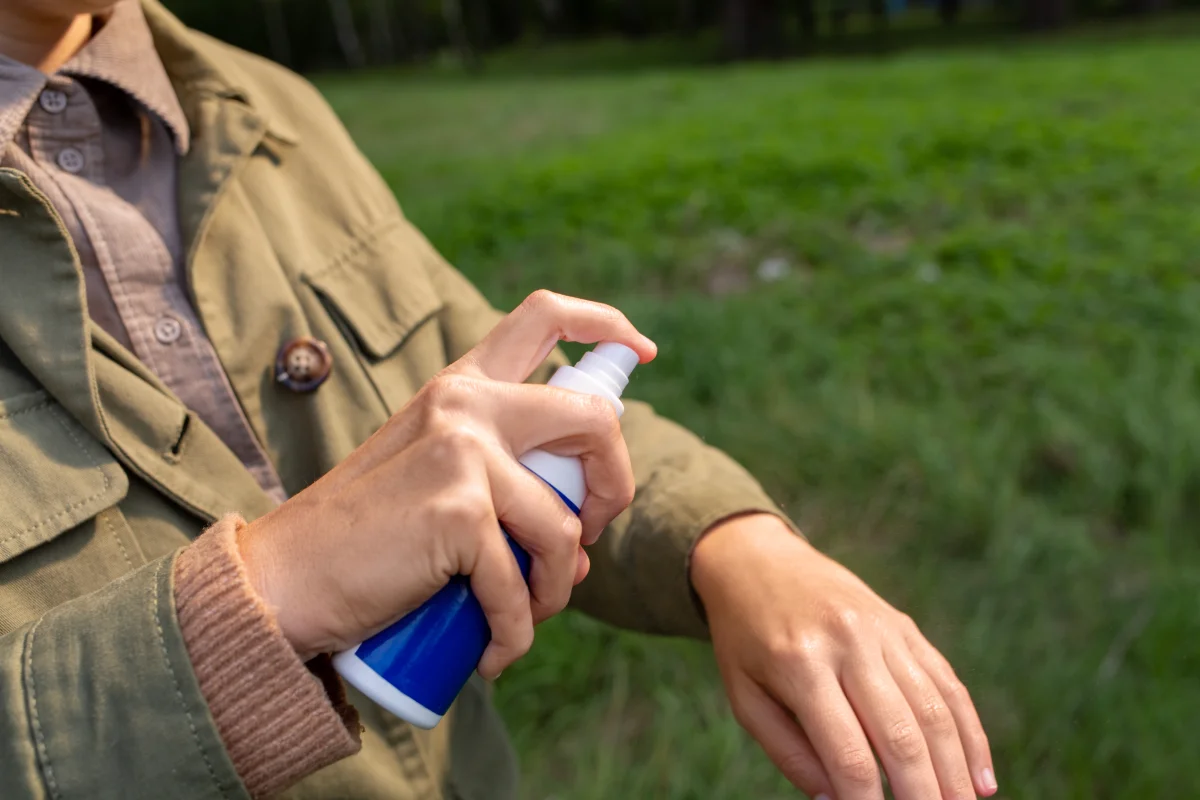
- DEET- or permethrin-based repellents, applied to clothing rather than skin. Permethrin paralyzes a tick on contact with treated fabric.
- A full-body check after every outing — neck, armpits, groin area, behind the ears, hairline. These are the spots ticks most often crawl toward.
- Keeping grass mowed on garden plots — ticks don't live on a short lawn; they need tall vegetation and damp leaf litter.
Tick season in central Russia runs from late March until the first sustained frosts — roughly seven months. But keeping in mind that the real danger concentrates in May–June, and letting the weather guide how early or late that peak arrives in a given year, means you can head outdoors without paranoia — just with the habit of checking yourself after every walk.