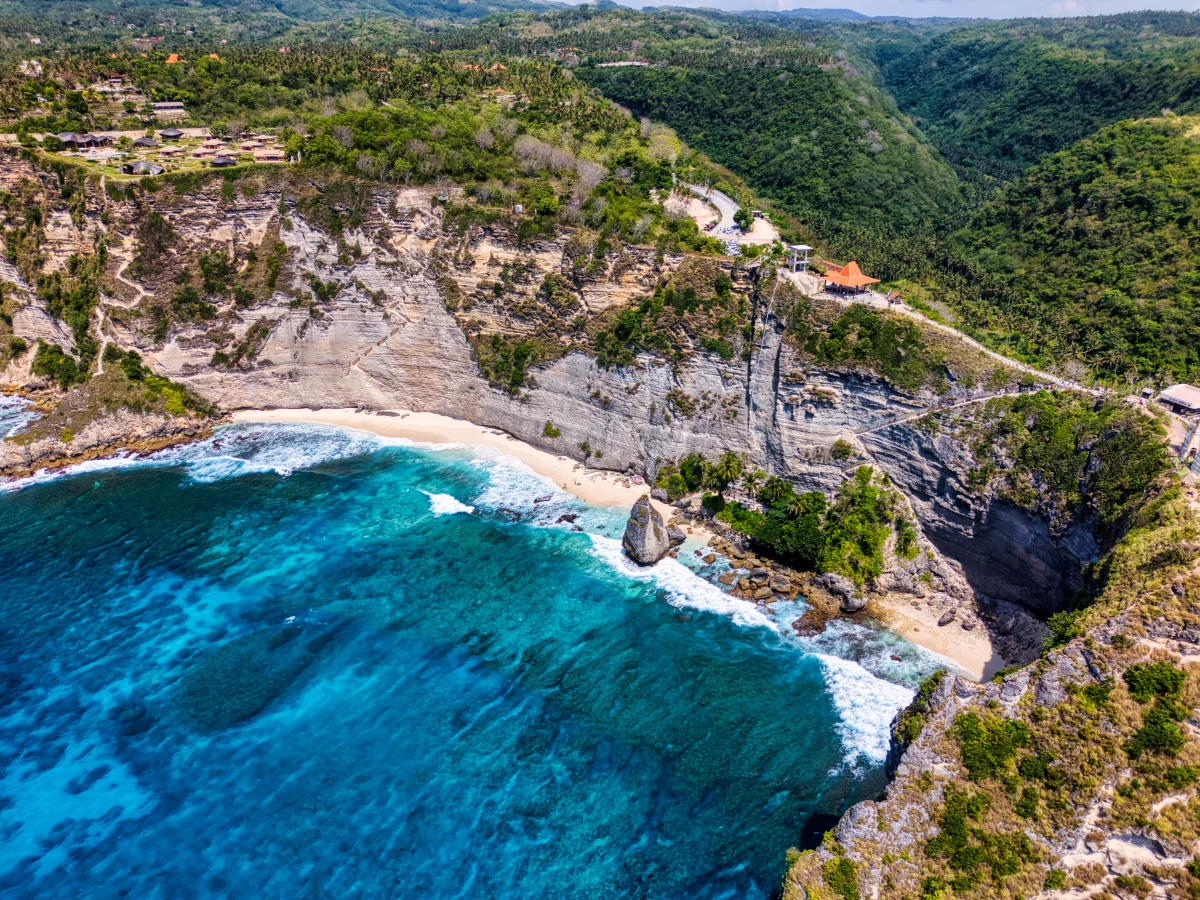
Bali sits at 82–90°F (28–32°C) year-round — and that's exactly what throws people off: it seems like you could visit any month. But spend January on the island, and it becomes clear that seasonality here isn't driven by temperature — it's driven by rain.
A tourist checking Bali's weather forecast for the first time sees a flat line: warm, warm, warm, twelve months straight. The difference between "summer" and "winter" amounts to a couple of degrees, imperceptible to the skin.
But on an island sitting just eight degrees from the equator, weather is governed by the monsoon, not the thermometer. And it's the monsoon that decides whether you'll spend your vacation on the beach or waiting out a wall of water in a café.
Two Seasons Instead of Four
Bali's climate is tropical monsoon, and it splits not into the familiar four seasons, but into two: dry season (April–October) and rainy season (November–March).
Air temperature barely shifts throughout, holding around 82–90°F (28–32°C) year-round. Ocean temperature stays just as stable: 81–84°F (27–29°C) in both June and January.
The only thing that changes is how much water falls from the sky. During dry season, that's 15–80 mm a month with 3–5 rainy days. During rainy season, it climbs to 150–350 mm, and in January–February, rain can fall on 16–27 days out of thirty.
What Rainy Season Actually Looks Like
An important nuance: "rainy season" in Bali isn't gray gloom or endless drizzle like St. Petersburg. A tropical downpour usually starts abruptly, unleashes a wall of water for an hour or two, and ends just as suddenly. Half an hour after the rain stops, the asphalt is dry, the sky is clear, and you can head back to the beach.
The real problem isn't the rain itself — it's that you can't predict its timing. A downpour might hit in the morning, at lunch, or right at sunset, derailing any plan. On top of that, humidity climbs to 80–85% during these months, making the heat feel heavier and laundry take days to dry.
Month by Month: What to Expect From the Weather
- January–February
Peak rainfall. Downpours hit daily, sometimes several times a day. The ocean turns murky from shoreline runoff, and debris washes up on beaches. Lodging prices sit at their lowest of the year, but beach time comes with constant interruptions.
- March
Rain starts easing off, but still hits frequently. A transitional month — you might get lucky with the weather, or not. In March, Bali observes Nyepi, the Day of Silence: the airport closes for 24 hours, leaving the hotel is prohibited, and lights go dark across the island. Worth knowing in advance if your trip falls on this date.
- April
Technically the start of dry season, but still a transitional stretch in practice. Rain drops off noticeably, sun increases, humidity eases. A good option for anyone wanting to catch the early season at lower prices.
- May–June
Full dry season. Rain is nearly absent, humidity feels comfortable, and the ocean stays calm. Fewer tourists than July–August, with prices not yet at their peak. By weather-to-cost ratio, this is one of the best windows of the year.
- July–August
The best weather of the year: minimal rain, 8–10 hours of sun a day, cooler nights (68–75°F / 20–24°C) allowing sleep without air conditioning. But this is also peak high season — hotel and villa prices hit their maximum, and popular beaches get crowded.
- September
Dry season continues, weather remains excellent, and tourist traffic has already started thinning out. Many consider September Bali's best month: still dry, without summer's crowds or price tag.
- October
The tail end of dry season. Rain returns by month's end, but the first two or three weeks are typically still sunny. A good choice for anyone willing to accept a bit of risk.
- November–December
Rainy season builds momentum. November still sees only occasional showers; by December, they've become regular. December runs expensive due to New Year demand, even though the weather is objectively worse than May or September.
Why the Weather Differs Between Beaches
Bali is an island, not a single point on a map, and its coastlines behave differently depending on wind direction.
During dry season (June–August), easterly winds dominate — pushing debris and waves toward the western coast, but at the same time keeping western beaches (Kuta, Seminyak, Canggu) clearer of seaweed, since the surf carries it back out to sea.
During rainy season, the wind shifts westerly — and the cleaner beaches "move" to the east: Nusa Dua, Sanur, Tanjung Benoa. Worth factoring into your hotel choice: booking for summer favors the western coast, while booking for winter favors the eastern one.
Who Rainy Season Actually Suits
Visiting Bali in November–March isn't a disaster, as long as the beach isn't your only goal. During this period, the island turns vividly green, the Tegallalang rice terraces fill with water and look more dramatic than in dry season, and waterfalls run fuller.
Lodging and moped rental prices drop 30–50%, and it's entirely possible to spend several hours at the beach between downpours.
But if the trip is purely and specifically about the sea, it's not worth the risk: a rain-free day in Bali in January is more a matter of luck than the norm.
When to Go So You Definitely Won't Regret It
The optimal months for a beach trip with no compromises are May, June, and September. The weather is predictably dry, the ocean warm and calm, and both prices and crowd density run noticeably lower than during the July–August peak.
If those months don't fit your schedule, July and August offer the best weather of the year — but you'll pay for it, both financially and in the form of lines at popular beaches and temples.