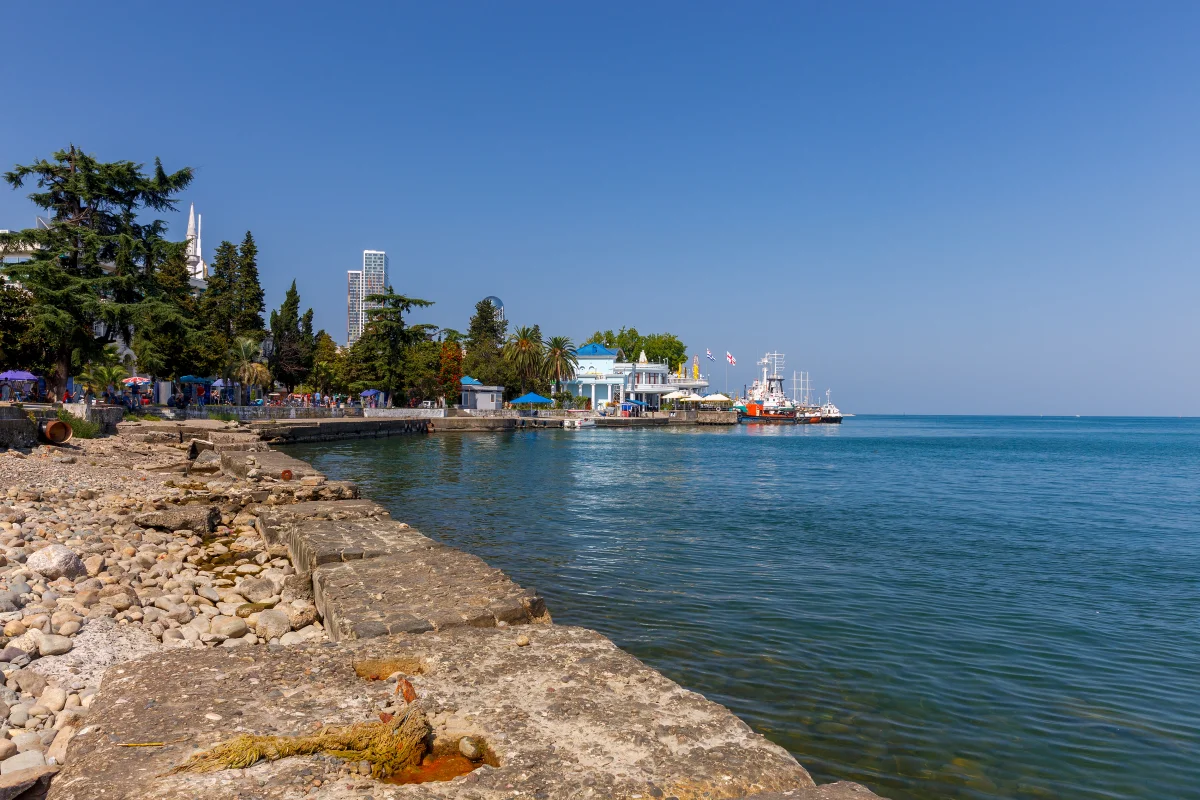
Nine out of ten tourists heading to Georgia for a beach vacation go to Batumi — and skip past a dozen and a half spots along the coast where the water is clearer, the beaches emptier, and the mountains drop straight into the sea.
Batumi is a convenient entry point: direct flights, a palm-lined promenade, restaurants, and nightlife. But as a beach resort, it doesn't suit everyone: the city's pebble beach gets cramped in season, the water turns murky after rain, and the noise of a large city undercuts any sense of relaxation.
Along the Adjara coastline — just about 100 kilometers of shore in total — are scattered villages where swimming and atmosphere work entirely differently.
When the Water Is Ready for Swimming
Before choosing a resort, it's worth settling on a month. The Black Sea off the Georgian coast warms up the same way it does off the Russian coast — slowly, and with a delay relative to air temperature.
- June: water at 70–73°F (21–23°C), the start of the season, few tourists, easy to find accommodation on arrival.
- July: 75–79°F (24–26°C), hot and humid, beaches fill up.
- August: the peak — water at 77–81°F (25–27°C), air up to 91°F (33°C), the busiest month.
- September: 73–75°F (23–24°C), the heat eases while the sea stays warm — locals call this the best time of all.
Comfortable swimming season runs from mid-June through the end of September. In May, the water still feels bracing (64°F), and by October it cools quickly and turns unpredictable.
Gonio: The Closest Alternative to Batumi
Gonio sits 12 kilometers south of central Batumi, reachable by a regular city bus. The village is small and quiet, and its main landmark is the Gonio-Apsaros Fortress, a 1st-century Roman structure — one of the oldest Roman fortifications in the Caucasus.
The beach is medium pebble and noticeably cleaner than Batumi's: the current here flows south to north, so murky water washed down from the mountains after rain gets carried toward Batumi rather than back toward Gonio.
The infrastructure is modest — cafés, shops, lounge chair rentals — but for anyone who wants a beach without city noise, just fifteen minutes from civilization, that's enough.
Kvariati: The Clearest Water on the Coast
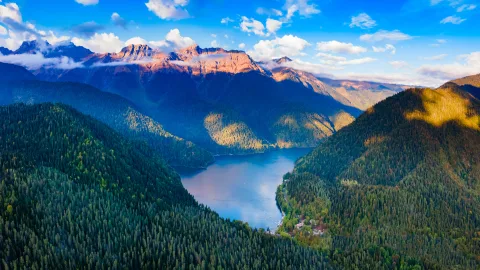
The next village south of Gonio, closer still to the Turkish border. Kvariati is squeezed between mountain and sea — literally a single street running along the shore. The beach is small and pebbled, but its water is considered the clearest anywhere on the Georgian coast.
Kvariati is home to Georgia's only PADI-certified dive center. Between Kvariati and Sarpi, a rocky outcrop juts into the sea — combined with the clear water, this is one of the few spots on the coast genuinely worth snorkeling or diving. The center also organizes trips to shipwreck dive sites.
Sarpi: A Beach Right on the Border of Two Countries
Georgia's southernmost resort village, just a few hundred meters from the Turkish border. The beach is a crescent of pebble stretching about 600 meters, with turquoise water so clear you can see every stone on the bottom.
Nearby stands the futuristic customs building designed by German architect Jürgen Mayer, along with St. Andrew's Church — and just past a fence, an actual Turkish mosque.
Entertainment options include cliff diving off the coastal rocks, popular among local youth. One downside: a highway runs right alongside the beach, making Sarpi less suited for a family trip with young children than neighboring Gonio or Kvariati.
Kobulete: A Long Beach and Quiet
Kobulete is Adjara's second-largest resort, but it feels like the opposite of Batumi. The town stretches along the shore, and its beach runs nearly 10 kilometers, combining stretches of coarse and medium pebble with sections of dark sand.
It sits about 25 kilometers north of Batumi, reachable by shared van in half an hour. Infrastructure is simpler — fewer restaurants and attractions — but lodging costs noticeably less, and even in August you can find open space on the beach without an early-morning sprint for a lounger. For families with kids and anyone seeking a calmer pace, it's one of the best options on the coast.
Ureki and Shekvetili: The Only Sandy Beaches
If pebbles aren't for you, the choice narrows to two neighboring villages north of Kobulete: Ureki and Shekvetili. This is the only stretch of the Georgian coast with genuine sand — dark, almost black, of volcanic origin.
The sand is rich in magnetite, and locals have long attributed healing properties to it, believed to help with joint problems.
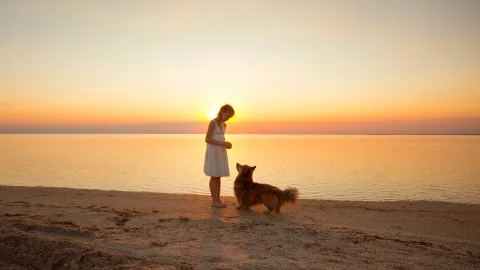
Scientific evidence is thin, but as a balneological destination, Ureki has been popular for decades. The more obvious practical upside: the water entry here is gentle and gradual, with no large rocks underfoot — exactly why it's the top choice for families with young children.
Chakvi: For Those Who Value Quiet
A small village positioned exactly halfway between Batumi and Kobulete, 15 minutes by car from either. Organized tour groups rarely make it here: there's no café-lined promenade, no attractions — just a clean pebble beach and an almost complete absence of crowds, even at the height of season.
Chakvi is surrounded by tea plantations — one of the few areas in Georgia where tea is still grown today. For anyone who's come specifically for the sea and quiet, and is happy to find evening entertainment in nearby Batumi, this is close to ideal.
How the Weather Differs From Resort to Resort
Climatically, the entire Adjara coast behaves in roughly the same way: subtropical humidity, hot summers, mild winters. But there are nuances. The southern villages — Gonio, Kvariati, Sarpi — run slightly drier and windier, since the mountains press right up against the shore and act as a natural barrier against clouds. The northern stretch — Kobulete, Ureki — runs slightly damper, with more frequent rain, though the sea there tends to be calmer.
The defining feature of an Adjaran summer is short but intense downpours. Rain can crash down for half an hour, soak everything in sight, and then the sun comes right back out. This isn't a "rainy day" in the usual sense — more like a twenty-minute intermission, after which the beach dries out within an hour.
Which Resort Suits Which Traveler
For clear water and dramatic cliffs, choose Kvariati or Sarpi. For a family with young kids and a sandy beach, choose Ureki. For a long beach and lower prices, choose Kobulete. And for anyone who wants to stay close to Batumi but sleep somewhere quiet, choose Gonio or Chakvi.
All of these villages sit within 40–50 minutes of each other, so with a bit of planning, you can visit two or three of them within a single trip without losing a single day to travel.