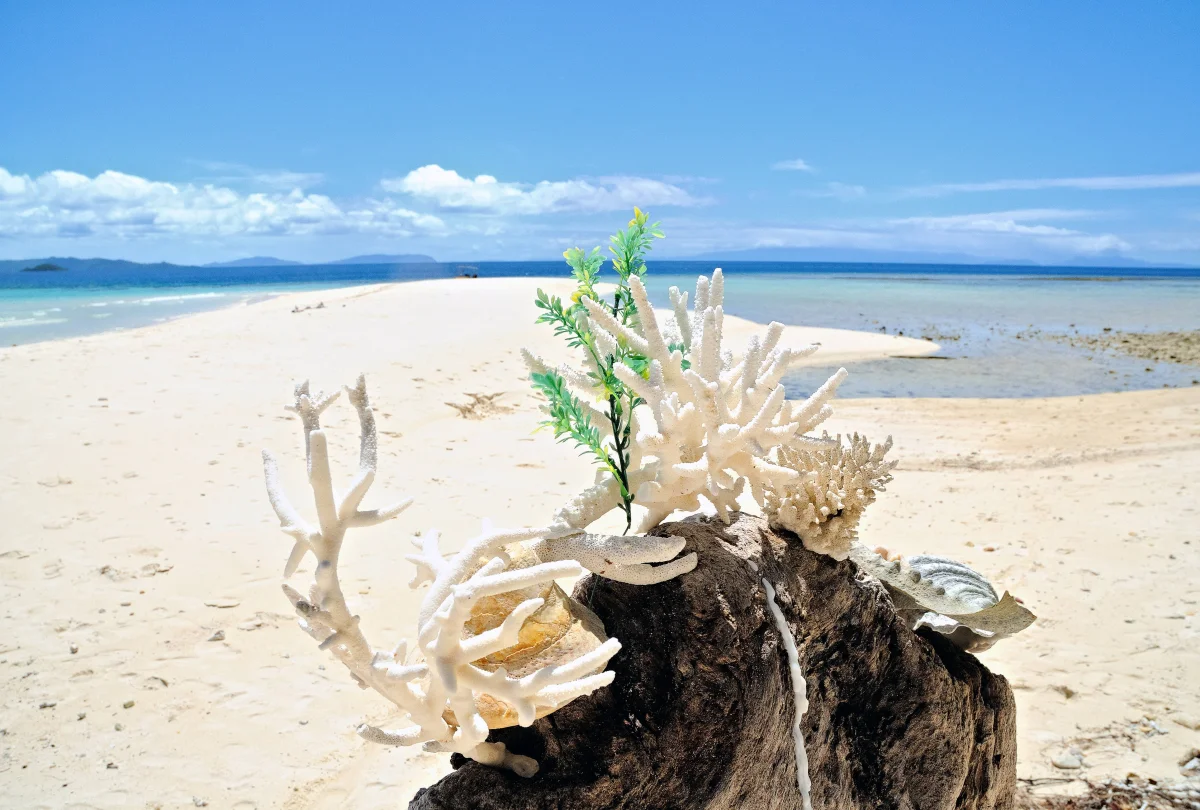
Indonesia is 17,000 islands stretched along the equator for 5,000 kilometers. While one island is getting hammered by rain, its neighbor can be sitting under clear sky. Understanding this simple geography lets you find a sunny beach in any month of the year.
Most tourists know one rule: dry season runs May through September, wet season November through March. For Bali, that's broadly correct. But Indonesia is not just Bali, and on a number of islands the seasons work differently — and on some, they barely exist at all.
Bali: Familiar and Predictable
Bali's dry season lasts from April through October, peaking in June, July, and August. During these months, rain is virtually nonexistent, humidity is at its lowest (+27–30°C air, +27–28°C water), and skies are clear. The best conditions for beaches, surfing, diving, and temple excursions.
July and August are high season: maximum tourists, peak hotel prices, popular restaurants packed. For those wanting the same Bali without the crowds, May, June, or September are the better pick — identical weather, a fraction of the people.
The wet season (November–March) is not a disaster. Rain typically falls for an hour or two in the afternoon, then the sun returns. Temperatures are the same — +28–32°C. Many Russians visit Bali over the New Year holidays and leave satisfied. But the risk of prolonged downpours and overcast days is higher, and the sea is less transparent.
Lombok and the Gilis: Bali's Climate Without Bali's Crowds
Lombok is Bali's neighbor, separated by a strait just 35 kilometers wide. The climate is nearly identical: dry season April through October, wet season November through March. But there are several times fewer tourists, and the atmosphere recalls Bali of twenty years ago — no noisy clubs, no dense development, no endless scooters.
The Gili Islands (Trawangan, Meno, Air) are three tiny atolls off Lombok's coast. Motorized transport is banned; you get around on foot or by bicycle. The water is transparent, and snorkeling with sea turtles is possible right from the shore.
The best window is June–September, when the sea is calm and underwater visibility is at its maximum.
Flores and Komodo: For Those Who Want More Than a Beach
Flores is an island east of Bali, and the departure point for expeditions to see the Komodo dragons. The dry season here is more pronounced: from April through October there's virtually no rain at all, and total precipitation is significantly lower than on Bali.
Peak tourist season is July and August — calm seas, ideal diving conditions. But the most comfortable temperature and humidity fall in April–June, when the heat hasn't maxed out yet and tourist numbers are minimal.
The wet season (November–March) is milder here than on Bali — less rain overall, but the sea can get rough, and some dive sites close.
Raja Ampat: A Diver's Dream With a Flipped Calendar
The Raja Ampat archipelago in West Papua is one of the best diving destinations on the planet. And here, seasonality works in reverse: the best time is October through April — precisely when Bali is getting drenched.
The reason: Raja Ampat sits in the equatorial zone, closer to the Pacific, and is influenced by different air masses. During Bali's dry season, strong winds here churn up the waves. From October through April — flat calm, water clarity up to 30 meters, temperature at +29–30°C.
The destination is expensive and hard to reach: multiple flights, a boat transfer, and a limited number of lodges. But for divers, it sits at the very top of the list.
Sumatra and Kalimantan: The Equatorial Zone With No Clear Season
On Sumatra and Kalimantan (Borneo), the classic dry-versus-wet division blurs. Both islands lie near the equator, and rain falls year-round — it's only a question of intensity.
On the Malaysian side of Borneo (Sabah, Sarawak), conditions are relatively drier from March through October. Beaches aren't the main draw here — people come for the rainforests, orangutans, Mount Kinabalu, and the underwater world of Sipadan Island. But the coastal bays are perfectly swimmable: water at +27–29°C all year.
Where the Season Lasts Longest
Ranking the islands by the length of their comfortable beach window:
- Raja Ampat — 7 months (October–April), but on a shifted calendar
- Flores and Komodo — 7 months (April–October), with the least rainfall overall
- Bali — 7 months (April–October), though beach days are possible even in the wet season
- Lombok and the Gilis — 7 months, mirroring Bali
- Borneo — swimmable year-round, but rain is unpredictable
What Russian Tourists Should Keep in Mind
There are no direct flights from Russia to Bali — the journey with a layover takes at least 14 hours. Visas for Russians are issued on arrival or applied for online in advance. Bali and Lombok have well-developed infrastructure; Flores and Raja Ampat are basic.
The main takeaway: don't reduce Indonesia to Bali. Every island is a separate world with its own climate, character, and season. And in a country with 17,000 islands, a sunny beach exists in every month of the year — you just need to know exactly where to look.