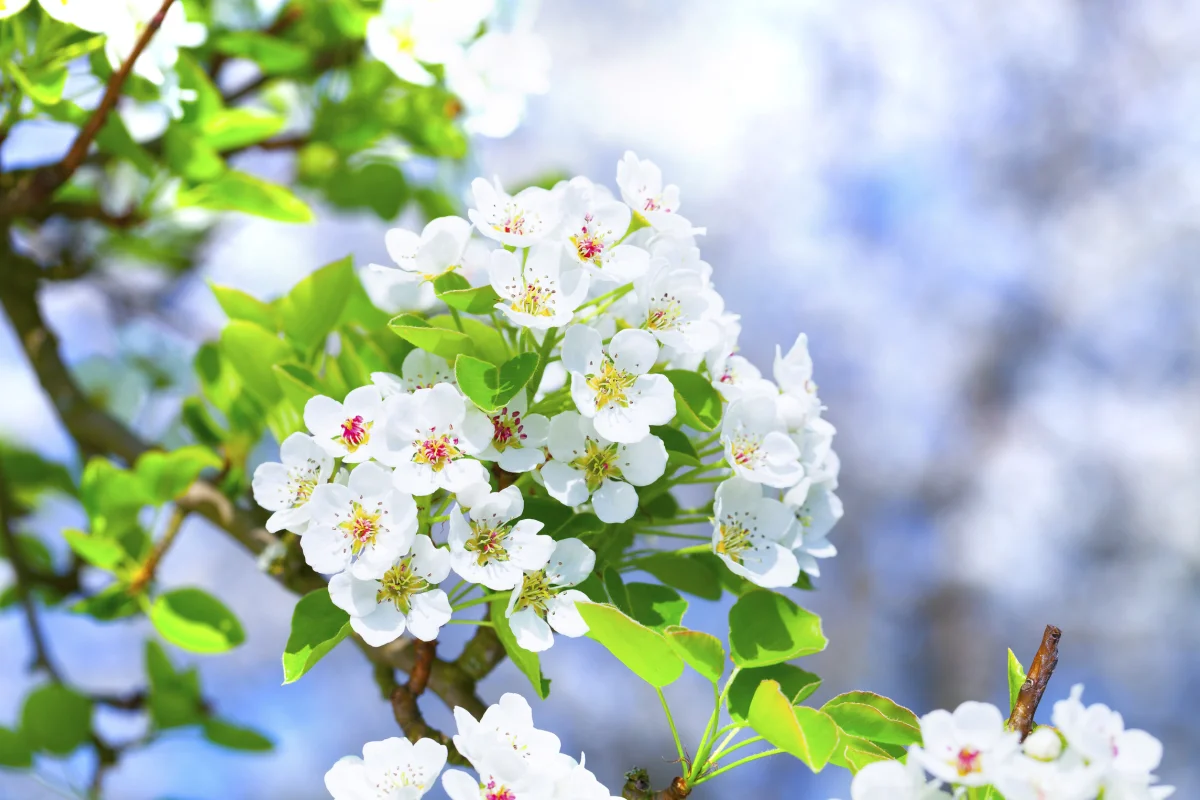
White blossom on bare branches in September, or even November, makes a pretty picture, but it tends to alarm gardeners rather than delight them. The tree is opening buds that should only have opened next spring. We look at why this happens and how dangerous it is.
In autumn 2026, reports of plants that had "mixed up the seasons" came in from various regions. In the Pskov Region, pear trees blossomed; in Astrakhan, St Petersburg, Krasnodar and Ufa, lilac and acacia; in Armavir, horse chestnuts; and in the Chelyabinsk and Orenburg regions, strawberries fruited again.
A year earlier, in November 2025, apple and pear trees partly blossomed in North Ossetia. The Main Botanical Garden of the Russian Academy of Sciences says plainly that a second flowering of trees and shrubs in late summer and autumn "happens with enviable regularity". But every time, gardeners ask the same question: what will happen to the tree and the harvest?
Which Flowers Open in Autumn
In apple trees, the flower buds for the following year are formed in summer. By autumn they're fully formed and are meant to "fall asleep" until spring: winter dormancy is an essential stage, after which the bud is ready to open.
In autumn, it's these future spring buds that open. Specialists at Michigan State University in the US explain that the buds most likely to open are those that have developed sufficiently but haven't yet entered deep dormancy.
The formation of a flower is irreversible: a bud that turned from a leaf bud into a flower bud in summer can't become a leaf bud again. So a flower that opens in autumn is lost for the spring. The autumn flowers themselves often look different from spring ones: according to the American specialists, they can be underdeveloped.
Why It Happens
There are several reasons, and most often they combine.
-
Heat, drought, then rain
The Main Botanical Garden names the weather as the main cause, above all heat: it disrupts the balance of substances that regulate a plant's development. American specialists describe a similar scenario: in severe heat and drought, a tree slows its growth and effectively goes into summer dormancy. When the rains come, it "wakes up", and some of its buds open as if spring had arrived.
"Flower buds can also open in response to a wet autumn after a long summer drought," the Main Botanical Garden notes.
-
A warm autumn
Prolonged warmth in October and November throws trees' biological rhythms off course. That was the explanation given for the November apple blossom in North Ossetia in 2025, and for the lilac, pear and horse chestnut blossom in various regions in autumn 2026.
-
Temperature swings
According to biologist Arkady Morozov, the most likely cause in Western Siberia is "an alternation of heat and heavy rain, followed by a warm spell".
-
Loss of leaves
A second flowering can begin if a tree has lost its leaves prematurely, because of pests, disease, heavy pruning or other damage. According to Arkady Morozov, when pests strike, plants "are forced to shed their leaves and start flowering all over again".
-
Too much nitrogen and watering in late summer
An excess of fertiliser and moisture in the second half of summer pushes a tree to keep growing instead of preparing for winter.
What It Means for the Tree
The answer depends on the scale. If the flowers are few and far between, there's no great harm done: this kind of flowering is common, and a couple of opened buds won't noticeably affect next year's harvest.
If the trees blossom en masse, however, the situation is more serious. The main loss is next year's harvest. The buds that opened in autumn were meant for spring, and the tree won't have time to replace them.
"The buds that blossomed in autumn will die, and there will be no flowers in spring," explained Taymuraz Kaziev, head of the fruit nursery at the Gorsky State Agrarian University, when apple trees blossomed in North Ossetia in autumn 2025.
The second risk is winter hardiness. Flowering uses up the nutrient reserves the tree has built up over the summer. According to the Main Botanical Garden, plants "use up the reserves from photosynthesis, which reduces the crop's winter hardiness and frost resistance".
If young shoots start growing along with the flowers, they won't have time to harden off before the frosts.
"At sub-zero temperatures they will die," warns Arkady Morozov, and the frost can reach the main branches through the damaged shoots.
What Gardeners Should Do
Don't panic over a couple of flowers. Occasional autumn flowering is common and doesn't have much effect on the harvest.
Remove the flower clusters if there are a lot of them. Biologists advise removing them, carefully and early, before the flowers have fully opened, especially on young trees.
"That way you'll help the tree or shrub stop wasting energy on pointless flowering," says Arkady Morozov.
Forget about nitrogen in the second half of summer. Nitrogen fertilisers stimulate new green growth that won't have time to prepare for winter. Instead, from the second half of summer, use potassium and phosphorus feeds or wood ash: they help the wood ripen and improve winter hardiness.
Don't water unnecessarily in late summer. Unless the weather is hot and dry, it's best not to water trees from the second half of summer onwards: too much moisture pushes them to keep growing.
Protect the foliage. Timely protection against diseases and pests helps a tree keep its leaves until they fall naturally, and with them the right rhythm of preparing for winter.
And it's worth remembering that no technique will protect you from the weather. A gardener can't change a summer drought or a warm autumn. The aim is for the tree to go into winter strong: then even unexpected flowering will pass without serious losses.