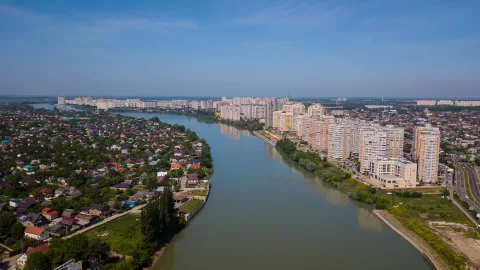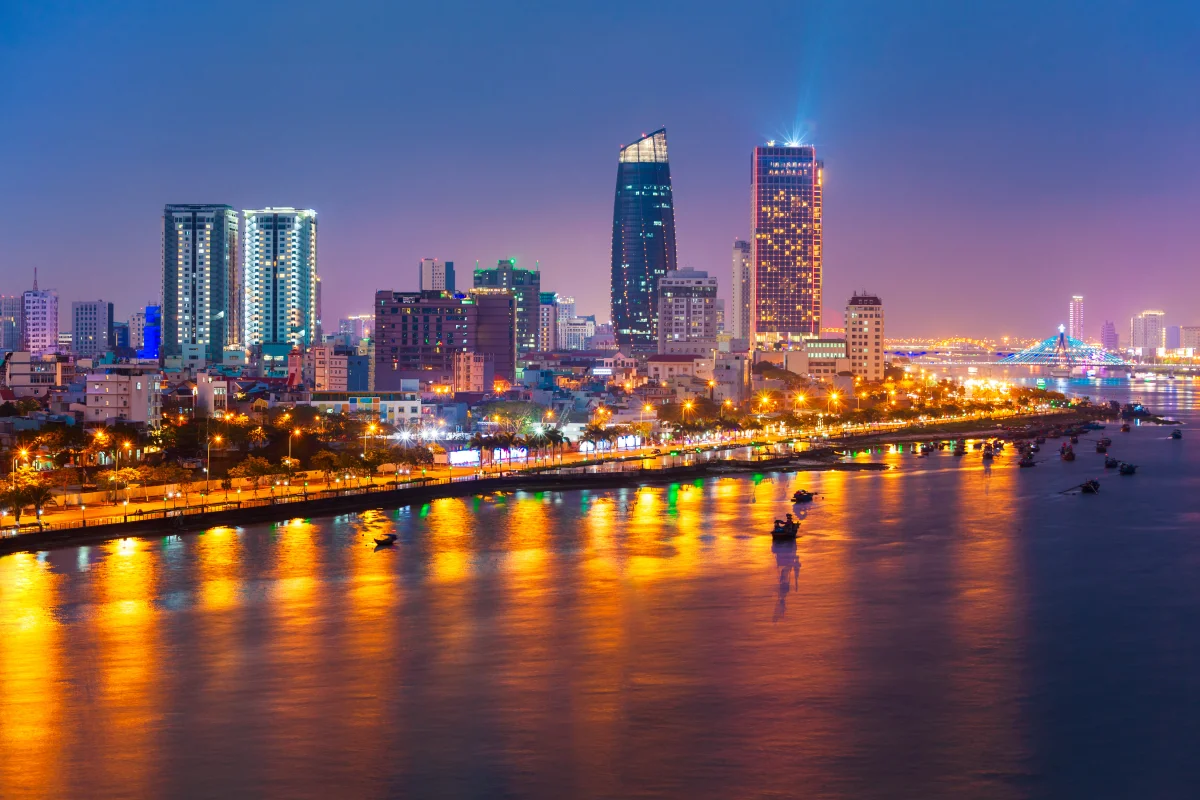
May, My Khe Beach: dead calm, water at 82°F, sand white, long, and half-empty. That same beach in October: six-foot waves, red flags, sand eroded, and a typhoon in the forecast. Same city, same beach — but five months and an entirely different set of rules separate those two pictures.
Da Nang has spent the past few years transforming from a mere layover between Hanoi and Ho Chi Minh City into a resort destination in its own right. The airport sits within city limits, the beach is 15 minutes away, Hoi An is half an hour, and the Golden Bridge at Ba Na Hills is an hour out. Everything's compact and convenient.
But central Vietnam's climate is the trickiest in the country: its rainy season runs on a different schedule than both the north and south, typhoons target this stretch of coast specifically, and "dry season" and "beach season" aren't the same thing here. Without understanding these quirks, you could fly in during what looks like a perfect month — and end up spending a week staring out the window.
Da Nang's Climate: Why It Doesn't Follow the Usual Rules
Central Vietnam runs on its own schedule. In the south (Ho Chi Minh City, Phu Quoc), the rainy season runs May–October. In the north (Hanoi), roughly the same window applies. But in Da Nang, the rainy season runs September through January, peaking in October–November. When the north and south are dry, the center is drenched.
The reason is the Truong Son mountain range (the Annamite Range), which runs along the coast. In summer, the southwest monsoon carries moisture off the Indian Ocean, but the mountains intercept it on their western slopes: the rain falls over Laos and western Vietnam, leaving Da Nang sitting in a rain shadow — dry and sunny.
Come autumn, the wind reverses: the northeast monsoon pushes moisture off the South China Sea directly onto the coast. Now the mountains don't shield the coast — they trap the clouds over the coastal plain instead. The result: October alone brings up to 600 mm of rain to Da Nang — more than Moscow gets in an entire year. November adds another 400–500 mm. By January, the rain eases, but rough seas persist into February.
Month by Month
January
The tail end of the rainy season: rainfall has dropped (~100 mm), but skies stay overcast and windy. Air runs 72–75°F (22–24°C), water at 73–75°F (23–24°C). The sea can stay rough. Beach conditions sit right on the edge — swimmable on sunny days, chilly on overcast ones. Good for sightseeing.
February
The shift toward the dry season: rainfall drops to a minimum (30 mm), and sunshine becomes more frequent. Air runs 75–79°F (24–26°C), water at 73–75°F (23–24°C). The sea calms down. By the second half of the month, sunbathing and cautious swimming become viable, though the water still feels brisk to anyone who runs cold.
March
Beach season officially opens. Air runs 79–84°F (26–29°C), water at 77–79°F (25–26°C), rain nearly nonexistent (~20 mm). The sea stays calm, waves minimal. Few tourists, prices below summer levels.
Many consider March Da Nang's best month: warm, dry, comfortable, without crowds or heat.
April
A near-perfect balance: air runs 84–88°F (29–31°C), water at 79–81°F (26–27°C). Sunny days peak. The heat isn't exhausting yet, and humidity stays moderate. Every beach is in top condition. Prices start climbing as high season approaches.
May
Peak comfort for beach travel: air runs 88–91°F (31–33°C), water at 82–84°F (28–29°C), dead calm seas. Hot, but manageable — the sea breeze helps. The first brief showers appear by month's end (~60 mm), but they don't get in the way. Diving and snorkeling hit peak visibility.
June–July
The hottest months: 91–97°F (33–36°C), water at 84–86°F (29–30°C). Dry and sunny, but muggy — humidity climbs to 80%. Between noon and 4 p.m., the beach is only bearable under shade. The sea stays calm, beaches remain open. This is peak tourist season: heavy Vietnamese and Korean tourist traffic, prices at their maximum.
July is Da Nang's busiest month — the international DIFF fireworks festival draws hundreds of thousands of visitors.
August
The heat continues (91–95°F / 33–35°C), but by month's end rain becomes more frequent (~120 mm). The sea stays calm for now, though the first typhoons start looming on the horizon. This is the last full beach month — with the caveat that you'll want to check the forecast daily.
September
The turning point. Rain falls every other day (350 mm for the month), waves build along the west-facing coast, and red flags appear more and more often. Temperatures run 84–88°F (29–31°C), water at 82°F (28°C). Sun appears between downpours, and the beach technically still functions — but with no guarantees.
October
The riskiest month for a beach vacation: peak typhoon season and peak rainfall. Precipitation runs 500–650 mm (a record for Da Nang), waves reach 6–13 feet, and every beach flies red flags. In 2020, central Vietnam endured four typhoons in a row across October–November.
Traveling to Da Nang in October is a gamble — and the odds aren't in your favor.
November
Rain continues (400–500 mm), typhoons remain possible, and the sea stays rough. By the second half of the month, things start calming down, but beach season stays closed. For sightseeing (Hoi An, Hue, My Son), it still works — if you don't mind an umbrella.
December
Rain tapers off (~200 mm), air cools to 72–77°F (22–25°C), water at 75°F (24°C). The sea calms by month's end. Still too early for the beach, but good for sightseeing. The New Year period runs cool by Vietnamese standards.
Beaches: Which One to Pick
- My Khe
Da Nang's flagship beach — 6 kilometers of white sand. Forbes once listed it among the world's most appealing beaches. The entry is gentle, the sand fine, and the infrastructure includes umbrellas, loungers, showers, and cafés along the promenade. In season, it's ideal for families. Lifeguards are on duty from March through August.
- Non Nuoc
South of My Khe, near the Marble Mountains. Quieter, with luxury hotels (Hyatt, Sheraton, Furama). The sand is just as white, but the crowds are thinner. Between the hotels, wild stretches let you have a spot entirely to yourself.
- Bac My An
An extension of My Khe to the north. Less developed, but more spacious. Surf schools operate here during wave season (September–November) — when swimming isn't advisable, surfing takes over.
- Beaches on the Son Tra Peninsula
The coves on the northern side of the cape stay shielded from monsoon swells. The water here runs calmer than the open beaches, even during the transitional months. Getting there requires a taxi or moped.
What to See When the Sea Turns Stormy
If your trip lands in autumn, Da Nang doesn't stop at the beach.
Hoi An, an ancient trading town 30 km south, offers lanterns, tailor shops, bridges, and rice paddies. Rain floods Hoi An regularly (the Thu Bon River overflows its banks), but on a lucky dry day, the town looks fairy-tale beautiful. Evening lantern boat rides run year-round.
Ba Na Hills and the Golden Bridge, a mountain resort at 1,500 meters connected by a 5.8-km cable car, features the pedestrian Golden Bridge held up by giant stone hands — one of Vietnam's most photographed sites. On rainy days, the bridge wrapped in clouds looks almost mystical, even as visibility drops.
The Marble Mountains are five limestone hills housing pagodas and caves. The climb takes 15 minutes; an elevator exists for the less energetic. Inside are Buddhist altars, stalactites, and skylight openings in the cave ceilings.
The Museum of Cham Sculpture houses a collection from the Champa Kingdom (2nd–15th centuries). Small, but one of a kind — an hour is enough.
Visa and Flights
Russian citizens get 45 days visa-free. Direct flights from Moscow to Da Nang take about 10 hours (Vietnam Airlines, charters). Alternatively, you can fly via Hanoi or Ho Chi Minh City with a domestic connecting flight (1.5 hours).
Da Nang's airport is one of the most convenient in Vietnam — it sits within the city itself, just 15 minutes by taxi from My Khe Beach. No half-day transfer needed — step off the plane, and within half an hour you're on the beach.
The currency is the Vietnamese dong. Russian bank cards don't work. UnionPay is accepted in some places. Cash in dollars is essential.
What It Costs
Da Nang is one of Vietnam's most affordable beach cities. A two-course meal runs 250–400 rubles. A massage costs 600–900 rubles an hour. A three-star hotel near the beach starts at 1,500 rubles a night. A five-star hotel on Non Nuoc starts at 5,000 rubles.
A taxi from the airport to the beach runs 150–200 rubles. Moped rental starts at 200 rubles a day (you'll need a Category A license and some experience — Vietnamese traffic has its own logic).
Da Nang saves its best for a narrow window running March through August. Outside that window, it doesn't stop being interesting — it just becomes a different city: wet streets, a stormy sea, and Hoi An wrapped in mist. Both versions are genuine. It's just that the beach version needs the first one.