Spain has two seas, one ocean, and an archipelago of "eternal spring." Beach season across its different coastlines varies by two to three months, and water temperature on the same day can differ by 8 degrees — depending on whether you're on the Mediterranean or the Atlantic.
Spain is the second most visited country in the world, and the vast majority of tourists come for the sea. The coastline boasts 642 beaches carrying the international Blue Flag award for cleanliness and safety — more than any other country.
But "Spain" is a broad term: from the cool Costa Brava to the subtropical Canary Islands, you're looking at entirely different climates and entirely different seasons.
The Mediterranean Coast: The Classic Choice
Beach season on the Mediterranean runs from June through September, stretching into the second half of May and the first half of October in good years.
Costa Blanca (Alicante, Benidorm, Torrevieja) — the warmest water on mainland Spain. Shallow, wind-sheltered bays heat up to +26–28°C in August. The season starts earlier than farther north — by early June, the water is already +22°C. The velvet season lasts through late October. For anyone who prioritizes water temperature, it's the best option on the mainland.
Costa Dorada (Tarragona, Salou) — south of Barcelona. Gently sloping sandy beaches, water reaching +26°C in August. The PortAventura theme park is nearby. A strong pick for families with children.
Costa del Sol (Malaga, Marbella, Torremolinos) — Andalusia's "sunny coast," with 325 sunny days per year. But the water here is cooler than on the Costa Blanca: the Atlantic's influence pushes through the Strait of Gibraltar. August brings +22–24°C, noticeably below Benidorm. The air, however, is hotter — up to +32°C — and the season runs longer.
Costa Brava (Girona, Tossa de Mar, Lloret de Mar) — the northernmost coast. Rocky coves, pine forests, stunning scenery — but the water is the coolest of all the Mediterranean coastlines. In June it's +18–20°C; in August, +23–25°C. Comfortable swimming is really limited to July and August.
The Balearic Islands: Mediterranean With Personality
Mallorca, Menorca, Ibiza, Formentera — beach season from May through October. Water in August reaches +26–27°C, slightly warmer than the Costa Brava but cooler than Costa Blanca.
The key difference from the mainland is wind. On Menorca and Mallorca's northern coast, the tramontana blows hard enough to make the beach uncomfortable even in the heat. The southern coves of Mallorca and Formentera are calmer, with warmer and clearer water.
The Canary Islands: Year-Round Season
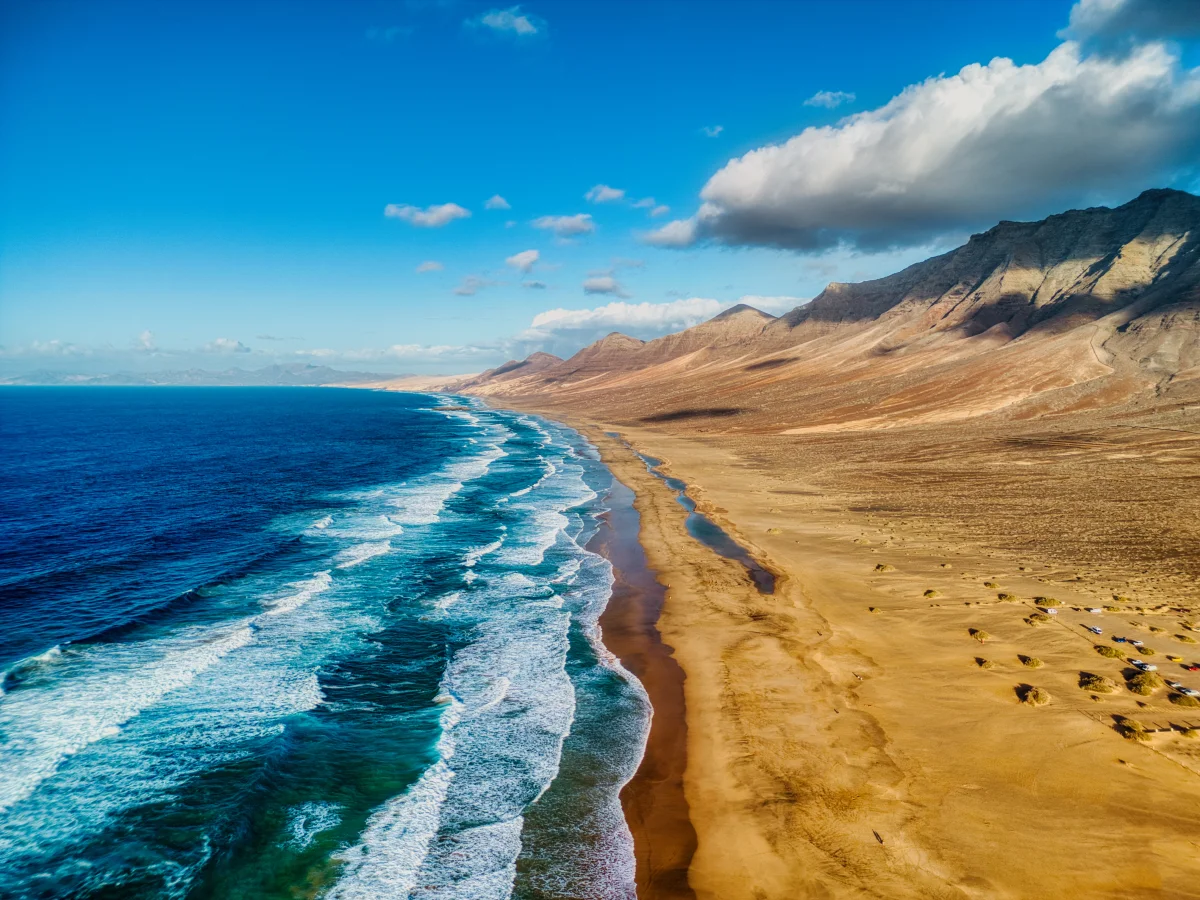
The Canaries are in a category of their own. Air temperature holds at +20–27°C year-round, with no sharp swings. But the water is paradoxically cool: the cold Canary Current from the Atlantic keeps it at +19–20°C in winter and +22–24°C in summer. That's lower than the Mediterranean at peak season.
Who it suits: anyone who dislikes extreme heat and wants guaranteed good weather in any month. In winter, the Canaries are warmer than the mainland; in summer, they're cooler.
Tenerife, Gran Canaria, Lanzarote, Fuerteventura — each island has its own microclimate, but the general principle is the same: the south of any island is drier and warmer, the north is greener and windier.
The Atlantic Coast: For Those Who Don't Fear Waves
Northern Spain — Galicia, Asturias, the Basque Country — is an entirely different story. Water in the Bay of Biscay rarely climbs above +20–22°C even in summer, wind is frequent, and cloudy days are more common. But this is where you'll find green mountains, world-class gastronomy, and a complete absence of mass tourism.
Costa de la Luz (Cádiz, Tarifa) — Andalusia's Atlantic coast. Expansive beaches, powerful surf, constant wind. Water runs +20–23°C in summer — cooler than the neighboring Costa del Sol. A mecca for surfers and kitesurfers, but not for anyone seeking a calm, warm swim.
When to Go to Avoid the Furnace
July and August are peak season: on the southern coasts, temperatures hit +33–38°C, and spending an entire day on the beach is punishing. For those who handle intense heat poorly, the sweet spot is June or September. Water is already (or still) warm at +22–25°C, air sits at +25–28°C, there are fewer tourists, and prices are lower.
For the Canaries, the best months are April–June and September–November: warm, dry, but without the summer crush.
Ranking the Coasts by Water Temperature
Lining up Spain's coastlines by peak-season water temperature:
- Costa Blanca — up to +28°C
Balearic Islands — up to +27°C
Costa Dorada — up to +26°C
Costa Brava — up to +25°C
Costa del Sol — up to +24°C
Canary Islands — up to +24°C
Atlantic North — up to +22°C
The rule is simple: the farther south and east you go on the Mediterranean, the warmer the water. The Atlantic and the Canaries run cooler — but they offer a longer season and freedom from scorching heat.