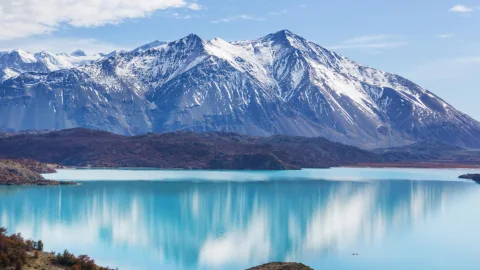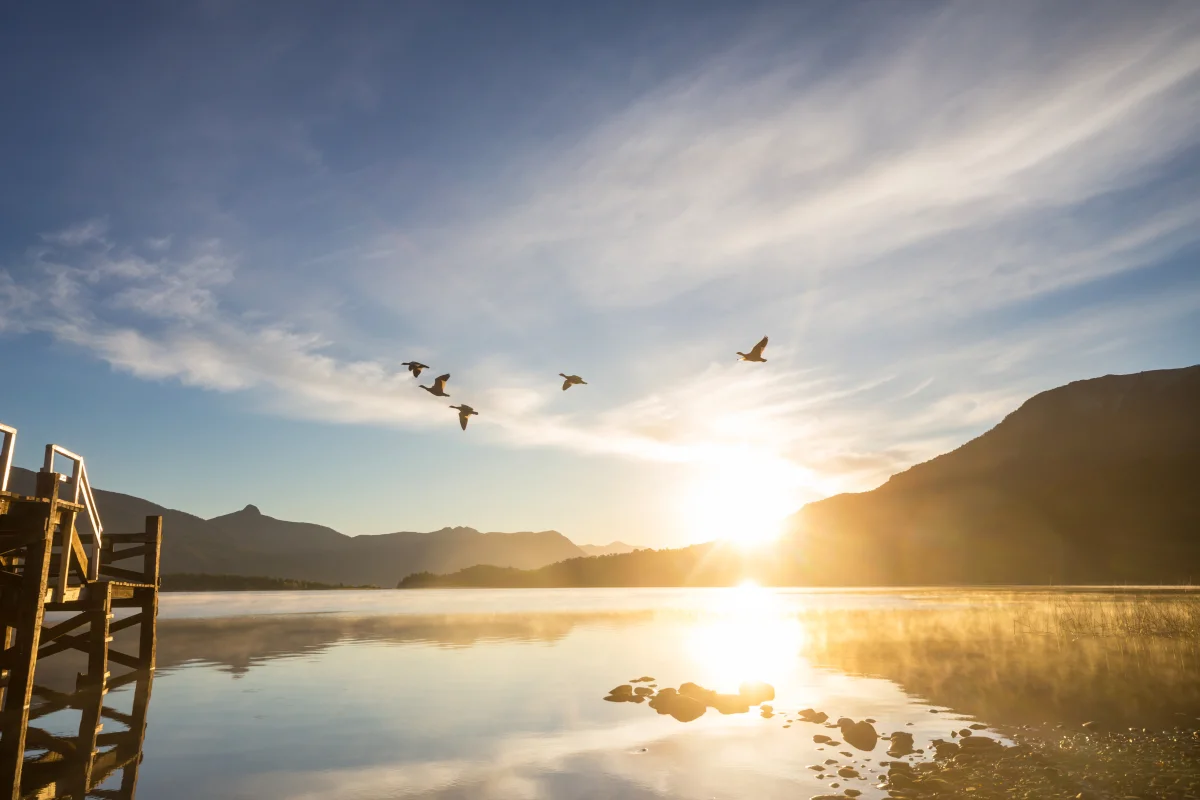
Balkhash is a lake where one half is fresh and the other salty, and it warms up enough in July that you could easily mistake it for a Black Sea resort. But it all ends abruptly: steppe wind cools the water within a matter of days.
For residents of central and southern Kazakhstan, Balkhash is the main alternative to the sea: closer, cheaper, with water warming to 82°F and above at the height of summer. But this steppe lake has its own temperament — the season starts later than you'd like and cuts off faster than you can adjust to it. Let's break down which months genuinely work, and why September is already a gamble.
A Lake of Two Halves
Balkhash is the world's 13th-largest lake and Kazakhstan's largest closed body of water: about 614 kilometers long, up to 74 kilometers wide. But its defining feature isn't size — it's structure. The narrow Uzynaral Strait splits the lake into two halves, and they're fundamentally different.
- The western section is fresh, shallow (average depth around 6 meters), and somewhat murky with suspended sediment. The Ili River flows in here, delivering 80% of all water entering the lake.
- The eastern section is salty (1.5–6 g/L), deeper (up to 26 meters), and clearer. The salinity gap between two halves of a single lake is nearly unique in world geography.
This matters for swimming: the western half warms faster (being shallow), but its water runs murky. The eastern half is cleaner and more pleasant, but it takes longer to warm and cools earlier.
When the Water Turns Warm
Balkhash sits in a sharply continental climate zone: hot, dry summers and freezing winters. The lake freezes over in November and doesn't clear until April — the western section thaws roughly two weeks before the eastern one.
Once the ice clears, the water warms rapidly, thanks to the shallow depth and blazing steppe sun:
- May — water at 54–61°F (12–16°C), swimming only for the hardy. Air already reaches 77°F, but the lake stays cold.
- June — water at 68–75°F (20–24°C), the season genuinely kicks off. By mid-month, the western shallows are already quite comfortable.
- July — the peak: water at 75–82°F (24–28°C), reaching up to 86°F (30°C) in shallow bays. Air runs 86–95°F (30–35°C), occasionally exceeding 104°F.
- August — water at 75–79°F (24–26°C), still excellent. Heat starts easing by month's end, but the lake holds onto its accumulated warmth.
September: Still Swimmable, or Already Over?
This is where things get interesting. Technically, early September water still sits at 68–72°F (20–22°C) — seemingly swimmable. But two factors make September Balkhash genuinely unpredictable.
In autumn, winds over the steppe pick up — and Balkhash, stretching hundreds of kilometers with no mountain shelter anywhere, catches them at full force. Waves build, the shallows turn murky, and wind at 68°F air temperature drives you out of the water faster than the thermometer would suggest.
A shallow lake that warmed up within a matter of weeks over summer releases that heat just as quickly. By mid-September, the water can drop to 61–64°F (16–18°C), and by month's end, below 59°F (15°C). The shift from "still swimmable" to "already cold" takes literally one or two weeks.
In practice, the last comfortable swims fall within the first ten days of September — and only if an early autumn weather system with wind and a cold snap hasn't already moved in.
Where to Swim at Balkhash
Most of the shoreline is steppe, reeds, and wild beaches with no infrastructure. Organized recreation concentrates in a handful of spots.
- The city of Balkhash (northern shore) is the main hub. The city beach is sandy, with a gentle entry, and the water within city limits is relatively clean. Nearby are resorts and hotels, with the airport just 10 minutes away.
- The coast near the village of Chubar-Tyubek (southern shore, eastern section) offers salty, clearer water and sandy spits. It's a longer trip with more modest infrastructure, but quieter and cleaner.
- Cape Burlyutobe and its surroundings offer wild beaches for anyone traveling with a tent. Sand, shallows, and steppe views stretching to the horizon. No cafés, no showers — bring everything you need.
Recreation centers and resort zones have been noticeably updated in 2026: new facilities with bungalows and yurts have opened, prices have risen, but service quality has improved too — it's worth booking ahead for July–August.
Heat: A Separate Risk Factor
July at Balkhash isn't just about warm water — it also means extreme heat on shore. Air temperatures of 95–104°F combined with near-zero humidity and a total absence of shade (it's steppe!) is a combination that dehydrates fast.
Shade on the beaches comes only from awnings — there are almost no trees along the shore.
Under sun at these temperatures and in dry air, skin burns rapidly, and dehydration sets in before you even feel thirsty. Plenty of drinking water, a hat, and shelter from midday sun aren't recommendations — they're survival requirements, especially with kids in tow.
When to Go
The best months for a beach trip are late June, July, and the first half of August: the water is reliably warm, winds are still moderate, and daylight stretches long. The second half of August is still good, though evenings turn cool.
The first ten days of September mark the last real chance for anyone willing to accept cooler water and wind. After September 10–15, swimming season at Balkhash wraps up — and the next one won't begin for another nine months.