Winter sun barely warms you, yet it blinds you as if someone aimed a spotlight straight at your face. It's a paradox familiar to anyone who's driven a snowy road on a clear January day.
Summer sun is hotter, brighter, sitting high overhead — you'd expect it to be the more blinding one. But try to recall: when was the last time you genuinely squinted against the sun? Chances are, it wasn't a beach day in July — it was a freezing February afternoon. Two physical mechanisms drive this, working together, and both are tied to weather.
Low Sun Hits You Right in the Eyes
In central Russia during summer, the midday sun climbs 55–60 degrees above the horizon. At that angle, its rays fall from above — onto the top of your head, your shoulders, the pavement underfoot. Your eyes stay shielded by any cap's brim, and your gaze faces forward, past the sun.
In winter, that same astronomy works against you.
In December–January, the sun climbs only 10–15 degrees above the horizon in Moscow, and even lower further north. At that height, it sits directly in your line of sight: whether you're walking down the street or sitting behind the wheel, the low disk of the sun hangs right at eye level. Neither a cap brim nor even a hand shielding your forehead fully blocks it.
Snow Turns the Ground Into a Mirror
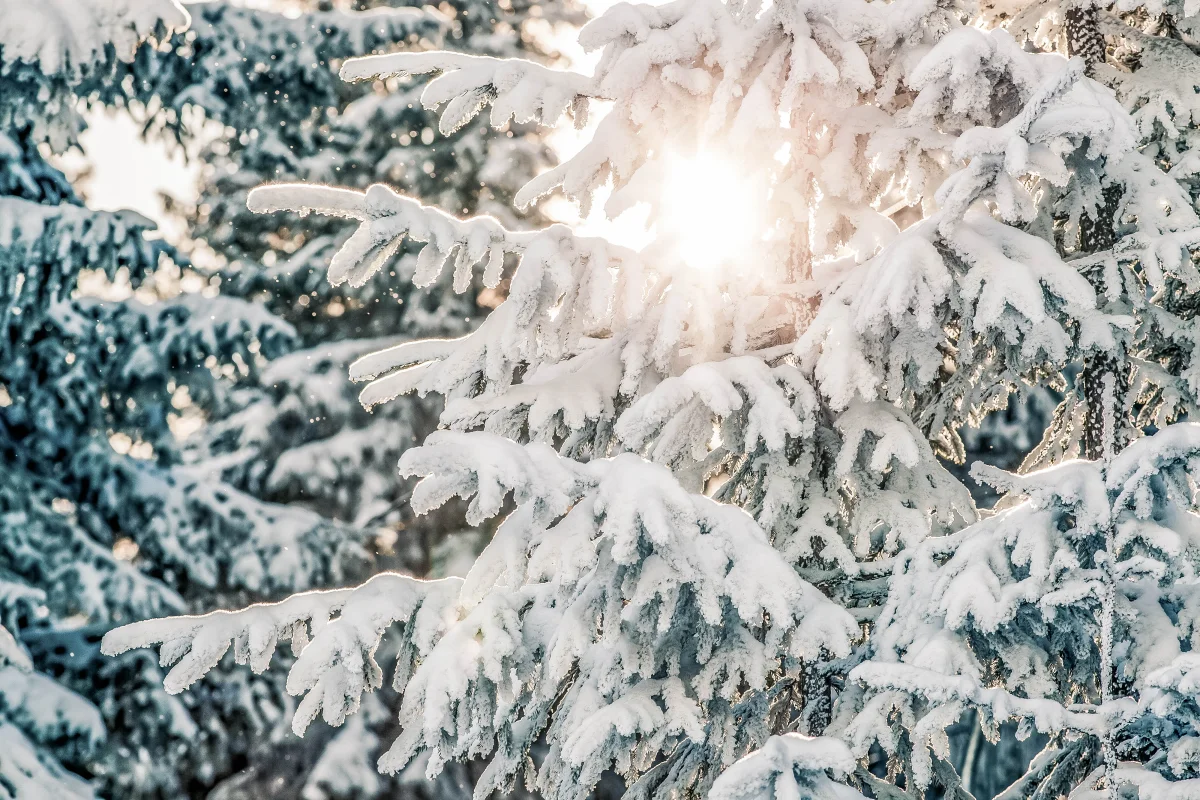
The second factor is reflection off snow cover. Meteorologists measure a surface's reflectivity using albedo — the fraction of sunlight a surface bounces back.
- Fresh, clean snow reflects 80–95% of incoming light — one of the highest albedo values among natural surfaces, exceeded only by ice and clouds.
- Dry asphalt reflects just 10–15%.
- Grass and soil reflect 15–25%.
- Wet beach sand reflects 20–30%.
In winter, once the ground is covered in snow, light reflects several times more intensely than in summer. Your eyes receive a double dose: direct light from the low sun, and reflected light bouncing up off the white surface below. The result is a sense of unbearable brightness, even though the sun's actual radiative energy runs weaker in winter than in summer.
Why the Combination of Both Factors Produces the Effect
Each factor alone is tolerable. Low sun without snow (a clear autumn day) is glaring, but not painfully so — the dark ground absorbs the light, and there's almost no reflected component. Snow without sun (an overcast winter day) is just a flat, unremarkable white backdrop.
But when both align — a low angle and high albedo — your eyes get caught in a trap. Light arrives simultaneously from the front (the sun near the horizon) and from below (reflected off the snow). The pupil constricts, trying to limit the flow, but managing two sources at once is harder than handling a single bright sun overhead.
Snow Blindness: When the Eyes Give Out
In the mountains during winter, this effect intensifies enough to become genuinely dangerous. At 2,000–3,000 meters, the atmosphere is thinner and filters less UV radiation, while snow-covered slopes reflect up to 90–95% of incoming light.
Without eye protection, this leads to photokeratitis — a UV burn to the cornea, commonly known as snow blindness.
Symptoms appear 6–12 hours after exposure: burning, watering eyes, a gritty sensation, and in severe cases, temporary vision loss. Skiers and mountaineers know this and never head onto a slope without goggles, but ordinary tourists visiting the mountains for a walk often forget protection — and pay for it that evening.
What an Anticyclone Has to Do With It
A winter anticyclone — clear sky, no wind, freezing cold — creates ideal conditions for maximum glare. In overcast weather, clouds scatter light in every direction, and there's no direct hit to the eyes.
Under an anticyclone, the sky is transparent, nothing obscures the sun, and dry, freezing air contains fewer aerosols and less moisture than summer air — meaning it scatters light even less. The beam reaches your eyes with almost no losses.
Add fresh snow that fell just before the anticyclone arrived and hasn't yet settled or gotten dirty, and you get a day when stepping outside without sunglasses is genuinely a bad idea.
Why Drivers Suffer the Most
Behind the wheel, winter sun isn't just uncomfortable — it's a safety hazard. Low sun shines directly into the windshield, and if the glass is dirty or covered in micro-scratches, the light scatters across the entire surface, creating a white haze through which neither the road nor oncoming cars are visible.
Morning and evening hours are the most dangerous: the sun sits almost right on the horizon line, and the sun visor doesn't lower far enough.
Snow along the roadside adds reflected light from below. Accident rates on rural highways run noticeably higher on clear winter days than on overcast ones — and sun glare ranks among the common causes of winter traffic accidents.
What to Do About It
Sunglasses in winter aren't an accessory — they're a necessity, and the requirements are actually stricter than in summer. For city use, filter category 2–3 is enough (letting through 18–43% of light). For mountains and snow-covered plains, you need category 4 (letting through less than 8%) — the heavily tinted ski goggles.
Polarized lenses are a separate advantage: they specifically cut the reflected light that snow produces, without darkening the whole scene uniformly. For drivers, polarization is especially useful — it removes glare from wet and snow-covered asphalt.
And a clean windshield, free of scratches and streaks, remains the cheapest and most effective defense against winter glare behind the wheel.