Sochi, Anapa, and Gelendzhik still capture the bulk of the traffic, but in 2026 a growing number of Russians are choosing destinations that barely registered as beach options five years ago: Dagestan, Primorye, the Baltic coast, and even Sakhalin.
Domestic tourism is expanding not just in volume but in geography. Overcrowded southern resorts, skyrocketing prices, and July heat north of +35°C are pushing travelers to look at the map more broadly. Russia is washed by 13 seas — and the beach potential extends far beyond Krasnodar Krai.
The Classics That Aren't Going Anywhere
- Sochi remains the country's flagship resort. The best coastal infrastructure, direct flights from dozens of cities, a season running May through October. But in July–August it's hot, packed, and expensive. If you're going, aim for June or September.
- Anapa — the capital of family vacations: shallow sea, sandy beaches, a gentle slope into the water. But at peak season, the central beaches get choked with seaweed. The workaround: Dzhemete, Vityazevo, or the pebbly Vysoky Bereg.
- Gelendzhik — a scenic bay, a long promenade, a safari park. Beaches are mostly pebble, and the water is cleaner than in Anapa. The downside: the bay is enclosed, and in the heat the water warms to the point where it stops refreshing.
- Crimea is noticeably more affordable this season: hotels are cutting prices, and competition for tourists has intensified. Yalta, Sevastopol, Sudak — for those looking to combine beach time with excursions.
Dagestan: The Biggest Growing Trend
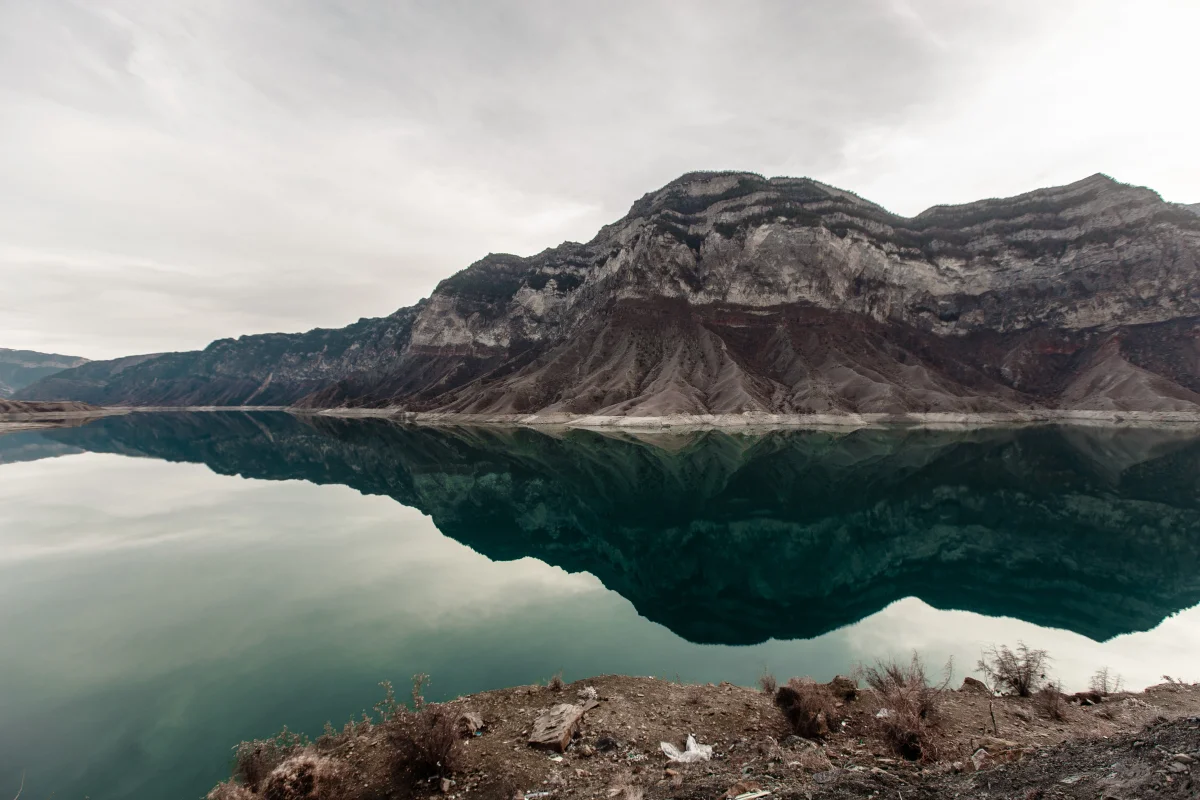
Three years ago, Dagestan was a destination for adventure seekers. In 2026, it's a fully fledged resort region with rapidly developing infrastructure. The Caspian Sea reaches +26°C in July–August, with wide sandy beaches, gentle entry, and sunshine nearly every day.
Beyond the beach: the Sulak Canyon (deeper than the Grand Canyon in the US), ancient Derbent with its Naryn-Kala fortress, mountain villages, and a cuisine worth a trip on its own. Prices are markedly below Black Sea levels: accommodation from 2,000 rubles per night, lunch at a café from 300 rubles.
Infrastructure still trails Sochi: service quality is uneven, navigating the region is tricky, and public transport runs irregularly. But development is moving fast, and the situation improves every year.
Kaliningrad Oblast: Europe Without a Visa
The Kaliningrad coast is in the middle of a renaissance. Wide beaches of white sand, ancient pines, the architecture of old German resort towns. The beach at Yantarny has twice earned the Blue Flag — an international mark of environmental quality.
The Baltic can't be called warm — water only reaches +20–22°C by late July. But there's no southern stuffiness, no punishing heat, and no crowds. Air temperature rarely climbs above +25°C, which is ideal for anyone who handles intense heat poorly.
Zelenogradsk, Svetlogorsk, the Curonian Spit — each with its own personality. Getting there is easy: direct flights from Moscow in two hours.
Primorye: For the Adventure-Ready
Vladivostok and its surroundings shatter the stereotype of the "cold Far East." In July–August, water in the bays warms to +22–24°C, and the scenery rivals Southeast Asia.
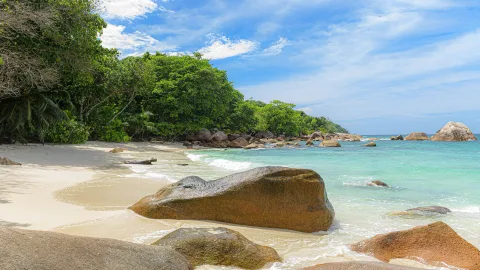
Triozerie Bay near Nakhodka regularly appears in rankings of Russia's most beautiful spots — turquoise water, white sand, rocky headlands. Russky Island offers beaches 20 minutes from downtown. Vityaz Bay is wild, deserted, with crystal-clear water.
The drawbacks are obvious: the flight from Moscow is 8 hours, infrastructure is basic, jellyfish show up in August, and the weather is unpredictable. But for anyone wanting to see a different Russia, it's one of the most powerful experiences out there.
The Sea of Azov: An Underrated Option for Families
The country's shallowest and warmest sea heats up by May — earlier than any other. The depth near shore stays waist-high on a child for tens of meters. Yeysk, Golubitskaya, Dolzhanskaya Spit — simple infrastructure, low prices, minimal crowds.
Azov isn't about luxury — it's about a calm family vacation with small children. You don't need a five-star hotel here. You need warm water, sand, and shallows.
What to Consider When Choosing
- Book early. Popular hotels in Sochi, Anapa, and Dagestan for July–August get snapped up in spring. The closer to your dates, the higher the prices.
- Calculate the full cost. A round-trip flight to Vladivostok runs 25,000–40,000 rubles. Kaliningrad starts at 6,000. Dagestan from 5,000. Sometimes it's cheaper to fly to Turkey than to the Far East.
- Don't chase the heat. The Baltic at +22°C with a light breeze can feel more comfortable than Anapa at +35°C with seaweed. The perfect beach vacation isn't always the hottest one.
- Consider September. The velvet season on the Black and Caspian seas means warm water, peaceful beaches, and lower prices. For anyone not tied to school holidays, it's the best time.