The term "velvet season" was coined in Crimea more than a hundred years ago — it described September, when aristocrats arrived at the coast in velvet dresses, because the heat had finally cooled enough to actually wear them. Since then, velvet season has stopped being a purely Russian invention and spread across the entire Mediterranean — and beyond.
Abroad, September follows a simple formula: the sea still holds its summer warmth, the air no longer scorches, beaches empty out, and prices drop. But "velvet season" isn't a universal concept. At some resorts it kicks in during the first days of the month; at others, not until mid-month; and in a few places, September is still full-blown summer with no velvet in sight. Let's break down exactly where autumn meets the sea.
Mediterranean Europe: The Classic Velvet Experience
The Mediterranean is the birthplace of the "velvet season" concept itself. September here brings 77–86°F (25–30°C) air and 75–81°F (24–27°C) water — and crucially, the suffocating July mugginess that makes southern European resorts unbearable has finally lifted.
Greece
Crete, Rhodes, Corfu, Santorini — all at their peak in September. Water runs 77–81°F (25–27°C), warmer than in June, air at 81–86°F (27–30°C), with essentially zero rain. Greek September stays drier and warmer than Turkish September — the island climate holds onto heat longer.
Crete is the best pick for anyone who wants both sea and substance: the Samaria Gorge is still open, the Knossos archaeological site runs without summer lines, and beachfront tavernas serve fresh octopus and homemade wine.
Rhodes offers long sandy beaches and a medieval Old Town. Santorini delivers caldera sunsets without the crowd that in July and August turns Oia's narrow streets into a bottleneck.
Russian citizens need a Schengen visa. Flights from Moscow require a connection, starting at 25,000 rubles round-trip.
Cyprus
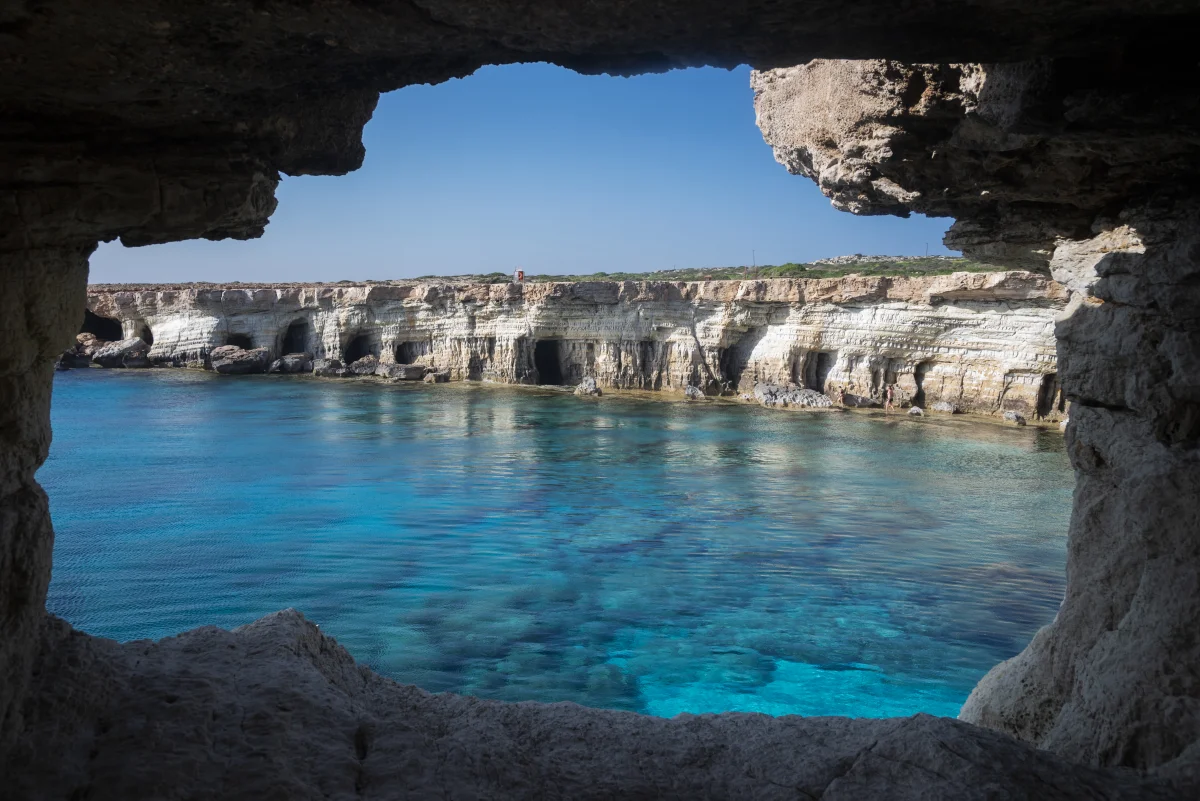
Cypriot September is still full-blown summer: air runs 86–91°F (30–33°C) in the first half of the month, dropping to 81–86°F (27–30°C) by the end. Water sits at 81–82°F (27–28°C). The heat retreats slowly, and the first two weeks of September feel more like an extension of August than genuine velvet season. Real velvet weather arrives by the third week: a comfortable 81°F, gentle sun, spacious beaches.
Ayia Napa offers white sand and turquoise coves, but it runs a bit loud (its club-scene reputation). Paphos is calmer, with a UNESCO archaeological park right on the shore. Limassol is a city-resort, with the vineyards of the Troodos Mountains just half an hour away.
The visa is either Schengen or Cyprus's own pro-visa (free, processed online in a day through the Cyprus embassy). Direct flights from Moscow take about 4 hours.
Spain
Mediterranean Spain in September brings 79–86°F (26–30°C) air and 75–79°F (24–26°C) water. The Costa Brava, Costa del Sol, the Balearic Islands (Mallorca, Menorca, Ibiza), and the Canary Islands all run at full capacity.
Mallorca is arguably the best Mediterranean island for September: coves with crystal-clear water, the Serra de Tramuntana mountain range for hiking, and stone villages full of restaurants. The summer crowds have thinned out, prices have dropped, and the sea is at its warmest.
The Canary Islands (Tenerife, Gran Canaria) are their own story: temperatures here run 72–82°F (22–28°C) year-round, and September looks no different from March. The Atlantic water sits at 73–75°F (23–24°C) — a touch cooler than the Mediterranean, but reliably stable. The Canaries suit anyone who wants guaranteed weather with no surprises.
The visa is Schengen. Flights require a connection, starting at 20,000 rubles.
Croatia
Dubrovnik, Split, Zadar, and the islands of Hvar and Korčula — the Adriatic warms to 75–77°F (24–25°C) in September, with air at 77–82°F (25–28°C). Croatia's velvet season runs shorter than the rest of the Mediterranean — by the end of the month, it's noticeably cooler, so the first two weeks work best for comfortable swimming.
Dubrovnik without the summer cruise-ship crowds is a different city — you can walk the city walls in relative silence instead of a stream of tourists. Hvar Island offers lavender fields (already bloomed, but the scent lingers) and coves reachable only by boat. Water in Croatia's bays ranks among the clearest in the Mediterranean.
The visa is Schengen (Croatia joined the Schengen zone in 2023). Flights require a connection.
Turkey: Velvet Season Without the Visa Hassle
Turkey shows up in every September roundup, and deservedly so. Air runs 82–90°F (28–32°C), the Mediterranean holds at 81–84°F (27–29°C) — warmer than nearly anywhere else in Europe. August's 104°F heat is gone, beaches have thinned out, and all-inclusive deals run 20–30% below peak.
Turkey's advantage over the European Mediterranean, for Russian travelers, comes down to no visa requirement, direct flights (3.5 hours), and the familiar package-tour format. For anyone who doesn't want to bother with Schengen paperwork, Turkey covers every need.
A September quirk: the Aegean coast (Bodrum, Marmaris) cools off faster by month's end than the Mediterranean coast (Antalya, Alanya). If warm water through the last day matters most, choose Alanya — its sea runs a degree or two warmer than Antalya's.
Egypt: When the Heat Finally Breaks
September in Egypt is a transitional month: air cools from August's 108°F down to 91–95°F (33–35°C). The wind that ruins winters in Hurghada hasn't started yet. The Red Sea sits at 81–82°F (27–28°C), clear and calm — one of the best times of year for divers and snorkelers.
The visa is issued on arrival ($30). The direct flight takes about 5 hours. Package tours run 20–30% cheaper than in winter.
Tunisia: The Budget Alternative
The Mediterranean off Tunisia's coast runs 77–81°F (25–27°C) in September, with air at 82–88°F (28–31°C). Hammamet, Sousse, and Djerba offer sandy beaches, all-inclusive deals, and excursions to Carthage and the Sahara.
Tunisia runs cheaper than Turkey for package tours, though the service is a bit more modest. No visa required (up to 90 days). Charter flights from Moscow take about 4.5 hours. For maximum sea time at minimum cost, this is a solid option.
Montenegro: The Last Visa-Free September
The Adriatic here runs 73–77°F (23–25°C) in the water, 77–82°F (25–28°C) in the air. Budva, Bečići, Kotor, Sveti Stefan — all fully in velvet-season mode: beaches have cleared out, prices have dropped, and figs fill the markets.
Critically important for 2026: starting November 1, Montenegro is introducing a visa requirement for Russian citizens. September is the last full month of visa-free entry. Flights connect through Istanbul or Belgrade, starting at 35,000 rubles.
Asia: Warm Sea, With Caveats
Vietnam (Nha Trang)
Air runs 86–91°F (30–33°C), water at 82–84°F (28–29°C), with just 4–7 rainy days. The bay is sheltered by mountains, and the monsoon hasn't arrived yet. Prices run 30–40% below winter levels. The direct flight from Moscow takes about 9.5 hours, no visa required.
Thailand (Phuket)
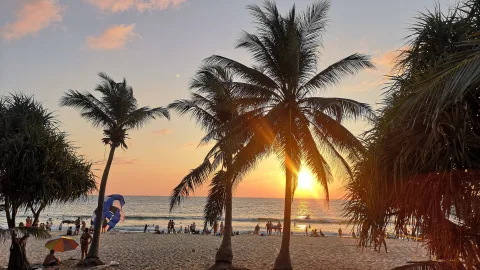
Technically low season here: rain, waves on the west coast beaches. But the showers fall in the evening, mornings stay sunny, and prices run half of winter levels. The east coast (Rawai, Chalong) stays swimmable. Good for anyone willing to trade a little convenience for savings.
UAE
Air runs 100–108°F (38–42°C), water at 91°F (33°C). Genuinely hot. But luxury hotels go for off-season prices. Works well for anyone who wants an air-conditioned vacation built around pools and shopping.
How to Choose: Three Questions
- Do you need a visa? Visa-free: Turkey, Egypt, Tunisia, Montenegro (until November 1, 2026), UAE, Vietnam, Thailand. Requires Schengen: Greece, Cyprus (or its pro-visa), Spain, Croatia.
- What water temperature works for you? The warmest: Egypt and the UAE (82–91°F). Comfortably warm: Turkey, Cyprus, Greece (77–82°F). A touch cooler: Croatia, Montenegro (73–77°F).
- What matters more — price or experience? Cheapest: Tunisia, Turkey (packages), Egypt. Pricier but culturally rich: Greece, Croatia, Spain. Exotic: Vietnam, Thailand.
Velvet season isn't a fixed date — it's a feeling: when the sun warms instead of burns, when you can lay a towel on open sand instead of squeezing between strangers, and when the evening promenade offers a stroll rather than a crowd. September abroad delivers that feeling in a dozen places at once. All that's left is picking the sea that suits you.