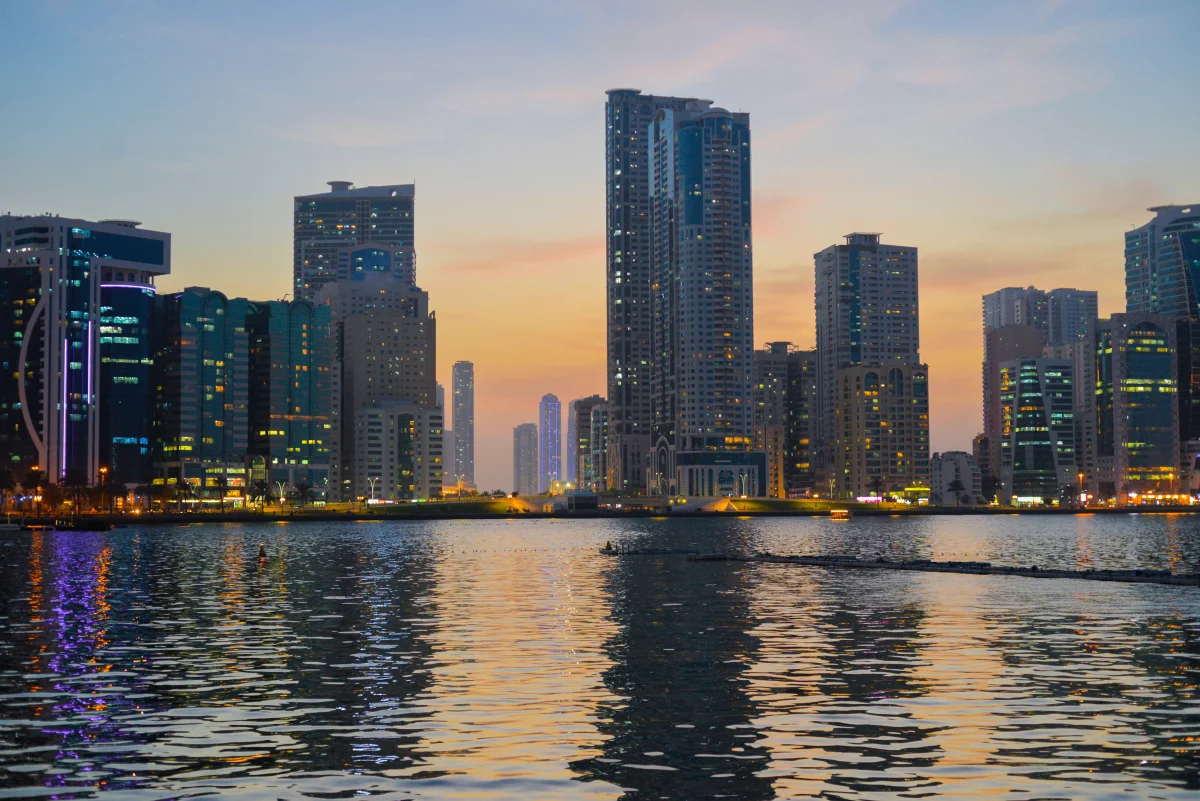
Sharjah borders Dubai so closely that you can get from one emirate to the other by taxi. The same sea, the same sun, but hotels and meals are noticeably cheaper. Yet these savings come at a price of their own, and it's not just the traffic jams.
It's a familiar pattern for anyone who has been to the Emirates on a budget package: you stay in Sharjah and go out in Dubai. A morning on the beach by the hotel, an evening at the fountains by the Burj Khalifa, then a taxi back. For a long time, Sharjah was "Dubai on a budget" for Russian tourists.
In recent years, though, it has gained some strong competitors, and the emirate itself remains one of the strictest in the country. We look at when the beach season here is at its best, and who Sharjah really suits.
When the Season Begins
The weather in Sharjah is almost the same as in neighbouring Dubai: it's the same stretch of Gulf coast. The beach season runs roughly from October to April, and the most comfortable months are November and March. Below are average figures for the Gulf coast (based on data for Dubai).
-
October — 36°C by day, 25°C at night, with the sea at around 31°C. The heat lingers, but becomes bearable by the end of the month.
-
November — 31°C by day, 21°C at night, with the sea at 28°C. Arguably the best month for the beach: the air no longer scorches, and the water is still warm after the summer.
-
December — 26°C by day, 17°C at night, with the sea at 25°C. Comfortable for both the beach and sightseeing.
-
January–February — 24–26°C by day, 15–16°C at night, with the sea at 22–23°C. The coolest time of year: sunbathing is pleasant, but many will find the water rather fresh, and you'll need a jumper in the evening.
-
March — 29°C by day, with the sea at 23°C. The air warms up again, but sandstorms are possible in spring.
-
April — 34°C by day, with the sea at 26°C. The last month when you can spend the whole day on the beach.
-
May–September — 38–42°C by day, with the sea at 29–33°C. Swimming in a "warm bath" and sitting in the sun are hard going, but packages are noticeably cheaper in these months.
Why Sharjah Is Cheaper Than Dubai
The main reason tourists choose Sharjah is price. Both hotels and package holidays cost less here than in Dubai and Abu Dhabi, as travel guides and tourists themselves agree.
As of summer 2026, a week-long package for two from Moscow to Sharjah could be found from 90,000 roubles.
Day-to-day spending is cheaper too. Here are some price benchmarks for 2026:
-
Taxis: the flag fall is 3.5 dirhams by day (about $1), each kilometre costs 2 dirhams (about $0.55), and the minimum fare is 13.5 dirhams (about $3.70). For a trip to another emirate, such as Dubai, there's a surcharge of 20 dirhams (about $5.40).
-
City buses: 8 dirhams in cash (about $2.20), or 6 dirhams with a travel card.
-
Food: shawarma costs 7–13 dirhams ($2–3.50), and lunch or dinner for two in an Indian restaurant 50–65 dirhams ($14–18).
-
Al Khan beach: entry costs 10 dirhams (about $2.70), but it's free for tourists brought in by bus from their hotels.
What You Need to Know About the Alcohol Ban
Sharjah is the only emirate in the UAE with a complete ban on alcohol. There's no alcohol in hotels, shops or restaurants, and "all-inclusive" here means alcohol-free. Being drunk in public is prohibited and punishable by a fine.
This has become one of the main reasons why Sharjah is losing popularity with Russian tourists. Vice-president of the Alliance of Travel Agencies of Russia Aleksan Mkrtchyan said in October 2026 that Sharjah used to account for almost 25% of Russian tourists in the UAE, but now accounts for less than 15%.
"Strong, serious competitors are growing: Ras Al Khaimah, Ajman, Fujairah," he noted.
The dress code is stricter here too. Swimwear is only appropriate on the beach, while in town, on the waterfront and in cafés you need to dress more modestly: it's best to cover your shoulders and knees. Topless sunbathing is banned, as are public displays of affection, apart from holding hands.
Sharjah's Beaches
Al Khan is a small beach near the centre, with white sand and shallow water. There are showers, toilets, changing rooms, lifeguards, a children's playground and water sports hire. Sun loungers and parasols cost extra, and there's no natural shade at all.
Al Corniche is a free public beach along the city waterfront, protected by breakwaters. There are lifeguards, but no sun loungers or parasols. Lots of local residents come here, so it's best to wear a one-piece swimsuit.
Al Heera is the city's longest landscaped beach, with about 3.5 km of soft, pale sand on the border with Ajman. There are walking and cycling paths, children's playgrounds, showers and cafés. It's usually quieter than Al Khan.
Khor Fakkan is a separate part of the emirate on the other side of the peninsula, on the Gulf of Oman, about 130 km from the city of Sharjah. It has about 3 km of golden sand at the foot of the Hajar Mountains, a waterfront promenade, boat trips to the islands and snorkelling around Shark Island. It's a completely different picture, with mountains instead of skyscrapers, and it's worth a trip for at least a day.
The Road to Dubai: A Saving or a Waste of Time?
Sharjah and Dubai have effectively merged, and many tourists travel to the neighbouring emirate every day. But this arrangement has a downside: traffic jams. The E11 (the continuation of Sheikh Zayed Road) and Al Ittihad Road regularly grind to a halt at rush hour, as many Sharjah residents commute to Dubai every day. A journey that looks short on the map can take several times longer at these times.
If you're planning trips to Dubai, avoid the rush hour and factor in the 20-dirham taxi surcharge for travelling to another emirate. Sometimes it's easier to spend one whole day in Dubai and come back late in the evening than to go back and forth every day.
How to Get There
Air Arabia resumed direct flights from Moscow (Domodedovo) to Sharjah on October 8, 2026: they had been suspended in February because of the escalating situation in the Middle East. The flights operate daily, and twice a day from December 14.
Many people also fly into Dubai airport and travel on to Sharjah by taxi or bus.
Russians don't need a visa: on entry to the UAE, you'll get a free 90-day stamp. Russian Visa and Mastercard cards don't work in the country, so bring cash in dollars or euros and change it into dirhams locally.
Who Sharjah Suits
Sharjah is a good choice for families with children: it's quiet and safe, and the shallow water at the city beaches is convenient for little ones. It also suits those who are going for sun and sea on a minimal budget and aren't planning to party.
But if you want nightlife, a glass of wine with dinner and a relaxed dress code, you'd be better off looking at Dubai or the neighbouring emirates of Ajman or Ras Al Khaimah. Saving on your hotel doesn't always make up for the inconvenience if you have to battle through traffic every evening in search of entertainment.