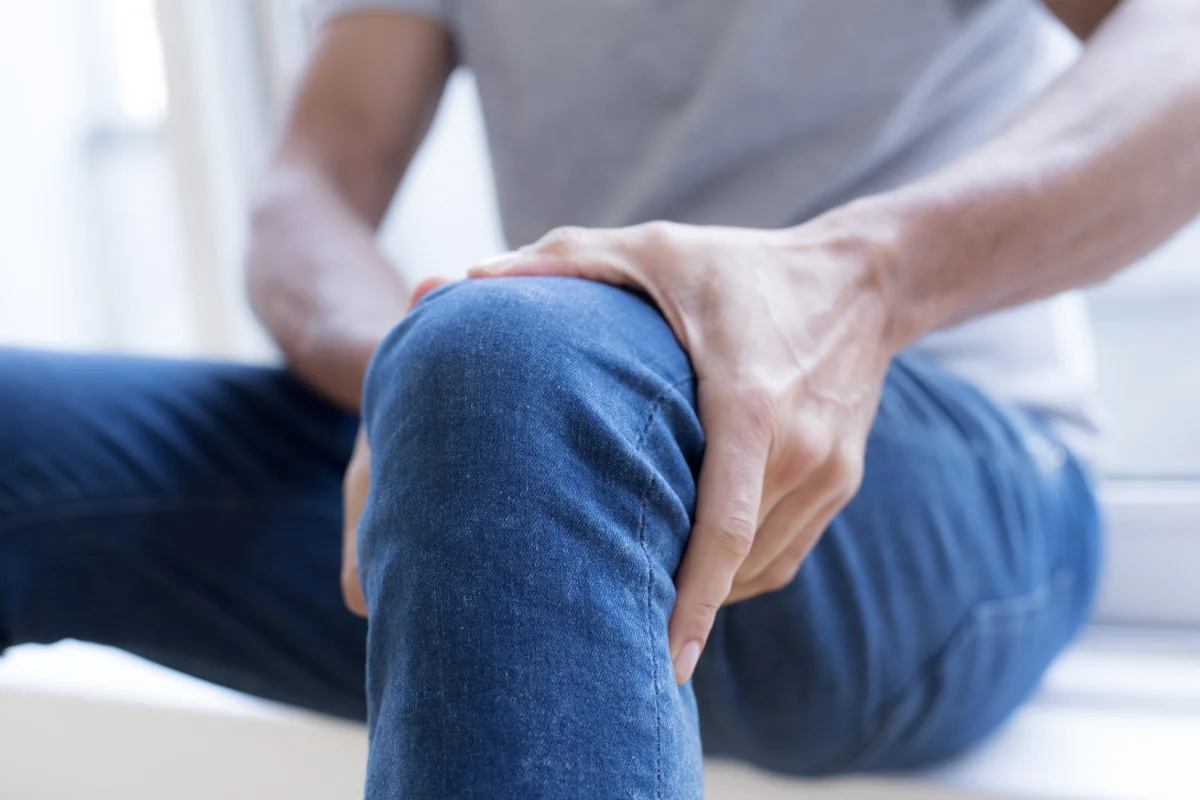
A knee that "forecasts" rain is one of the most enduring stories of folk weather lore. Scientists were sceptical about it for a long time, but several large studies have shown that joints really are linked to the weather. Just not quite in the way people usually mean.
Spring in central Russia is rarely a smooth affair. Spring 2026 is a case in point: at the end of an abnormally warm March, temperatures in Moscow reached +17…+19°C, while on April 27 the capital was buried under record snowfall, breaking a daily record set in 1880.
In May, the heat arrived. In weeks like these, the barometer jumps around as air masses come and go: in spring, cold air from the north collides with warm air from the south. And this is exactly when many people's knees, fingers and lower backs start to ache: "It'll rain tomorrow, I can feel it." We look at what's true here, and what's just the habit of seeing patterns where there are none.
Why the Weather Changes So Often in Spring
Spring is a transitional season, when Arctic and southern air masses clash over Russia. Each change of air mass brings a change in temperature, pressure and humidity. In spring these changes happen especially often, which is why the weather between seasons is so unstable.
For reference, normal atmospheric pressure at sea level is 760 mm of mercury (1013 hPa), while for Moscow, which lies above sea level, the norm is around 745–750 mm of mercury.
When a cyclone approaches, pressure falls, bringing cloud, damp and precipitation. Under an anticyclone, pressure rises and the weather turns clear and dry. In spring, this seesaw can repeat itself again and again, with only short breaks in between.
On top of that come thaws and damp: snow melts during the day and freezes again at night, and humidity stays high. The result is the full set of weather factors usually linked with joint pain.
What the Research Has Shown
The largest study was carried out in Britain. In the University of Manchester's Cloudy with a Chance of Pain project, more than 13,000 people recorded how they felt on their smartphones every day, while an app logged the weather at their location.
The final analysis included data from 2,658 participants who kept the diary for around six months. Most of them were living with arthritis or other chronic pain.
The results, published in 2019, surprised many people:
-
The most important factor was humidity. Damp days were the most likely to be painful, and dry days the least.
-
Low atmospheric pressure and strong wind were also linked with pain, but less strongly.
-
Temperature on its own made no difference on average, although cold, damp and windy days could be harder to bear.
-
Rain — the very thing the knee supposedly "forecasts" — showed no link.
How strong is the effect? On a damp, windy day with low pressure, the chance of pain being worse than usual was about 20% higher than average. The authors give an example: instead of five cases in a hundred, there were six. The effect is real, but modest.
The project's leader, professor of digital epidemiology at the University of Manchester Will Dixon, pointed out that a link between weather and joint pain had been suspected since the time of Hippocrates. His study confirmed it, but corrected the details.
A Change in the Weather Matters More Than the Weather Itself
Even earlier, in 2007, researchers in Boston led by Tim McAlindon followed 200 people with knee osteoarthritis across the United States. They found that pain was affected independently by changes in atmospheric pressure and air temperature: the colder it was, the worse the pain.
The key word is "changes". For a joint, it seems, what matters is not the pressure outside but the fact that it changes. That's why spring, with its constant ups and downs, feels harder than a steady winter with settled frost.
Are There Studies That Found No Link?
Yes. In 2017, American researchers led by Anupam Jena of Harvard Medical School compared 11.6 million doctor visits — made by about 1.5 million older Americans on the Medicare programme — with weather data.
They found no link between rainy days and visits for joint or back pain. The study was published in the journal BMJ.
There's actually no contradiction here. First, this study looked only at rain, and the British study also found no link with rain specifically. Second, people don't go to the doctor every time their knee aches. A slight worsening on a damp day may well not lead to a GP appointment.
Why Do Joints React to the Weather at All?
Scientists don't yet know the exact mechanism, but there are several plausible explanations.
-
Pressure
According to one hypothesis, when atmospheric pressure falls, there's less pressure on the tissues around a joint from outside, so they may expand slightly. As pressure fluctuates, the strain on cartilage and joint capsules increases. A healthy joint won't notice, but a damaged or inflamed one may respond with pain.
-
Cold
In the cold, muscles and ligaments tense up and joints become less mobile. Doctors also link sharp temperature swings and high humidity with poorer circulation in the tissues around a joint, which makes it more sensitive.
-
Different Pain, Different Weather
Rheumatologist, candidate of medical sciences Irina Samkova, points out that joints react differently to different changes. A dull, aching pain and stiffness are more often linked with falling pressure, which usually comes before rain or a cyclone — this kind of mechanical pain is typical of osteoarthritis and the after-effects of injuries. But inflammatory pain, for example in active rheumatoid arthritis, can, she says, be triggered by rising pressure and sharp changes in humidity.
An important caveat: all of this applies first and foremost to people whose joints are already not entirely healthy — after injuries or with osteoarthritis or arthritis. In someone with healthy joints, the weather is unlikely to cause pain.
How to Get Through Spring's Ups and Downs
The most useful thing you can do is repeat the British experiment on yourself. Keep a diary for a couple of weeks: every day, note how your joints are behaving and record the weather, including pressure, humidity and temperature. After a month, it'll become clear what you personally react to: damp, falling pressure or a cold wind. Different people can have different "triggers".
Once you've found your own pattern, the weather forecast becomes a tool. On days when forecasters predict a sharp drop in pressure, damp and wind, it's best not to plan a big spring clean, dig the vegetable patch or go for a long walk. It makes more sense to save heavy physical work for a dry day with stable pressure.
In spring, in damp and windy weather, it's especially important to keep your joints warm. Knees, hands and the lower back are the first to feel the chill in a cold wind, and a spring wind on a clear day is deceptive: the sun is already warm, but the air is still cold. Windproof trousers, gloves and waterproof footwear work as prevention between seasons.
And finally. The weather can make pain worse, but it doesn't create it from scratch. If your joints ache all the time, whatever the weather, or the pain gets worse every year, that's a reason not to study the forecast but to see a doctor.