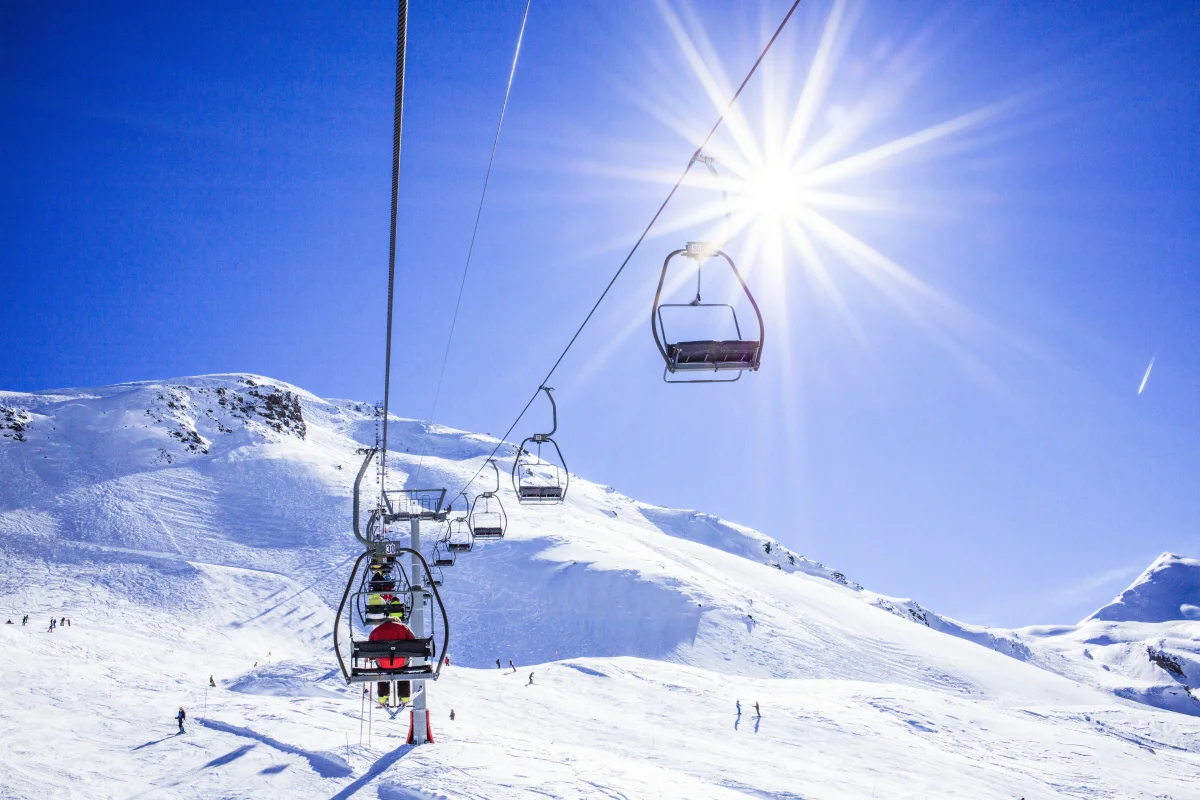
In December, Moscow gets an average of 18 hours of sunshine for the entire month — less than an hour a day. In St. Petersburg, even less. The body responds with disruptions to hormones, mood, and immunity, even if we're not consciously aware of it.
Winter light deficiency isn't a subjective impression — it's a measurable physical fact. In December–January at Moscow's latitude, daylight lasts about 7 hours, a significant portion of which is overcast. The sun sits low on the horizon, its rays pass through a thick layer of atmosphere, and even on a clear day there isn't enough ultraviolet to produce vitamin D.
Why Winter Means Little Sun — and It's Not Just the Clouds
The first reason is Earth's axial tilt. In winter, the Northern Hemisphere is angled away from the Sun — days are short, nights are long. At Moscow's latitude (55°), the sun in December rises just 11 degrees above the horizon.
For comparison: in summer it reaches 58 degrees. A low sun means weak light, long shadows, and minimal ultraviolet.
The second reason is cloud cover. The winter atmospheric pattern across central Russia is dominated by cyclones carrying moisture from the Atlantic. Overcast skies hold for weeks, and even the short daylight hours pass under gray. Moscow averages 5–6 clear days in December; St. Petersburg, 2–3. The rest are solid cloud.
The third is the urban environment. Narrow streets, tall buildings, tinted office windows — even on a sunny day, a city dweller receives several times less light than a village resident. Many leave for work in darkness and return in darkness, spending the entire daylight period indoors under artificial lighting.
What Happens Inside the Body
Light governs two key hormones through its effect on the retina and the hypothalamus.
Serotonin is a neurotransmitter that regulates mood, appetite, and the ability to concentrate. Daylight is required for its production. When there's less light, serotonin output drops. The result: low mood, irritability, cravings for sweets and carbohydrates. The body tries to compensate for the serotonin deficit through fast carbs — hence the winter weight gain.
Melatonin is the sleep hormone. Produced in darkness, suppressed by light. In winter, when it's dark for most of the day, melatonin is produced in excess. Hence the daytime drowsiness, the feeling of being wrecked even after eight hours of sleep, the urge to burrow under the covers and never get up.
"Serotonin is produced when daylight hits the retina, while melatonin is produced in darkness. With a short daylight period, the body produces more melatonin and less serotonin," explains somnologist and medical sciences candidate Sofia Cherkasova.
Vitamin D: A Separate Story
Vitamin D is synthesized in the skin under the influence of UVB ultraviolet. In winter, at latitudes above 40° — which means all of Russia — the angle of the sun's rays is too low for sufficient UVB to reach the surface. Even if you step outside at noon on a clear January day and roll up your sleeves, vitamin D will not be produced.
Research shows that vitamin D deficiency affects up to 80% of central Russia's population by winter's end. The consequences: weakened immunity, brittle bones, elevated cardiovascular risk, and worsened depressive states. Replenishing it through food alone is virtually impossible — without supplements or sunshine.
Seasonal Affective Disorder Is Not Just "Winter Blues"
For some people, the lack of light triggers not just a dip in mood but clinical depression. In psychiatry, this is called Seasonal Affective Disorder, or SAD.
By various estimates, it affects 5–10% of the population at northern latitudes. Another 10–20% experience a subclinical form — the "winter blues": not full-blown depression, but a noticeable decline in quality of life.
SAD symptoms include persistent fatigue, loss of interest in usual activities, excessive sleepiness, weight gain, and difficulty concentrating. They appear in autumn, intensify toward January, and lift in spring — sometimes literally within a week as the daylight hours lengthen.
An important note: SAD is not a character flaw or laziness. It's a disorder linked to disrupted brain neurochemistry, and it's treatable — with light therapy, psychotherapy, and in severe cases, antidepressants.
How to Compensate for the Lack of Light
Light therapy. Special lamps producing 10,000 lux mimic daylight and suppress excess melatonin production. The recommended regimen: 20–30 minutes in the morning, immediately after waking. Research shows that for SAD, the effect is comparable to antidepressants. Ordinary room lamps don't work — their brightness is 10–20 times below what's needed.
"Vitamin and mineral supplements simply cannot make up for a lack of light," emphasizes Alexander Kalinkin, head of the MSU Center for Sleep Medicine and a practicing somnologist.
Walks. Even on an overcast winter day, outdoor illumination is 2,000–5,000 lux. In an office, it's 300–500. A half-hour walk during your lunch break delivers ten times more light than an entire workday by the window.
Vitamin D. The Russian Association of Endocrinologists recommends that adults take 1,000–2,000 IU of vitamin D daily from October through March. Dosage is best determined by a blood test.
Sleep schedule. Waking at the same time every day and avoiding oversleeping on weekends helps synchronize circadian rhythms even with a short day. In the evening, limit bright screen light to avoid further suppressing already disrupted melatonin production.
When It Gets Easier
The turning point comes not in March, as you might assume, but earlier — at the end of January. From December 22 (the winter solstice), days start getting longer, and by late January Moscow's daylight has extended by an hour and a half.
The body responds to this gain faster than we consciously register: sleep improves, mood stabilizes, energy returns.
By March, daylight reaches 11–12 hours, and for most people the winter symptoms fade. But if every winter you notice the same pattern — depleted energy, apathy, drowsiness, weight gain — it's worth treating this not as "normal winter laziness" but as a signal you can and should respond to.