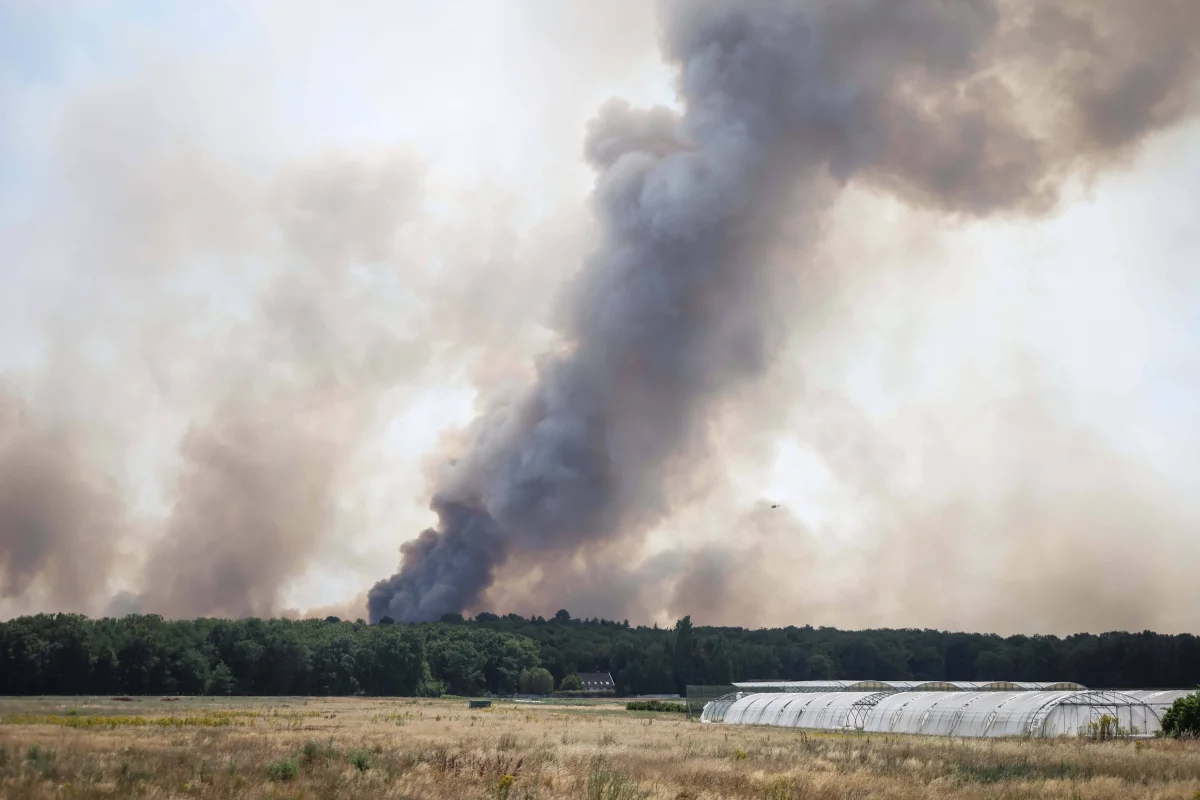
The summer of 2026 is shaping up as one of the most dangerous fire seasons in recent years: by late June, fires in Krasnoyarsk Krai alone had burned through 148,000 hectares of taiga, and special fire-prevention protocols are in effect across 46 regions of the country.
Fire season is officially open in 87 out of 89 federal subjects. Since the start of the year, over 3,000 wildfires have been recorded across an area of 1.2 million hectares. Spring statistics looked encouraging — a snowy winter pushed back the season's start, and the area burned was three times smaller than the year before.
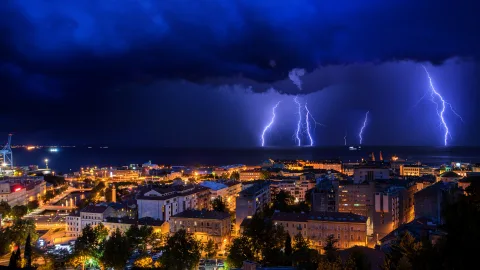
But with the arrival of summer, the situation changed dramatically: dry lightning storms in remote parts of Siberia are igniting dozens of new fires daily, and many can only be reached by air.
According to Rosleskhoz (Russia's Federal Forestry Agency), most spring fires were caused by human negligence — unextinguished campfires, dry grass burning, and fire spreading from agricultural land.
In summer, the main driver shifts to weather. But anyone can find themselves in a fire zone — a hiker, a mushroom forager, a resident of a village on the forest's edge. And in that moment, what matters is not panicking but following a clear set of steps.
How to tell a fire is approaching
The first signal is the smell of smoke. It appears long before you can see flames. Stop and figure out where it's coming from. Look at the treetops: smoke rising in a column or creeping along the canopy helps you gauge both direction and distance.
The second signal is animal behavior. A mass flight of animals in one direction, alarmed bird calls, insects flying away from the forest — all are signs of approaching fire. Animals sense a wildfire before humans do.
If the fire is small and you're confident in your ability
A small ground fire — flames moving through grass and ground cover at a height of up to half a meter — can be attempted on your own. But before you start, call 101 or 112 and send someone for help.
You can beat down the flames with a broom of green deciduous branches about 1.5–2 meters long, sweeping fire back toward the center of the blaze. You can douse it with water from a nearby source, smother it with damp soil, or stomp it out with your feet. Stay close to roads and clearings, and don't lose sight of other people. The wind can shift at any moment — and a small fire can become uncontrollable.
The key is an honest assessment of what you can handle. If the fire is growing and you can't contain it, leave immediately.
If the fire is large — retreat is the only option
Attempting to fight a crown fire or an intensifying ground fire without specialized equipment is impossible and deadly. A crown fire can move at speeds of up to 70 km/h — faster than any human can run. The only right decision is to get out.
The cardinal rule: move perpendicular to the direction the fire is spreading — not away from it and not toward it, but sideways. Don't try to outrun the front.
Where to go:
- Along roads, firebreaks, and trails — there's less fuel on the ground.
- Along rivers and streams — water stops fire.
- Toward a body of water — a lake, a river, even a large puddle can serve as shelter.
- Downhill — fire moves upslope significantly faster.
- Onto already burned ground — as long as it's not a peat bog, scorched earth is safe.
How to protect yourself in heavy smoke
Smoke kills more often than flames. In heavy smoke, breathe through wet fabric — a handkerchief, scarf, or T-shirt soaked in water. Move bent low to the ground: the air is cleaner near the surface, since smoke rises. If possible, douse yourself with water and cover your head and upper body with wet clothing.
If fire is approaching a settlement
Russia's Emergency Ministry (EMERCOM) recommends preparing for evacuation well in advance, without waiting for the last moment:
Gather documents, cash, and medications in one place so you can grab them in under a minute. Get your car ready to leave — park it facing the road. Wear clothing made of cotton or wool — synthetics melt and stick to skin. Keep gloves, a handkerchief, and protective goggles on hand.
Prepare a supply of water and food. Monitor EMERCOM alerts via television, radio, and warning systems.
Evacuation moves perpendicular to the fire's direction — along roads, following rivers. Children, the elderly, and people with disabilities are evacuated first.
What you must never do
Do not hide in ravines or ditches — hot air and smoke collect in low-lying areas, and suffocation can occur within minutes. Do not run uphill toward the fire.
Do not climb trees — in a crown fire, the canopy ignites first. And do not overestimate your abilities — heroism in a wildfire ends in tragedy.
Who to call and where to check conditions
101 — fire service. 112 — universal emergency number. 8 (800) 100-94-00 — Rosleskhoz's direct forest protection hotline. If there's no fire station nearby, call the local forestry office or municipal administration.
Report clearly: where you are, what's burning, which direction the fire is moving, and whether there are people nearby.
A live map of wildfires and information on forest access restrictions can be checked on the Rosleskhoz website. As of July 2026, special fire-prevention protocols are active in 46 federal subjects, including Moscow, Sverdlovsk, Tyumen, and Rostov oblasts, the republics of Buryatia and Tuva, and Zabaykalsky Krai.
Fines for violating fire safety rules under the special protocol range from 10,000 to 20,000 rubles for individuals.