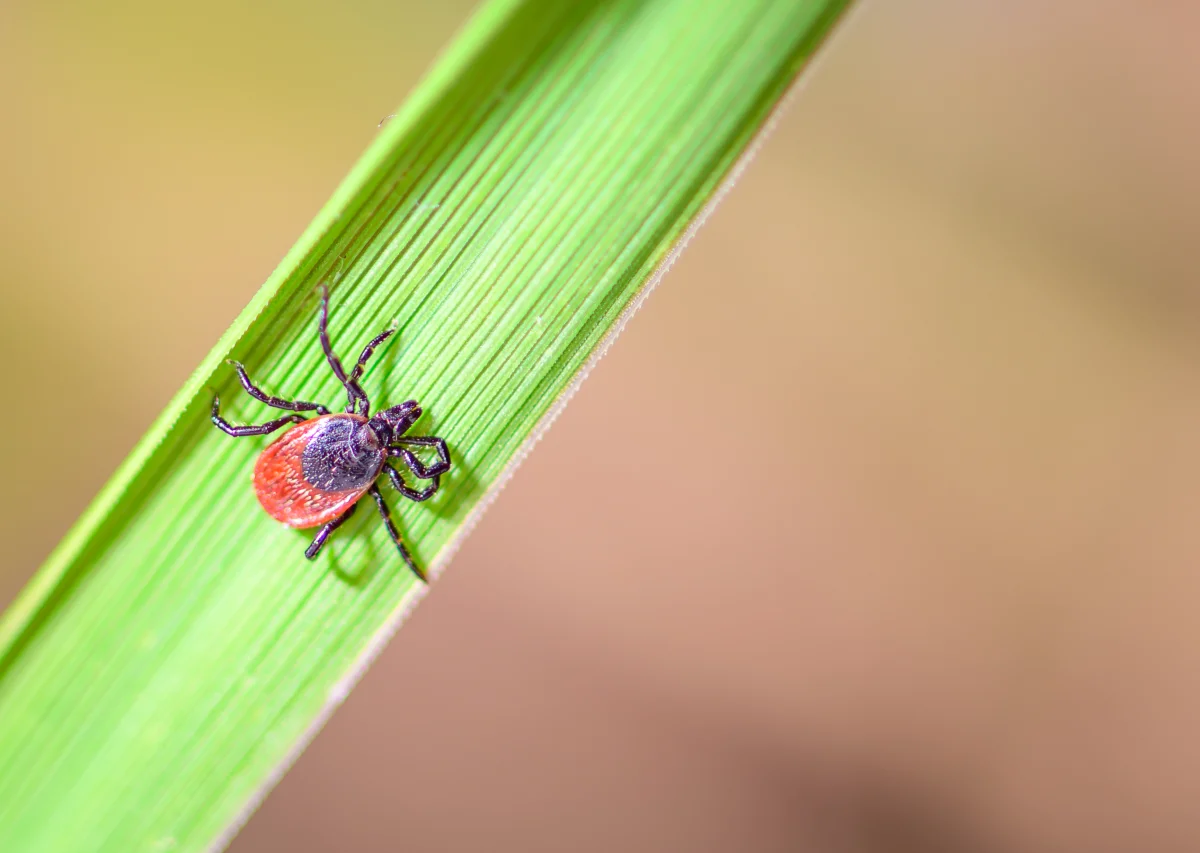
In May 2026, Rospotrebnadzor (Russia's consumer health watchdog) updated its list of territories endemic for tick-borne encephalitis — and it covered nearly the entire map. But several large regions didn't make the list, and understanding why is more useful than memorizing a long catalog of danger zones.
Since the start of 2026, more than 43,000 people have sought medical attention in Russian hospitals after tick bites. Ticks carry not only encephalitis but also borreliosis (Lyme disease), anaplasmosis, ehrlichiosis — over a dozen infections in total.
There are no completely safe regions in Russia: Ixodes ticks are found virtually everywhere grass and shrubs grow. But the risk of encountering an infected tick varies by orders of magnitude.
Where Ticks Are Genuinely Scarce
Ticks need moisture, moderate warmth, and forest floor cover. In regions with hot, dry climates, open steppe, and no dense undergrowth, their numbers are significantly lower.
According to Rospotrebnadzor's 2026 data, the following areas are not listed as endemic for tick-borne encephalitis:
- Southern Russia and the North Caucasus
Krasnodar Krai (with the exception of forested mountain areas), Rostov Oblast, Volgograd Oblast, Astrakhan Oblast, Stavropol Krai, Kalmykia, Dagestan, Chechnya, Ingushetia, Kabardino-Balkaria, Karachay-Cherkessia, and North Ossetia — all territories where encephalitis either goes unregistered or appears in isolated cases.
The reasons: a dry, hot climate, steppe and semi-desert vegetation, and the absence of the taiga undergrowth where ticks typically lie in wait.
- The Central Black Earth Region
Voronezh, Belgorod, Kursk, Lipetsk, Tambov, Oryol, and Tula oblasts also fall outside the list. Ticks exist here, but their encephalitis infection rate is extremely low. The landscape is forest-steppe, with a smaller share of coniferous woodland than in the north.
- Parts of the Volga Region
Saratov and Penza oblasts, Mordovia, and Chuvashia are not on the endemic list — even though neighboring Nizhny Novgorod, Kirov, and Samara oblasts already are.
Where the Risk Is Highest
The opposite end of the spectrum is the Urals, Siberia, and the Far East. Virtually every region from Sverdlovsk Oblast to Primorsky Krai is listed as endemic, and many are included in their entirety, without being broken down by district.
The leaders in bite-related hospital visits are Sverdlovsk, Kemerovo, Novosibirsk, Tomsk, and Irkutsk oblasts, along with Krasnoyarsk, Perm, and Altai krais. Taiga, high humidity, dense forest undergrowth — the ideal habitat for Ixodes ticks.
In Central Russia, the risk is lower but far from zero. The endemic list includes Ivanovo, Kostroma, Tver, and Yaroslavl oblasts, as well as two districts of Moscow Oblast — Dmitrovsky and Taldomsky. Moscow itself is technically not on the list, but ticks turn up in city parks, and Lyme disease cases are recorded every year.
Why "Not Endemic" Doesn't Mean "Safe"
The Rospotrebnadzor list covers only tick-borne encephalitis — one infection, albeit the most dangerous one. Borreliosis (Lyme disease) is far more widespread: infected ticks are found even in regions not on the list.
In Krasnodar Krai, considered relatively safe for encephalitis, Lyme disease is documented regularly.
Beyond that, ticks as parasites are present across nearly the entire country. A bite from even an uninfected tick is unpleasant and can trigger an allergic reaction. Letting your guard down completely isn't wise anywhere — it's simply that in some regions, the consequences of a bite can be far more severe than in others.
How to Protect Yourself Regardless of Region
Even in relatively safe zones, the basic rules remain unchanged:
- Clothing. Light-colored (easier to spot a tick), with long sleeves, pants tucked into socks or boots. It looks ridiculous — and it works reliably.
- Repellents. DEET-based products go on skin; permethrin-based products go on clothing. The latter are more effective but require advance application.
- Check yourself every 1–2 hours while outdoors and immediately upon returning. A tick typically crawls on the body for 30–60 minutes before latching on. The sooner you remove it, the lower the risk.
- Vaccination against encephalitis — for anyone living in or planning trips to endemic regions. A two-dose course with a booster every three years. Free at public clinics in endemic areas; 800 to 2,500 rubles per dose at private clinics.
- If a tick has latched on — twist it out gently (don't yank), don't squeeze the abdomen, and don't apply oil. Place it in a small container and take it to a lab for testing. The results will show whether the tick was infected and whether emergency prophylaxis is needed.
Where to Go if Ticks Are Your Biggest Fear
If you want to spend summer in nature with minimal tick risk, look south: the Black Sea coast of Krasnodar Krai, the Caucasus Mineral Waters, the steppe areas of Rostov and Volgograd oblasts, Kalmykia, Dagestan. Hot, dry, open spaces — everything ticks hate.
There are no absolute guarantees anywhere, but the statistics speak for themselves: Krasnodar Krai records isolated cases of tick-borne encephalitis per year; Sverdlovsk Oblast records hundreds.